Is Stainless Steel Glass Railing Safe?
Is stainless steel glass railing safe? Yes, it can be a reliable guard system when the glass, stainless steel components, anchorage, and installation are selected for the actual project. The important point is that safety does not come from the stainless steel or the glass alone. It comes from the complete railing system and how it responds to impact, guard loads, wind, and the condition of the supporting structure.
For homeowners, architects, contractors, and purchasing teams, the more useful question is not simply whether glass railing is safe. It is how the system is designed, what type of glass is used, how the glass is retained after breakage, and how the railing is connected to the deck, balcony, or stairs.
What Will This Stainless Steel Glass Railing Guide Cover?
Choosing a glass railing often looks straightforward from the outside. There is a stainless steel frame, transparent glass, and a clean architectural appearance. Behind that simple appearance, however, several technical decisions affect the final performance.
- How the glass behaves when it is impacted or broken.
- How stainless steel posts, brackets, clamps, and handrails support the glass.
- How the railing connects to concrete, steel, timber, or another substrate.
- How project loads and environmental conditions affect the design.
- Whether a balcony, deck, or staircase requires additional protection after glass breakage.
- How the system should be maintained in outdoor and coastal environments.
This guide focuses on those practical questions rather than treating glass railing as a purely decorative product.
What Makes Stainless Steel Glass Railing Safe?
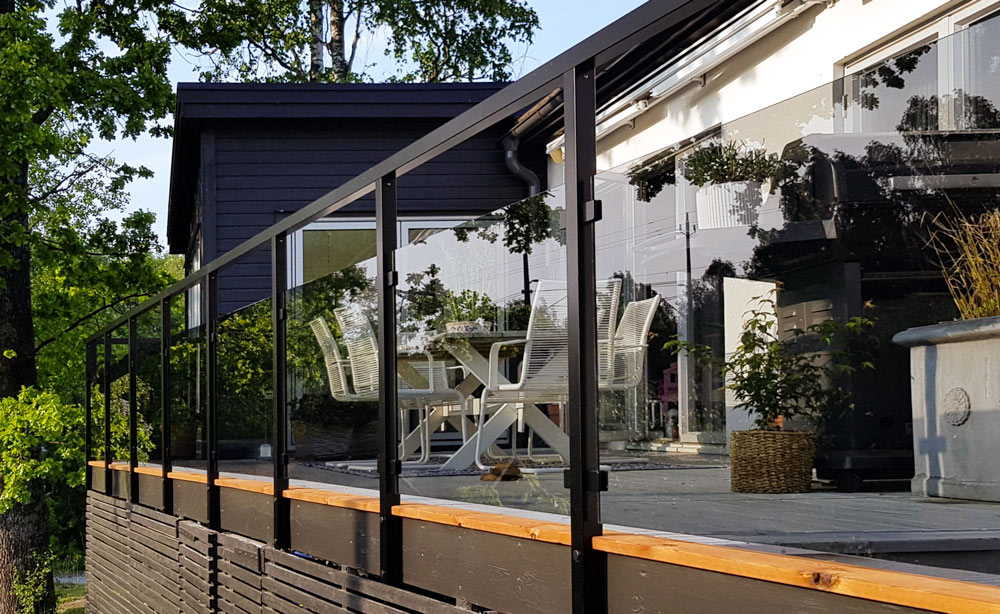
What makes stainless steel glass railing safe is the combination of safety glazing, structural support, correct anchorage, and proper installation.
The stainless steel frame or fittings provide the mechanical connection between the glass and the building structure. The glass forms the infill or guard surface. Neither component should be evaluated independently.
A properly specified system should consider at least these factors:
- Glass type: Tempered and laminated safety glass have different breakage characteristics.
- Glass configuration: Thickness, panel size, support conditions, and glass composition affect performance.
- Stainless steel components: Posts, clamps, brackets, handrails, and connectors must be appropriate for the application.
- Anchorage: The connection between the railing and the supporting structure is critical.
- Design loads: The system should be designed according to the loads required for the specific project.
- Installation: Even a properly specified system can perform poorly if the substrate, anchors, or glass installation are incorrect.
For guard applications, building codes can place specific requirements on safety glazing and the ability of the railing assembly to resist loads. For example, ICC provisions for glass in handrails and guards address safety glazing and structural load considerations, while some applications require laminated glass so the barrier can remain in place after breakage.
At Vionta Metal, our approach is to treat the glass, stainless steel hardware, mounting method, and project conditions as one system rather than quoting glass and fittings as unrelated components.
Why Does the Type of Glass Matter So Much?
Why choose stainless steel glass railing without first deciding on the appropriate glass type? The glass is one of the most important safety elements in the entire assembly.
Two common safety-glazing approaches are tempered glass and laminated glass. They do not behave in exactly the same way when damaged.
What Happens When Tempered Glass Breaks?
Tempered glass is heat-treated to increase its strength compared with ordinary annealed glass. When it breaks, it generally fractures into many small pieces rather than long, sharp shards.
This breakage pattern can reduce the severity of certain cutting injuries. However, there is another issue that matters in a guardrail: the glass panel itself may no longer remain as a continuous barrier after a major break.
That is why simply saying “tempered glass is safe” does not provide enough information for a railing specification.
How Does Laminated Glass Behave After Breakage?
Laminated glass consists of multiple glass layers bonded together with an interlayer. If one or more glass layers break, the interlayer can help keep the broken pieces together.
For guard applications where retaining the barrier after glass breakage is an important consideration, laminated construction can provide an additional level of post-breakage retention. The National Glass Association specifically identifies laminated glass made from fully tempered or heat-strengthened glass as an important solution for glass guardrail applications.
The final glass specification should still be determined from the project's loads, dimensions, support conditions, local requirements, and system design rather than selecting a thickness based only on appearance.
How Does Stainless Steel Support the Glass?
How does stainless steel glass railing transfer loads from the glass to the building structure? The answer depends on the railing configuration.
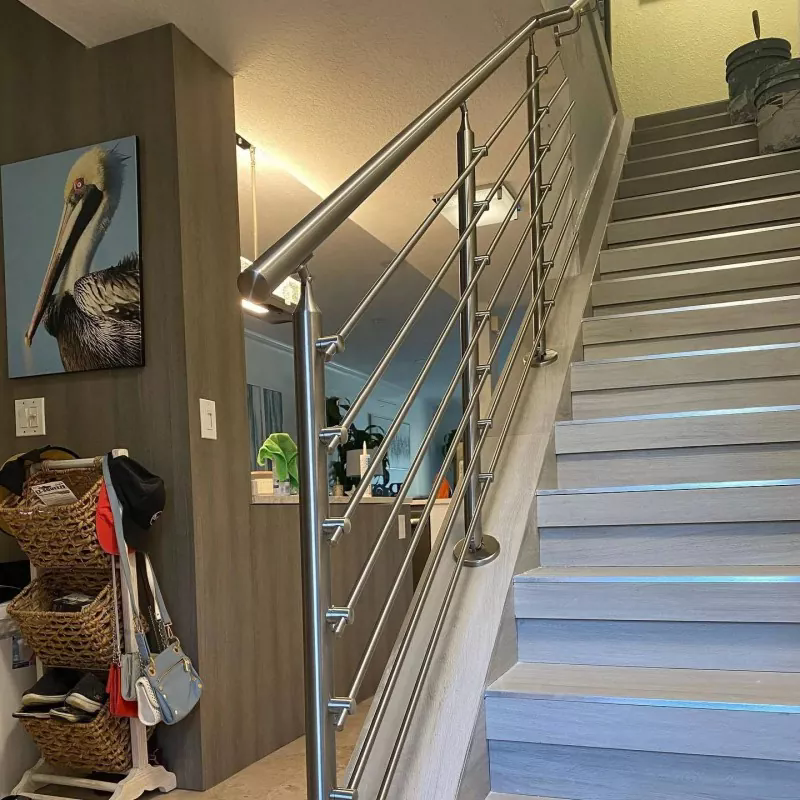
Stainless steel can be used for posts, handrails, brackets, clamps, base plates, connectors, and other fittings. These components form the mechanical path between the glass panel and the supporting structure.
A typical system may include:
- Vertical stainless steel posts.
- Glass clamps or panel holders.
- Top handrails or top rails.
- Base plates and mounting brackets.
- Mechanical anchors or other approved fixing methods.
- Glass panels designed for the selected support configuration.
The connection is particularly important because the railing receives loads from people leaning against it, accidental impact, wind pressure, and other project-specific forces.
A strong stainless steel post does not compensate for an inadequate anchor. Likewise, thick glass does not compensate for a weak deck edge or poorly designed connection.
What Should You Check Before Installing a Glass Railing for Balcony?

What should you check before installing a glass railing for balcony applications? Start with the building structure, not the glass color.
Balcony railings are often exposed to wind and weather, while elevated edges introduce fall-protection requirements. Before ordering the system, the following information should be confirmed:
- Balcony edge construction: Determine whether the railing will be fixed to concrete, steel, timber, composite construction, or another substrate.
- Railing height: Confirm the required guard height under the applicable local regulations.
- Panel dimensions: Glass size and support spacing affect structural behavior.
- Glass specification: Select safety glazing appropriate for the application.
- Mounting position: Decide whether the railing will be top-mounted, side-mounted, post-mounted, or installed using another system.
- Environmental exposure: Coastal areas may require additional attention to stainless steel grade and maintenance.
- Wind conditions: Open balconies, rooftops, and exposed properties can experience higher wind loads.
In some jurisdictions, glass used in guards is subject to specific safety-glazing and structural requirements. California's current code provisions, for example, specify laminated glass constructed from fully tempered or heat-strengthened glass for many guard applications, with limited exceptions for single fully tempered glass.
This is why local code review should be part of the specification process rather than something checked after manufacturing.
Why Is Stainless Steel a Practical Choice for Outdoor Glass Railings?
Why is stainless steel glass railing commonly used in outdoor areas? One reason is that stainless steel provides a durable metal framework while maintaining a relatively clean visual appearance around transparent glass.
For outdoor projects, material selection should take the environment into account. A railing installed beside a swimming pool, near the sea, or in a humid climate does not face the same conditions as an interior staircase.
Stainless steel selection may therefore consider:
- Exposure to rain and humidity.
- Salt or chloride exposure in coastal locations.
- Pool chemicals and cleaning agents.
- Indoor versus outdoor installation.
- Expected cleaning frequency.
- Required surface appearance.
Our factory can work with stainless steel railing configurations using SS304 or SS316 according to the project specification. The correct grade should be selected based on the actual exposure conditions rather than assuming one grade is suitable for every project.
Stainless steel also works well with clear glass because the metal framework can remain visually simple while the glass provides an open sightline.
How Safe Is Steel Stair Railing With Glass?
How does steel stair railing with glass perform on a staircase? It can provide both a guard function and a handrail support system, but stair applications need careful attention to geometry and fixing details.
Unlike a straight balcony edge, a staircase introduces changes in height, angle, tread position, landing dimensions, and handrail location. The railing therefore has to be designed around the stair rather than simply adapting a standard deck railing.
What Should Be Considered for Glass Stair Railings?
- The angle and layout of the staircase.
- The location of landings.
- Required guard and handrail heights.
- Glass panel size and support spacing.
- Connection points at the floor, stair stringer, or structural frame.
- Handrail continuity and graspability where required.
- Potential impact from people using the stairs.
For commercial staircases, apartment buildings, hotels, offices, and other public environments, the applicable building and safety requirements should be confirmed before finalizing the railing details.
A stainless steel and glass stair system should therefore be treated as a structural guard and handrail assembly, not simply as decorative glass mounted beside the stairs.
What Are the Main Stainless Steel Glass Railing Options?
Different projects require different combinations of glass support and stainless steel hardware. The following configurations are commonly considered during specification.
| System element | Possible configuration | Typical consideration |
| Glass | Tempered or laminated safety glass | Selected according to application, dimensions, loads, and applicable requirements |
| Posts | Stainless steel posts | Post spacing and fixing method affect system performance |
| Handrail | Round, square, or project-specific profile | Selected according to design and applicable handrail requirements |
| Glass fixing | Clamps, brackets, channels, or point-supported fittings | Depends on the railing system and glass configuration |
| Mounting | Top mount or side mount | Substrate and available fixing area must be checked |
| Stainless steel grade | SS304 or SS316 | Selection depends on indoor, outdoor, coastal, and other exposure conditions |
The table is a starting point for procurement rather than a universal specification. The final configuration should be confirmed against the project drawings and applicable local requirements.
How Should You Compare Stainless Steel Glass Railing With Other Railing Systems?
Glass is not automatically the right choice for every deck, balcony, or staircase. The surrounding environment, desired visibility, maintenance expectations, and budget all influence the decision.
What Is the Difference Between Glass and Cable Railing?
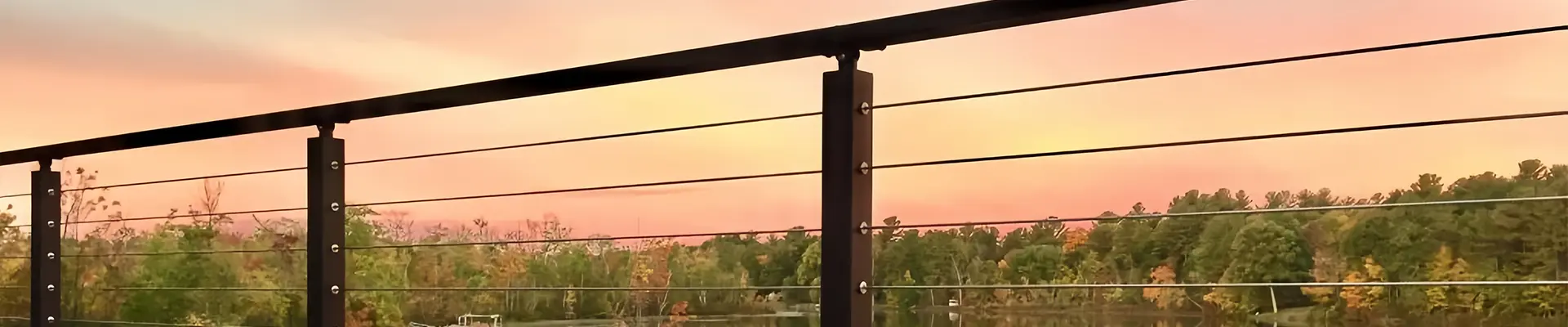
Glass provides a broad visual barrier with fewer visible vertical elements. Cable systems use horizontal stainless steel cables and generally leave more open space between the cables.
Glass can be useful when the client wants a more continuous transparent barrier. Cable railing can be attractive when ventilation, open sightlines, and a lighter visual structure are priorities.
Why Might a Client Choose Glass for a Balcony?
- It maintains a relatively unobstructed view.
- It creates a visually open edge.
- It can complement contemporary architectural designs.
- It can be combined with stainless steel or aluminum support systems.
- It can work for decks, balconies, stairs, terraces, and similar applications.
When Is Cable Railing Worth Considering?
Cable railing can be considered when the project requires an open railing appearance without large transparent glass panels. It can also be useful where the design calls for horizontal stainless steel cables rather than a solid visual infill.
The choice should be based on the actual project rather than treating one railing system as universally superior.
What Maintenance Does Stainless Steel Glass Railing Need?
One advantage of combining stainless steel with glass is that routine cleaning is relatively straightforward. That does not mean the railing can be ignored after installation.
For outdoor systems, regular maintenance can include:
- Cleaning glass panels with water and a suitable glass cleaner.
- Removing dust, dirt, and deposits from stainless steel surfaces.
- Rinsing salt deposits from coastal installations.
- Checking visible clamps, brackets, and fasteners.
- Inspecting the railing for movement, damage, or loose components.
- Checking sealants and connection areas where applicable.
Coastal locations deserve particular attention because salt and chloride deposits can accelerate surface contamination and corrosion-related problems on unsuitable or poorly maintained metal components.
Cleaning frequency depends on the environment. A railing beside the ocean generally needs more frequent cleaning than one installed in a dry inland location.
How Can You Reduce Safety Risks Before Ordering?
How can stainless steel glass railing safety be improved before production begins? The simplest approach is to provide complete project information before the quotation is finalized.
For a B2B project, we recommend preparing the following information:
- Project location — This helps identify environmental exposure and the applicable local requirements.
- Application — Specify whether the railing is for a balcony, deck, staircase, terrace, commercial building, or another area.
- Railing dimensions — Provide approximate total length, height, and panel layout.
- Substrate — Identify concrete, steel, timber, composite, or another supporting structure.
- Mounting method — Indicate top mounting, side mounting, or the preferred fixing approach if already determined.
- Glass preference — State whether tempered, laminated, clear, ultra-clear, tinted, or another specification is required.
- Stainless steel preference — Indicate SS304, SS316, finish requirements, or leave the selection for technical review.
- Drawings or photographs — These can help clarify corners, stairs, posts, walls, and unusual fixing conditions.
This information allows our technical team to understand the project before recommending a railing configuration. It also reduces the risk of choosing a glass panel or fixing system based only on a generic product photograph.
What Does a Safe Stainless Steel Glass Railing Specification Look Like?
A useful specification should describe more than “glass railing with stainless steel posts.” For procurement and project coordination, a clearer specification may identify the following:
| Specification area | Information to confirm |
| Application | Deck, balcony, staircase, terrace, commercial or residential project |
| Glass type | Tempered or laminated safety glass according to project requirements |
| Glass finish | Clear, ultra-clear, grey, bronze, frosted, or specified alternative |
| Support system | Posts, clamps, channels, brackets, or other selected configuration |
| Stainless steel | SS304 or SS316 according to environmental exposure and project specification |
| Mounting | Top mount, side mount, or another approved installation method |
| Substrate | Concrete, steel, timber, composite, or other supporting structure |
| Project requirements | Applicable guard, handrail, glass, wind, impact, and structural requirements |
The purpose of this level of detail is simple: it gives the manufacturer and contractor enough information to discuss the complete system instead of making decisions from a single product name.
Why Should You Work With an Experienced Railing Manufacturer?
Why choose stainless steel glass railing from a manufacturer instead of treating the glass, posts, and fittings as separate purchases? Because compatibility between the components matters.
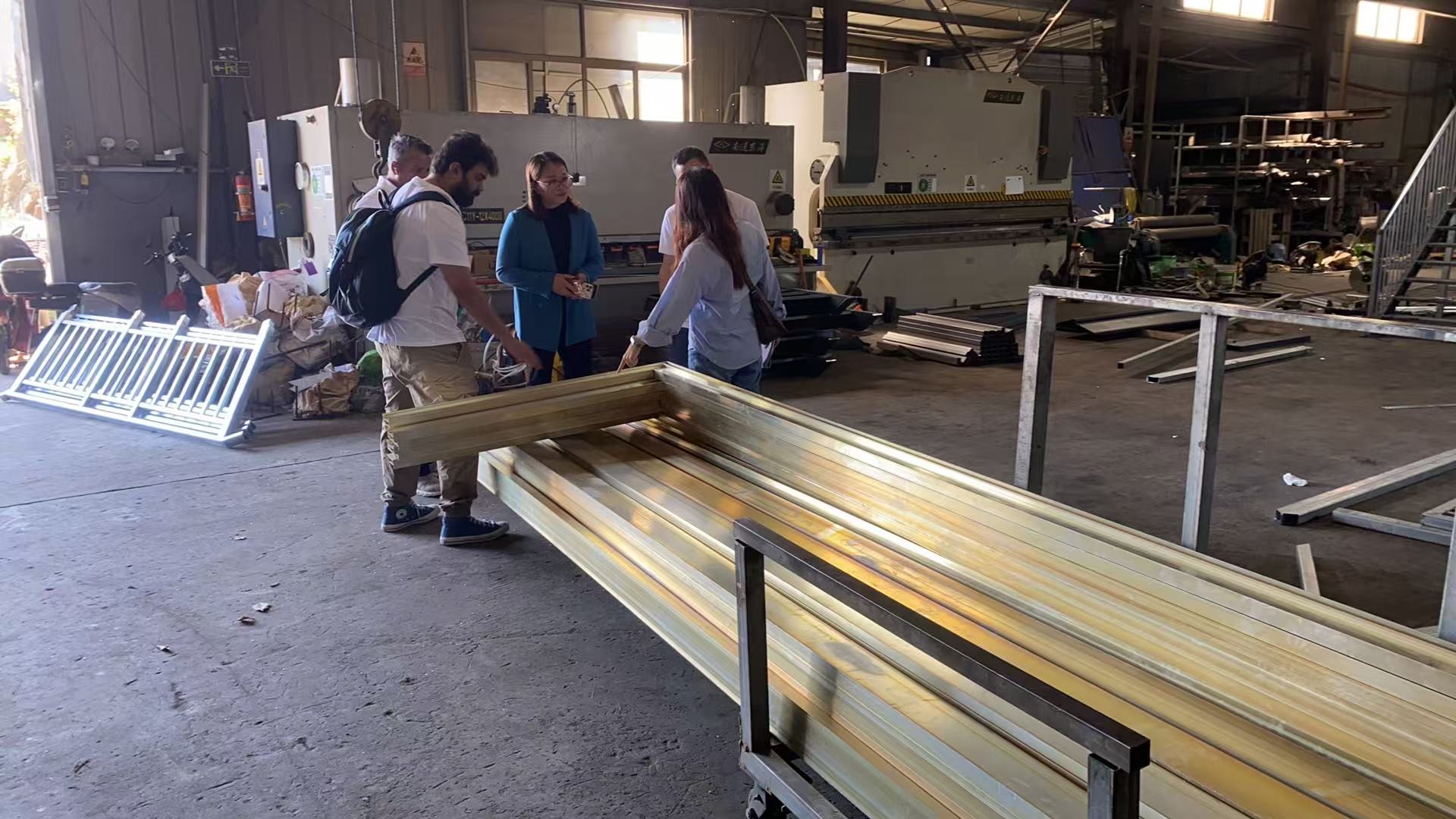
At Vionta Metal, we work with metal railing systems and related architectural products for residential and commercial applications. Our factory can coordinate stainless steel posts, fittings, handrails, and other railing components with the selected glass system.
For overseas buyers, this can also simplify communication during the quotation and production stages. Instead of discussing every component separately, the project can be reviewed as a complete railing package.
Vionta Metal can also work with project-specific dimensions and configurations when the required information is provided in advance. For contractors and distributors, this approach can make it easier to compare specifications between different suppliers.
What Should You Ask Before Approving a Glass Railing Order?
Before placing an order, do not focus only on the appearance shown in the product image. Ask practical questions about the system.
- What type of safety glass is being proposed?
- How does the selected glass behave if it breaks?
- How is the glass retained by the stainless steel system?
- How are the posts or fittings anchored to the substrate?
- What information is required to confirm the mounting method?
- Does the system need to account for wind or other project-specific loads?
- Is the stainless steel grade appropriate for the installation environment?
- Are the glass dimensions based on the actual railing layout?
- Are local building requirements being considered?
- What drawings or technical information will be supplied before production?
These questions are especially useful for distributors, builders, and purchasing teams because they help identify differences between quotations that may look similar on the surface.
What Is the Practical Answer to “Is Stainless Steel Glass Railing Safe?”
What is the practical answer to “Is stainless steel glass railing safe?” It is safe when the complete system is properly specified, engineered where required, anchored to a suitable structure, installed correctly, and maintained according to the environment.
The glass type matters because tempered and laminated glass behave differently after breakage. The stainless steel components matter because they transfer loads between the glass and the supporting structure. The anchors matter because even strong railing components cannot perform properly when the substrate or connection is inadequate.
For balconies and elevated decks, attention should be given to fall protection, glass retention, wind exposure, mounting conditions, and local requirements. For stairs, the geometry of the staircase and handrail arrangement becomes equally important.
At Vionta Metal, our goal is to make the specification process practical for contractors, architects, distributors, and project buyers. If you are planning a glass railing project, send us the railing length, required height, installation location, substrate, preferred glass type, mounting method, project location, quantity, and available drawings or photos. Our team can review the information and help you develop a suitable stainless steel and glass railing configuration for your project.
Request a project quotation from Vionta Metal and let us review your railing requirements before production.
What Are the Most Common Questions About Stainless Steel Glass Railing?
Is stainless steel glass railing safe for balconies?
Yes, when the system uses appropriate safety glazing, properly designed stainless steel components, suitable anchorage, and installation that meets the requirements of the project location. Balcony applications should also account for the height of the guard, wind exposure, substrate condition, and the behavior of the glass if it is damaged.
Is tempered or laminated glass safer for a glass railing?
Both can be used as safety glazing, but they behave differently after breakage. Tempered glass is designed to break into smaller fragments, while laminated glass uses an interlayer that helps hold broken glass together. For guard applications where retaining the barrier after breakage is important, laminated glass may be required or preferred depending on the applicable code and system design. The final selection should be based on the project rather than glass thickness alone.
Can stainless steel glass railing be used on stairs?
Yes. Stainless steel and glass can be used for stair guards and handrail systems, but stair applications require attention to the staircase angle, landing configuration, handrail position, glass panel dimensions, fixing points, and applicable safety requirements. A stair railing should be designed around the actual stair geometry instead of simply adapting a balcony railing.
How do you maintain stainless steel glass railing outdoors?
Clean the glass and stainless steel regularly with suitable cleaning products, remove dirt and salt deposits, and inspect visible fittings and connections for signs of movement or damage. Coastal installations generally require more frequent cleaning because salt and chloride deposits can accumulate on stainless steel surfaces. Avoid harsh cleaning methods that may damage the surface finish.
What should I provide when requesting a stainless steel glass railing quote?
Provide the project location, railing application, approximate railing length and height, substrate type, preferred mounting method, glass preference, stainless steel grade if specified, required quantity, and any available drawings or photographs. For stairs or projects with unusual corners and fixing conditions, drawings or site photographs are particularly useful. Vionta Metal can then review the information and prepare a more accurate product recommendation and quotation.
Related News
- Are Jalousie Windows Easy to Break Into?
- How waterproof is an aluminum louvered pergola during heavy rain, and how should its drainage capacity be tested?
- How Strong Is Aluminum Railing Compared With Steel Railing?
- How to Choose Metal Railing for Residential and Commercial Projects
- How To Remove Hard Water Stains From Glass Railings?
- Motorized or Manual Retractable Awning Which Should I Get?
Leave me a message