Are Jalousie Windows Easy to Break Into?
Jalousie windows are known for one major advantage: ventilation. Their horizontal louvers can be tilted open to let fresh air into a room while still providing shade, privacy, and a relatively open view. This makes them particularly useful in warm and humid climates, where natural airflow can make a noticeable difference to indoor comfort.
However, their construction also raises a practical security question: Are jalousie windows easy to break into?
The short answer is: older or poorly designed jalousie windows can be more vulnerable to forced entry than many modern window systems, but a well-designed modern system can significantly improve security. The important factors are not simply whether the window has louvers. Frame construction, blade retention, locking hardware, the material of the louvers, installation quality, and additional security barriers all affect the actual level of protection.
At Vionta Metal, we look at jalousie windows as a complete system rather than simply a collection of movable blades. Our approach considers the frame, operating mechanism, blade connection, locking points, drainage, ventilation, and installation together so that the window can provide both everyday airflow and practical security.
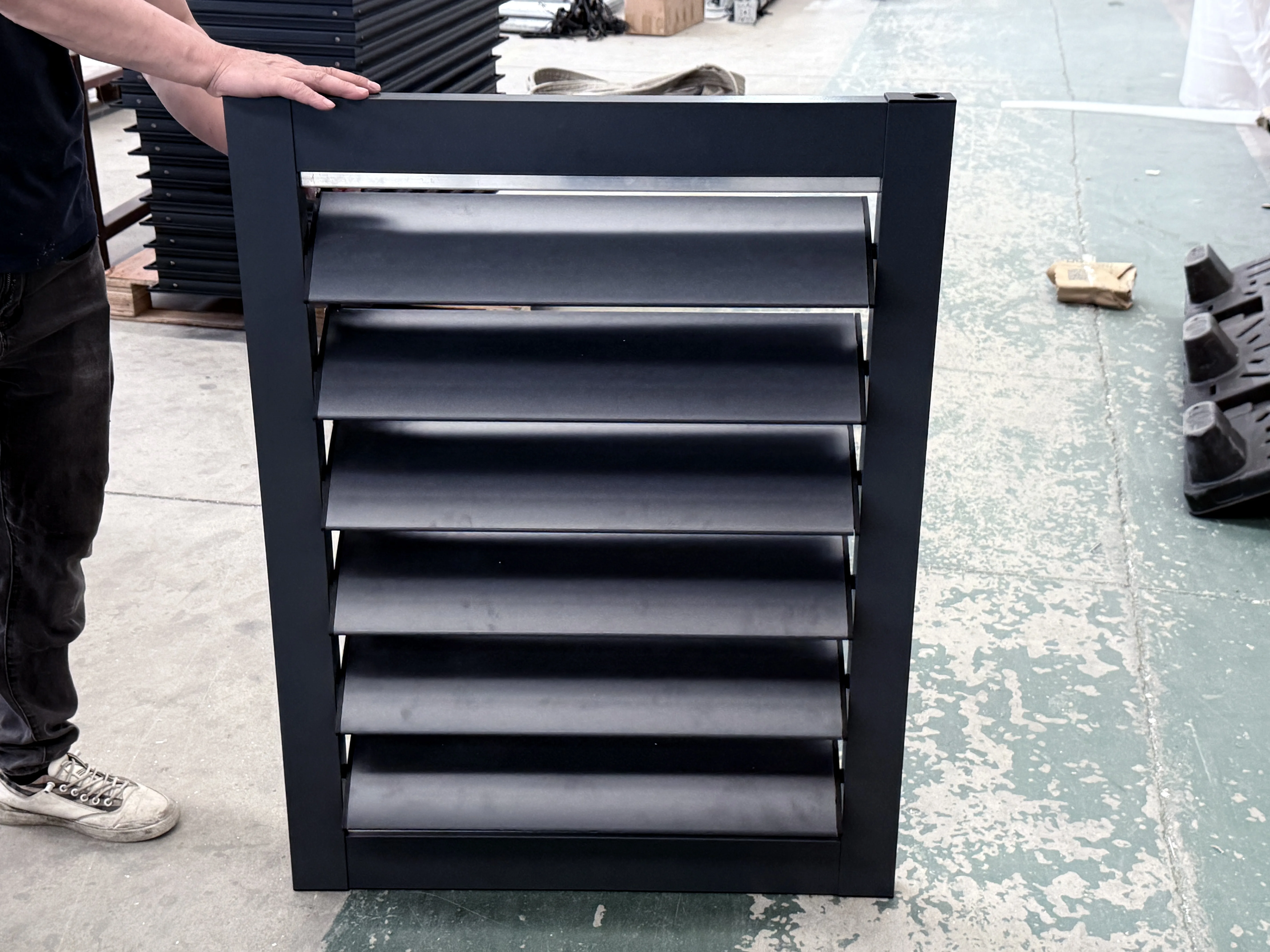
Table of Contents
- What Are Jalousie Windows and How Do They Work?
- Why Can Traditional Jalousie Windows Be Vulnerable?
- How Do Aluminum Jalousie Windows Improve Security?
- What Parts of a Jalousie Window Matter Most During a Break-In Attempt?
- Why Does the Choice of Louver Material Matter?
- How Important Are Locks and Blade Retention?
- How Does Installation Affect Jalousie Window Security?
- What Security Advantages and Limitations Should You Consider?
- How Can You Make Jalousie Windows More Secure?
- Why Are Jalousie Windows Still Used in Residential and Commercial Projects?
- How Should You Choose Jalousie Windows for a New Project?
- What Is the Bottom Line on Jalousie Window Security?
- Frequently Asked Questions About Jalousie Windows
What Are Jalousie Windows and How Do They Work?
Jalousie windows, also called louver or louvre windows, consist of multiple horizontal blades installed inside a surrounding frame. Instead of moving a single sash, the blades tilt together through an operating mechanism, allowing the user to control airflow and light.
The design is especially useful where ventilation is important. When the blades are opened, air can pass through a large portion of the window opening. When they are closed, the blades overlap to create a barrier against outdoor conditions.
A typical jalousie window includes several main components:
- An aluminum or other structural frame.
- Individual glass or aluminum louvers.
- A mechanical operator or handle.
- Blade clips, holders, or retention components.
- Locking hardware.
- Seals or gaskets where the design requires them.
- Optional insect screens or security barriers.
This construction explains both the strength and weakness of the design. A conventional fixed window has a large continuous pane surrounded by a frame. A jalousie window divides the opening into multiple independently supported louvers. Therefore, the security of the system depends heavily on how securely each blade is retained and how well the operating mechanism is protected.
Modern jalousie windows can use reinforced aluminum construction, stronger blade retention systems, and improved locking arrangements. This is an important distinction when comparing a modern aluminum system with an older residential window installed several decades ago.
Why Can Traditional Jalousie Windows Be Vulnerable?
The reputation of jalousie windows as an easy entry point largely comes from older designs. Some traditional systems used relatively simple clips and mechanical operators. If a blade could be removed or displaced without defeating the main frame, an intruder might gain access without damaging the entire window.
There are several reasons why older systems may present greater security concerns:
Individual louvers create multiple connection points
Unlike a fixed pane, a louvered window has several individual blades. Each blade must remain securely attached to the frame while the entire group moves during normal operation. If the retention system is weak, the individual connection becomes a potential vulnerability.
Older operators may provide limited resistance
A jalousie window depends on its operating mechanism to open and close the blades. A basic mechanism with limited locking capability may not provide the same resistance as a modern multi-point or reinforced locking arrangement.
Some older frames were not designed around forced-entry resistance
Historical jalousie windows were often designed primarily for ventilation, simplicity, and low-cost construction. Security requirements were not necessarily the same as those expected from modern architectural window systems.
This does not mean every jalousie window is inherently unsafe. It means that the design generation and hardware specification matter.
How Do Aluminum Jalousie Windows Improve Security?
Aluminum is widely used in modern louvered window systems because it provides a practical combination of strength, corrosion resistance, dimensional stability, and relatively low maintenance.
Well-designed aluminum jalousie windows can improve the overall security of the opening in several ways.
- Rigid frame construction: A properly engineered aluminum frame can maintain its geometry better than a poorly reinforced frame during everyday use and moderate mechanical stress.
- Secure blade retention: Modern systems can use dedicated clips, holders, or captured blade designs to reduce the possibility of individual louvers being removed.
- Stronger operating hardware: Better-quality operators can provide more controlled movement and a more secure closed position.
- Integrated security components: Some designs allow security bars, screens, or other protective elements to be incorporated into the window assembly.
- Corrosion resistance: Aluminum is useful in humid and coastal environments because the frame does not rely on conventional steel that may require frequent corrosion protection.
For project buyers, the key point is that aluminum itself does not automatically make a jalousie window secure. Security comes from the complete engineering of the frame, blades, hardware, retention system, and installation.
Our factory evaluates these components together when developing window solutions for different project requirements. At Vionta Metal, we also pay attention to the relationship between ventilation and security rather than treating them as separate features.
What Parts of a Jalousie Window Matter Most During a Break-In Attempt?
When assessing the security of jalousie windows, it is useful to look at the system component by component rather than asking whether the window is simply “strong” or “weak.”
| Component | Why It Matters |
| Frame | The frame supports the louvers and transfers loads into the surrounding wall. A rigid, properly anchored frame is important for overall stability. |
| Louver blades | The blade material influences resistance to impact and deformation. Aluminum and safety-oriented glass options can provide different performance characteristics. |
| Blade retention | The connection between each blade and the frame determines whether the louver remains securely captured during normal use or attempted interference. |
| Operator | The operating mechanism controls the blades. A stronger mechanism can provide better control and more reliable closing. |
| Lock | The lock helps prevent unauthorized operation from the accessible side of the window. |
| Anchoring | Even a well-designed window can perform poorly if it is incorrectly anchored to the building structure. |
| Additional security barrier | Security screens, grilles, or other barriers can provide another physical layer where higher security is required. |
For this reason, comparing windows only by blade material is not enough. A strong aluminum blade installed in a weak frame with inadequate retention is not a complete security solution.
Why Does the Choice of Louver Material Matter?
The louver material is one of the most visible differences between jalousie window systems. Glass has traditionally been popular because it allows daylight and visibility to pass through the opening. Aluminum louvers provide a different balance between privacy, durability, appearance, and security considerations.
Glass louvers
Glass provides a clean appearance and allows natural light into the room. However, ordinary glass can break when subjected to sufficient impact. For projects where security is a major concern, the specific type and configuration of glass should therefore be discussed with the window manufacturer.
Safety-oriented glass products can change the way a window behaves when damaged, but glass selection should always be matched to the applicable building code and project requirements.
Aluminum louvers
Aluminum louvers do not have the same breakage behavior as glass. They can also provide greater visual privacy and can be formed as reinforced blades depending on the system design.
This is one reason aluminum jalousie windows can be attractive for projects where ventilation needs to coexist with durability and controlled access.
At Vionta Metal, our product development focuses on creating a practical balance between airflow, durability, appearance, and security rather than assuming that one blade material is appropriate for every building.
How Important Are Locks and Blade Retention?
Locks and blade retention are two of the most important details in a jalousie window.
A lock prevents the operator from being easily manipulated from the accessible side. Blade retention, meanwhile, determines whether the individual louvers remain securely connected to the frame.
For a security-conscious project, buyers should ask several practical questions:
- How are individual louvers retained inside the frame?
- Can the blades be removed without accessing the interior of the building?
- Does the closed position mechanically restrict blade movement?
- Is the operating mechanism designed for repeated use?
- Does the window have a dedicated locking point?
- Can additional security hardware be incorporated into the design?
- Are the components suitable for the intended environmental conditions?
These questions are often more useful than simply asking whether a product is advertised as “high security.” A manufacturer should be able to explain how the security features work and what they are designed to achieve.
How Does Installation Affect Jalousie Window Security?
Even a well-engineered window can become a weak point if it is poorly installed.
The surrounding wall, fixing method, frame alignment, fasteners, and installation tolerances all influence how effectively the window performs. A frame that is not properly anchored may move independently of the building when subjected to force. Misalignment can also interfere with the normal operation and locking of the louvers.
For project installations, we recommend paying attention to:
- Correct opening dimensions before fabrication.
- Proper frame alignment.
- Suitable corrosion-resistant fasteners.
- Secure anchoring to the surrounding structure.
- Correct adjustment of the operating mechanism.
- Verification that all louvers close evenly.
- Inspection of locks and retention components after installation.
For commercial and residential projects, installation should follow the manufacturer's instructions and applicable local building requirements. Where a project has specific forced-entry, impact, hurricane, or security requirements, the relevant tested system should be selected rather than relying on a general product description.
What Security Advantages and Limitations Should You Consider?
Jalousie windows have a distinctive combination of benefits and limitations. Understanding both sides makes it easier to decide whether they are appropriate for a particular project.
| Factor | Potential Advantage | Potential Limitation |
| Ventilation | Large portions of the opening can be used for airflow. | The same open design requires careful consideration of security when the window is left open. |
| Aluminum construction | Rigid, corrosion-resistant and relatively easy to maintain. | Security still depends on the complete system design. |
| Individual louvers | Easy control of airflow and light. | Each blade requires reliable retention. |
| Glass louvers | Good daylight transmission and visibility. | Glass can break under sufficient impact unless a suitable safety glazing system is specified. |
| Aluminum louvers | Durable and useful where privacy and physical durability are priorities. | They can reduce transparency compared with clear glass. |
| Security hardware | Additional retention, locks, grilles, or screens can improve protection. | Additional components may affect appearance, cost, or emergency egress requirements. |
The right decision therefore depends on the building, location, accessibility of the window, and the level of security required.
How Can You Make Jalousie Windows More Secure?
If a property already has jalousie windows, several practical measures can improve security without necessarily replacing the entire system.
1. Keep accessible windows properly closed
An open window is naturally easier to access than a closed and locked one. Ground-level windows, windows near balconies, and windows hidden from public view deserve particular attention.
2. Inspect the blade retention system
Check whether individual louvers remain firmly captured in their intended position. Loose or damaged clips should not be ignored.
3. Upgrade the locking hardware where appropriate
If the existing operator or lock is worn, a compatible security upgrade may provide better control. The replacement hardware should be suitable for the specific window system rather than selected only by appearance.
4. Consider security screens or grilles
Where ventilation is important but security requirements are higher, a properly designed security barrier can provide an additional layer of protection while allowing the window to remain functional.
5. Consider replacing outdated systems
If an old jalousie window has loose blades, damaged frames, poor locking hardware, or obsolete retention components, replacement may make more sense than repeatedly repairing individual parts.
6. Consider the entire opening
A secure window should not be evaluated separately from the wall, surrounding structure, and access conditions. Security is a system-level issue.
Why Are Jalousie Windows Still Used in Residential and Commercial Projects?
Despite concerns about older designs, jalousie windows remain useful because they solve a problem that many conventional windows do not solve as efficiently: controlled natural ventilation.
They are particularly suitable for:
- Warm-climate residential buildings.
- Bathrooms and utility areas where ventilation is important.
- Sunrooms and enclosed outdoor spaces.
- Commercial buildings requiring passive airflow.
- Hospitality projects in tropical or subtropical regions.
- Projects where adjustable airflow is more important than a completely sealed window.
The ability to adjust the blades allows occupants to control the amount and direction of airflow without opening a large sash. This can be valuable in climates where fresh air is desirable throughout much of the year.
Modern systems can also combine ventilation with insect screens, improved weather control, stronger frames, and security-oriented components.
Our team at Vionta Metal works with project buyers who need window solutions that fit specific architectural and environmental requirements. Instead of treating ventilation and security as competing objectives, we consider how the complete window assembly can address both.
How Should You Choose Jalousie Windows for a New Project?
If security is one of the priorities for your project, do not choose a jalousie window solely from a product photograph or a basic material description.
A more practical purchasing process is to evaluate the following points:
Start with the location
Determine whether the window will be installed on the ground floor, upper floors, a balcony, a bathroom, a commercial space, or another location with different accessibility requirements.
Define the ventilation requirement
One of the main reasons to choose jalousie windows is airflow. Decide how much natural ventilation the room needs and whether the window will normally remain partially open.
Choose the louver material
Glass and aluminum offer different visual and functional characteristics. Aluminum may be preferable where durability, privacy, and physical robustness are important, while glass may be preferred where daylight and visibility are priorities.
Ask about blade retention
This is a critical but sometimes overlooked question. Ask the supplier how the louvers are held in the frame and whether the design prevents unintended removal.
Examine the locking mechanism
Find out how the window locks when fully closed and whether the locking system is appropriate for the intended application.
Review installation requirements
A manufacturer should provide sufficient information for the installer to understand how the frame should be anchored and adjusted.
Ask for project-specific performance information
If your project has requirements for wind resistance, impact resistance, forced-entry resistance, water penetration, or other performance categories, ask for documentation applicable to the actual window system. Do not assume that one test result automatically applies to every configuration.
At Vionta Metal, we believe this project-specific approach gives architects, contractors, distributors, and property developers a clearer basis for product selection.
What Is the Bottom Line on Jalousie Window Security?
So, are jalousie windows easy to break into?
Older jalousie windows can be more vulnerable to forced entry, particularly when they use weak blade retention, basic operators, damaged frames, or inadequate locks. Modern jalousie windows can be considerably more secure when the frame, louvers, retention system, locking hardware, and installation are designed as one complete assembly.
The most important lesson is not to judge a jalousie window by its name alone. Security depends on the details.
For a new project, look at the frame construction, blade material, blade retention, operating mechanism, locking arrangement, anchoring method, and any additional security barrier required by the building. For an existing property, inspect the condition of these same components before deciding whether repair, hardware upgrades, or full replacement is the most appropriate solution.
Vionta Metal provides aluminum-based window solutions for residential and commercial applications, with attention to ventilation, durability, appearance, and practical project requirements. If you are sourcing jalousie windows for a villa, apartment, hotel, commercial building, or another construction project, contact our team with your opening dimensions, application, preferred blade material, and security requirements. We can help you evaluate a suitable configuration and discuss OEM or project-specific requirements directly with our factory.
Frequently Asked Questions About Jalousie Windows
1. Are jalousie windows easy to break into?
Older jalousie windows can be relatively vulnerable if their individual louvers can be removed, their frames are weak, or their locking mechanisms provide limited resistance. Modern systems can reduce these vulnerabilities through stronger frames, secure blade retention, improved locks, and additional security barriers. The actual security level therefore depends on the specific design rather than the word “jalousie” alone.
2. Are aluminum jalousie windows more secure than glass jalousie windows?
Aluminum louvers can provide a different security profile because they do not break in the same way as glass. They can also provide greater privacy and physical durability. However, aluminum does not automatically make a window secure. The frame, blade retention, operating mechanism, locks, installation, and surrounding structure all influence forced-entry resistance. For higher-security applications, the complete system should be evaluated rather than comparing materials alone.
3. Can jalousie windows be secured without replacing them?
In some cases, yes. Existing windows may be improved with compatible locking hardware, replacement retention clips, security screens, grilles, or other barriers. The appropriate solution depends on the condition and design of the existing window. If the frame is damaged or the original blade-retention system is fundamentally weak, complete replacement may provide a more reliable long-term solution.
4. Are jalousie windows suitable for ground-floor rooms?
They can be used on ground-floor rooms, but security should receive more attention because the window is directly accessible from outside. A suitable system should have secure blade retention, reliable locking hardware, proper frame anchoring, and any additional security barrier required for the property. The window should also be kept properly closed and locked when the building is unattended.
5. How can I choose secure jalousie windows for a commercial or residential project?
Start by identifying the project's location, ventilation requirements, accessibility, environmental conditions, and security expectations. Then evaluate the frame, louver material, blade-retention method, operator, lock, installation method, and available performance documentation. For projects with specific wind, impact, or forced-entry requirements, ask the manufacturer for test information applicable to the exact configuration being proposed. A supplier such as Vionta Metal can also review project dimensions and application requirements before production so the window specification is based on the actual building conditions rather than a generic product description.
Related News
- Is Stainless Steel Glass Railing Safe?
- How waterproof is an aluminum louvered pergola during heavy rain, and how should its drainage capacity be tested?
- How Strong Is Aluminum Railing Compared With Steel Railing?
- How to Choose Metal Railing for Residential and Commercial Projects
- How To Remove Hard Water Stains From Glass Railings?
- Motorized or Manual Retractable Awning Which Should I Get?
Leave me a message