How Do Stainless Steel Railing Systems Meet Modern Architectural Safety Standards?
Article Summary
Stainless steel railing systems have become a core architectural element in residential, commercial, and public infrastructure projects worldwide. This article explains how stainless steel railing solutions are engineered to meet safety regulations, structural requirements, and aesthetic expectations. It provides a detailed overview of product parameters, material specifications, installation logic, and application scenarios.

Table of Contents
- 1. How Is Stainless Steel Railing Defined in Architectural Applications?
- 2. How Are Stainless Steel Railing Parameters Engineered for Performance?
- 3. How Do Stainless Steel Railing Systems Perform Across Different Use Scenarios?
- 4. How Will Stainless Steel Railing Evolve with Future Building Trends?
1. How Is Stainless Steel Railing Defined in Architectural Applications?
Stainless steel railing refers to a modular or custom-fabricated barrier system primarily composed of stainless steel posts, handrails, infill components, and mounting accessories. These systems are installed along staircases, balconies, terraces, ramps, corridors, and elevated platforms to provide fall protection, guidance, and spatial definition.
In contemporary construction, stainless steel railing is valued for its mechanical strength, corrosion resistance, dimensional stability, and compatibility with diverse architectural styles. Unlike painted carbon steel or timber alternatives, stainless steel railing systems maintain structural integrity and surface consistency under long-term exposure to moisture, temperature fluctuations, and mechanical stress.
From a regulatory perspective, stainless steel railing solutions are typically designed to comply with international and local building codes, including load-bearing requirements, height standards, and spacing limitations. This compliance makes them suitable for high-traffic public environments as well as private residential projects.
2. How Are Stainless Steel Railing Parameters Engineered for Performance?
The performance of a stainless steel railing system is determined by a combination of material grade, structural geometry, surface treatment, and connection design. These parameters are specified during the engineering phase to ensure safety, durability, and installation efficiency.
| Parameter | Specification Range | Technical Explanation |
|---|---|---|
| Material Grade | SS304 / SS316 | SS304 is commonly used for indoor and low-corrosion environments, while SS316 offers enhanced resistance to chlorides and marine exposure. |
| Post Diameter | 38 mm – 50.8 mm | Determines load resistance and visual proportion; larger diameters are used for public or high-load applications. |
| Handrail Profile | Round / Square / Rectangular | Profile selection affects ergonomics, grip comfort, and design compatibility. |
| Surface Finish | Satin / Brushed / Mirror Polished | Surface treatment impacts corrosion resistance, maintenance frequency, and aesthetic perception. |
| Mounting Method | Top Mount / Side Mount | Installation method influences structural load transfer and usable floor space. |
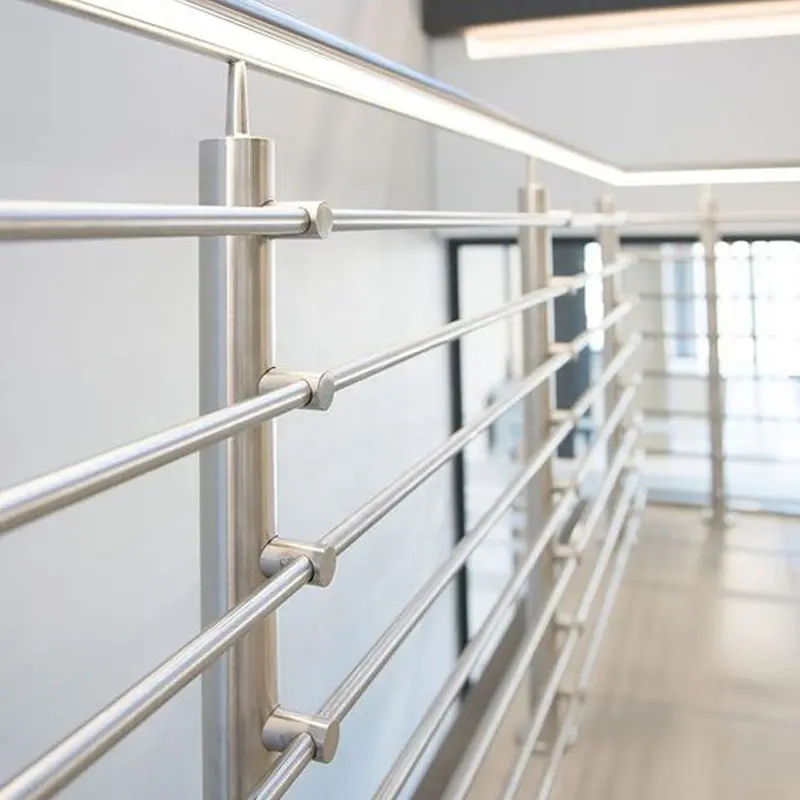
| Infill Options | Cable / Glass / Rod | Infill configuration defines visibility, safety spacing, and design intent. |
Each parameter is selected based on site conditions, regulatory constraints, and client expectations. Engineering calculations are often conducted to validate load-bearing capacity under static and dynamic forces.
3. How Do Stainless Steel Railing Systems Perform Across Different Use Scenarios?
Stainless steel railing systems demonstrate consistent performance across a wide range of architectural environments due to their adaptable modular design and robust material properties.
Residential Buildings
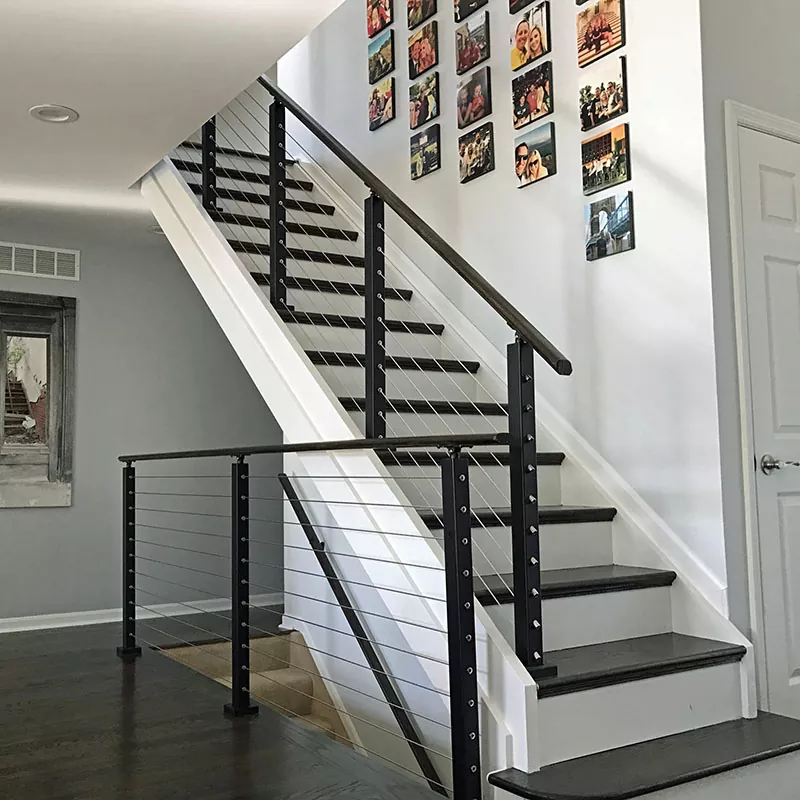
In residential applications, stainless steel railing is commonly installed on staircases, balconies, and terraces. The material provides a balance between visual openness and safety compliance, particularly when combined with glass or cable infill systems.
Commercial and Public Spaces
Shopping centers, office buildings, airports, and hospitals rely on stainless steel railing for its ability to withstand high pedestrian traffic while maintaining a clean and professional appearance. The non-porous surface supports hygiene requirements and simplifies routine maintenance.
Industrial and Infrastructure Projects
In industrial facilities and infrastructure projects such as bridges and platforms, stainless steel railing systems are specified for their resistance to chemicals, weather exposure, and mechanical impact. Structural integrity remains stable over extended service life cycles.
Common Questions About Stainless Steel Railing
Q: How does stainless steel railing resist corrosion over time?
A: Stainless steel contains chromium, which forms a passive oxide layer on the surface. This layer self-repairs when damaged, providing continuous protection against oxidation and corrosion.
Q: How is load capacity calculated for stainless steel railing systems?
A: Load capacity is calculated based on post spacing, material thickness, mounting method, and applicable building codes. Engineering analysis ensures the system can withstand horizontal and vertical forces.
Q: How does stainless steel railing compare with aluminum railing in durability?
A: Stainless steel generally offers higher tensile strength and better resistance to impact and abrasion, making it suitable for demanding environments where long-term structural reliability is required.
4. How Will Stainless Steel Railing Evolve with Future Building Trends?
The future development of stainless steel railing systems is closely aligned with broader architectural and construction trends. Increasing emphasis on sustainable materials, modular construction, and prefabrication is driving innovation in railing design.
Advanced fabrication technologies, such as CNC machining and precision welding, are enabling tighter tolerances and more complex geometries. At the same time, surface treatment processes are evolving to enhance scratch resistance and reduce maintenance requirements.
Digital design integration, including Building Information Modeling (BIM), is also influencing how stainless steel railing systems are specified and coordinated within larger construction projects. This integration improves accuracy, reduces on-site adjustments, and supports lifecycle cost analysis.
As urban density increases and safety regulations become more stringent, stainless steel railing will continue to serve as a reliable architectural solution that balances compliance, longevity, and visual clarity.
Within this evolving landscape, manufacturers and suppliers such as Vionta focus on delivering stainless steel railing solutions that align with international standards while addressing project-specific requirements. Through material selection expertise and consistent quality control, stainless steel railing systems can be adapted to diverse architectural visions.
For project consultation, technical specifications, or customized stainless steel railing solutions, interested parties are encouraged to contact us to discuss application requirements and engineering considerations in detail.
Related News
- Are Jalousie Windows Easy to Break Into?
- Is Stainless Steel Glass Railing Safe?
- How waterproof is an aluminum louvered pergola during heavy rain, and how should its drainage capacity be tested?
- How Strong Is Aluminum Railing Compared With Steel Railing?
- How to Choose Metal Railing for Residential and Commercial Projects
- How To Remove Hard Water Stains From Glass Railings?
Leave me a message