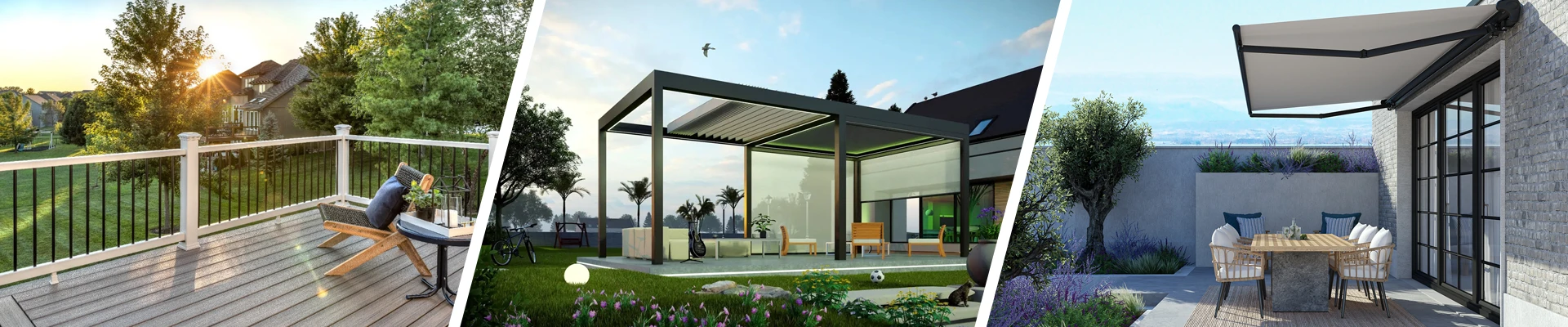
Aluminium Awnings for Residential and Commercial Solutions
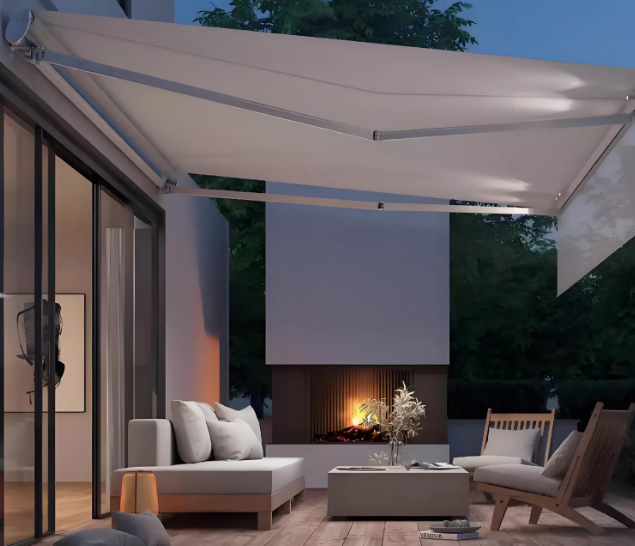
Aluminium awnings are outdoor sunshades and rainproof devices made with high-strength aluminum alloy frames, commonly installed on doors, windows, balconies, or shop entrances. They are lightweight, durable, rust-free, weather-resistant, modern in appearance, and easy to install. Effectively blocking sunlight, UV rays, and rain, they are ideal for residential and commercial buildings.
Vionta offers a variety of customizable awnings in different styles and finishes, providing sun, rain, and wind protection while maximizing space utilization! Vionta's high-quality awnings and pergolas are the perfect shading solution for your property, providing year-round sun and rain protection for commercial and residential outdoor areas!
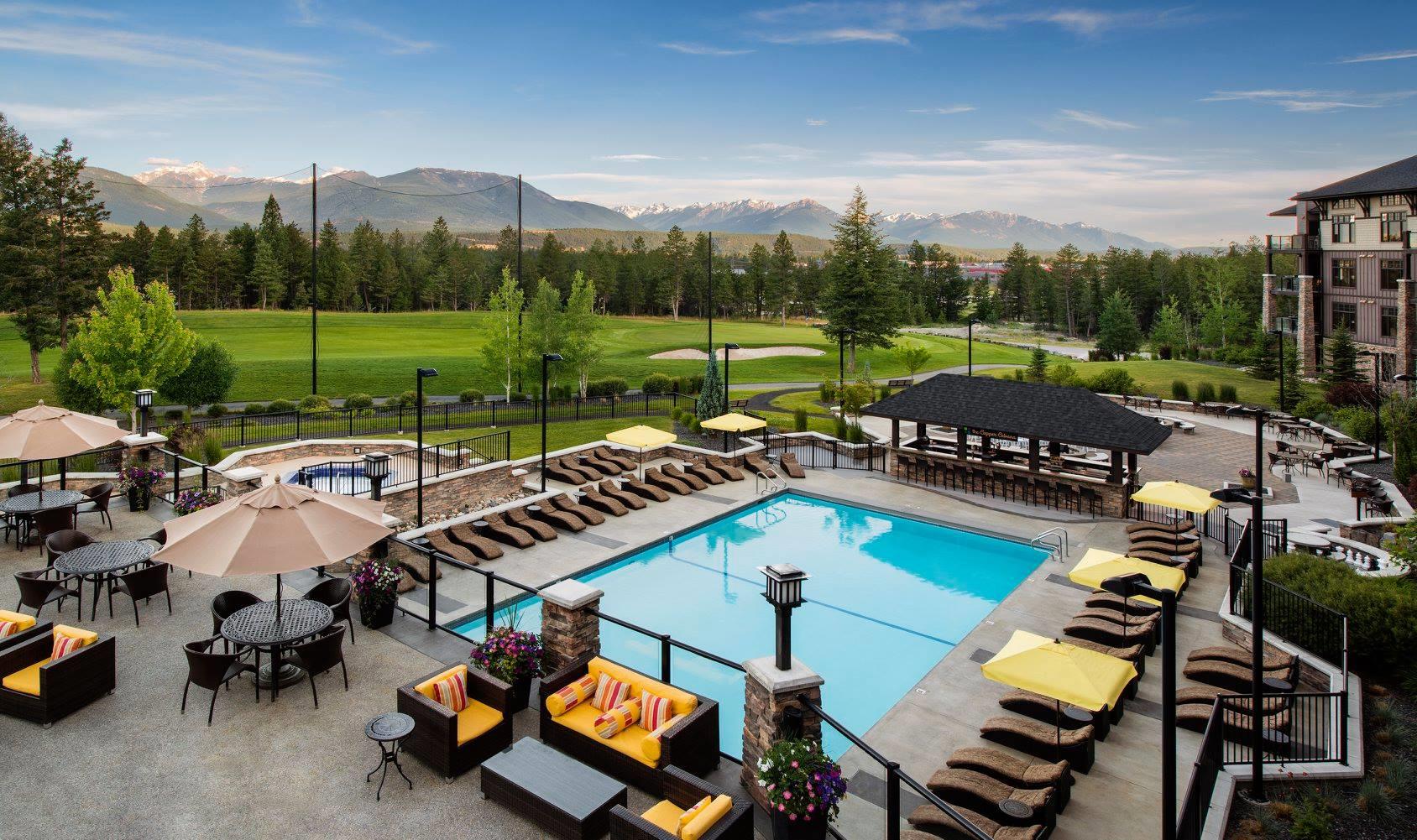
For residential applications, you can retract the awning at any time to enjoy the sunshine, and deploy it in inclement weather to protect your patio furniture without worrying about damage. With their unique style, sophisticated and simple design, and cutting-edge technology, Vionta's high-end awnings are also suitable for hotels, resorts, restaurants, and other commercial venues, ensuring your customers can fully enjoy their time outdoors.
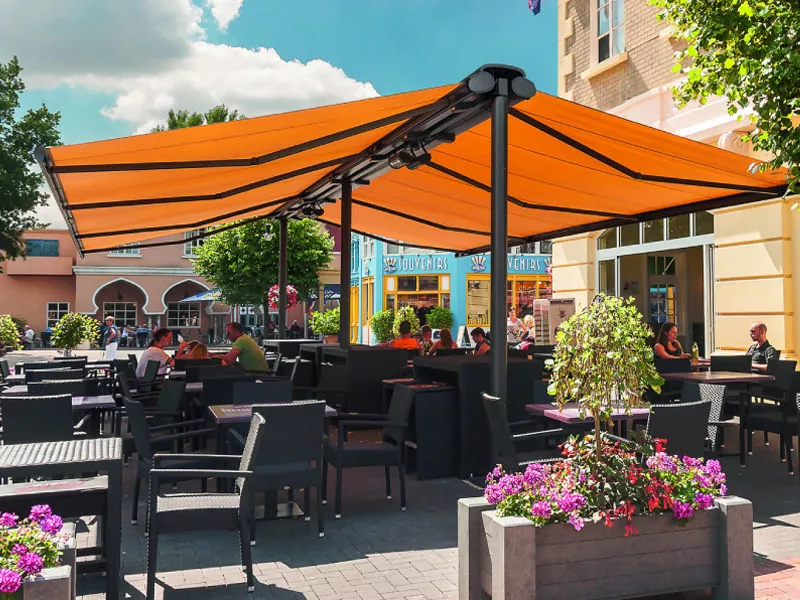
Therefore, installing a covered shading system for your building is not only a protection for the building itself, but also an important step in providing a comfortable environment for customers and employees. With a suitable shading system, employees and customers can enjoy sheltered, supportive seating and relaxation spaces for more of the year.
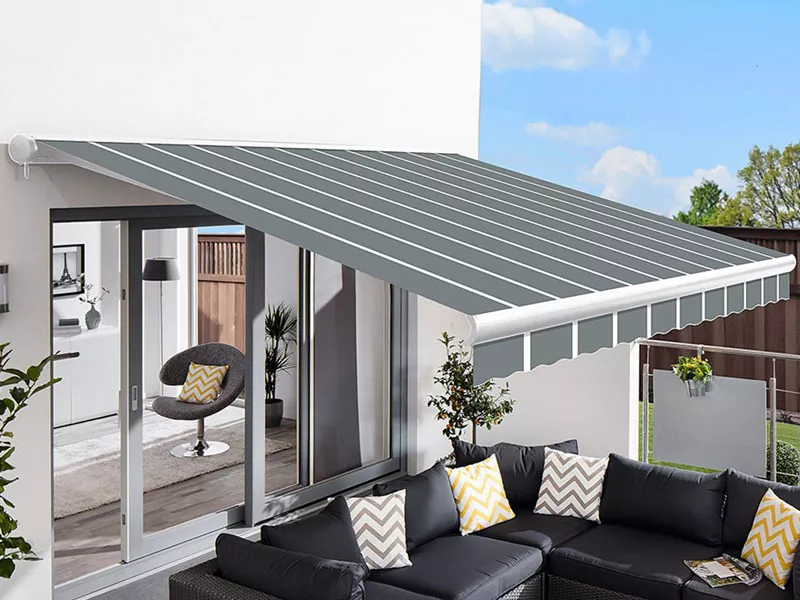
As a professional awning manufacturer and supplier in China, we provide manual and motorized awnings for almost all types of businesses and residences. Whether it's a building attached to a solid wall or a self-supporting system requiring a custom frame, we can tailor the most suitable shading solution for you with our excellent products and innovative solutions. Vionta offers a wide range of heavy-duty durable awnings—commercial awnings, motorized louvered awnings, manual and motorized awnings, remote-controlled aluminum awnings, outdoor fabric awnings, motorized patio awnings, garden awnings, motorized remote-controlled awnings, patio motorized awnings, European-style pergola awnings, and more.
- View as
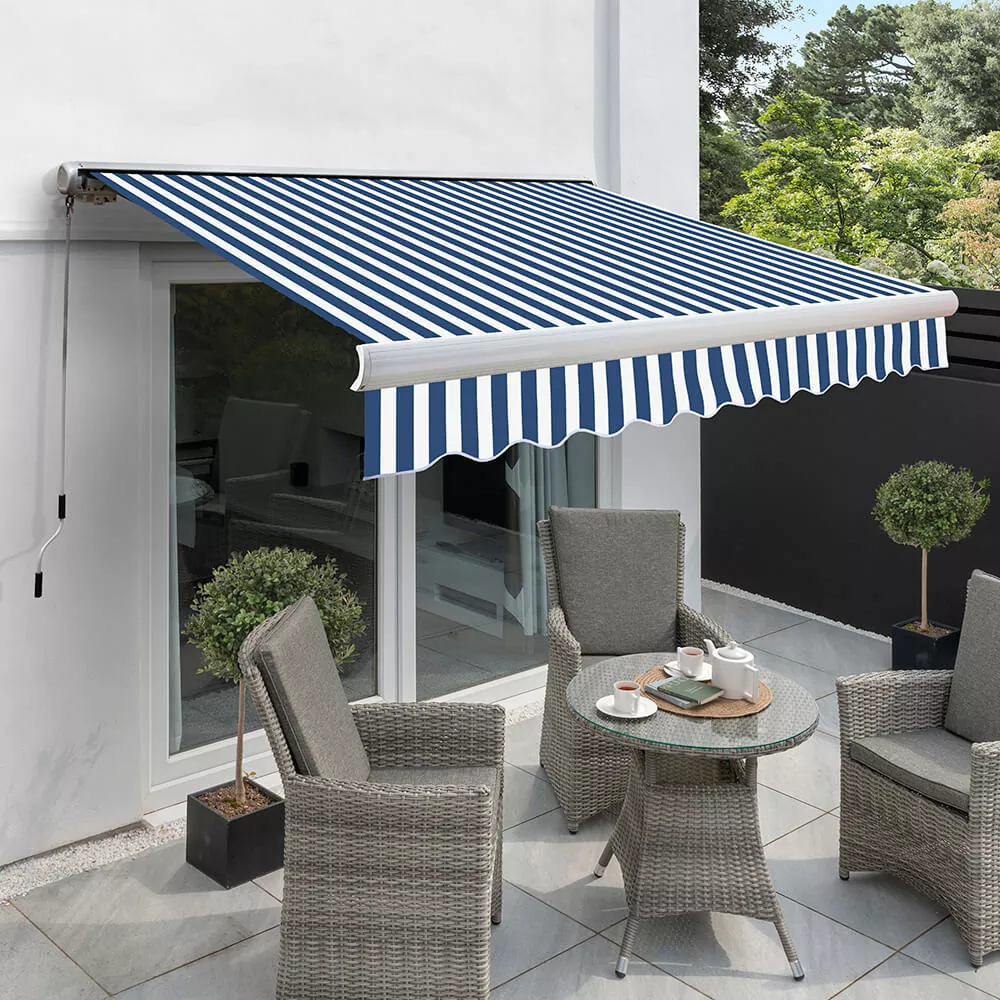
Waterproof Retractable Awning
As a China Factory with years of expertise in the shading industry, we deeply understand the core pain points of overseas buyers when selecting Waterproof Retractable Awning: not only must they block sunlight but also withstand unpredictable rainy weather; they demand not only aesthetics but also structural stability and intelligent operation.

Electric Awning For Patio
Awnings are not just for shelter from rain. The Electric Awning For Patio developed by Vionta solves the problem of outdoor space being limited by weather through the combination of high tension brackets and sunshade tarpaulins. Users can adjust the coverage range freely through remote control or intelligent control.
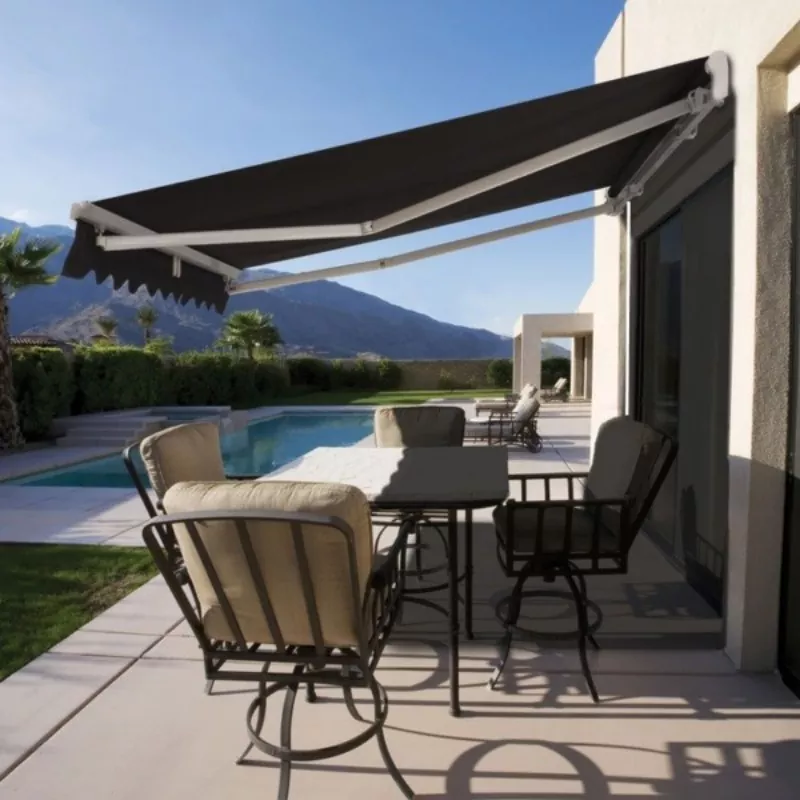
Outdoor Folding Arm Awning
Outdoor Folding Arm Awnings are the perfect choice for shielding a balcony or patio from the sun, heat and bad weather. Combining sleek design, high performance and lasting resistance, Vionta from China will ideally complete your awning, whatever its size or model.
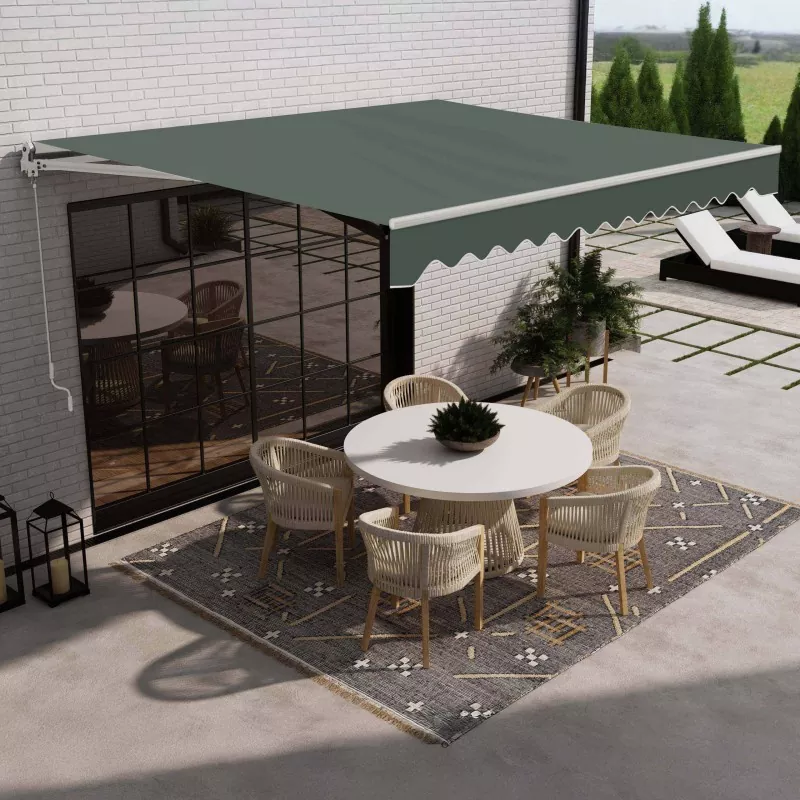
Manual Retractable Awnings
Among the many sunshade products, the Manual Retractable Awnings have become one of the most popular outdoor sunshade options for homes and commercial spaces due to its simple structure, ease of use, durability, and cost-effectiveness.
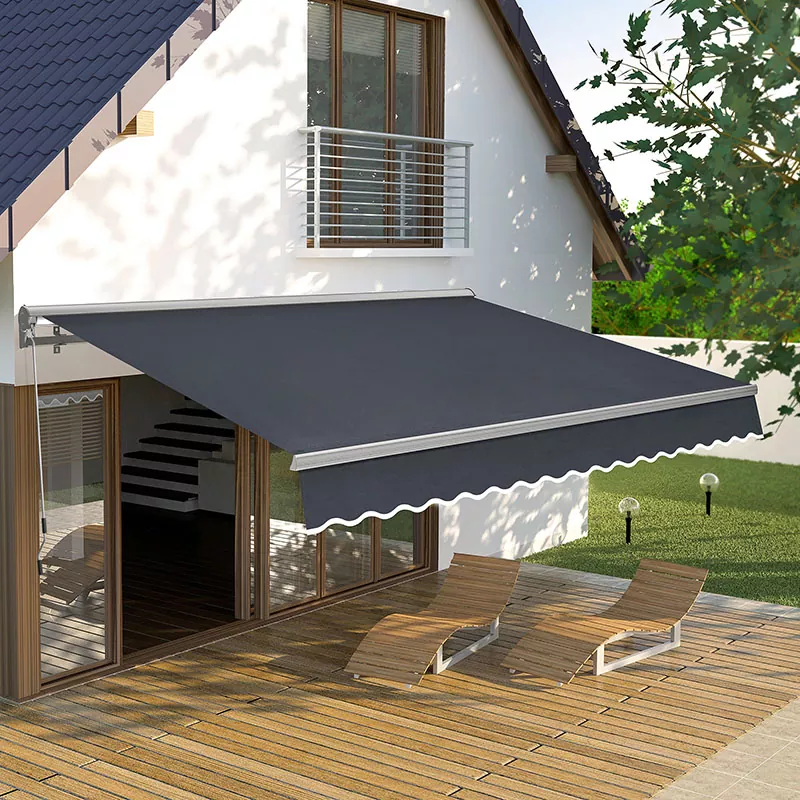
Folding Arm Awning
As one of China's leading manufacturers of outdoor sunshade products, Vionta specializes in designing and producing high-quality folding arm awnings.
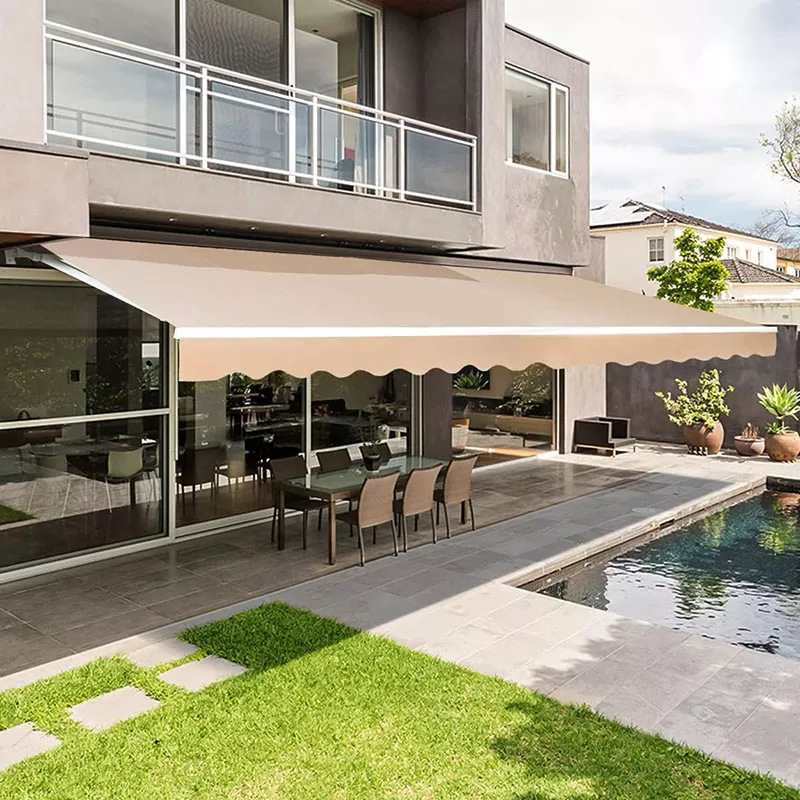
Retractable Awning For Deck
Have you ever been unable to fully enjoy this outdoor space that should be filled with laughter due to the scorching sun when the warm sunshine shines on the terrace? As a professional Retractable Awning For Deck manufacturer in China, Vionta has launched the retractable awning series of products designed specifically for deck, based on years of research and production experience. We are committed to helping you turn your deck into a comfortable and stylish outdoor living area through innovative design, high-quality materials, and exquisite craftsmanship.
What Is an Aluminum Retractable Awning?
A retractable awning is an overhead shade and weather cover that extends out from a wall-mounted housing when needed and retracts back into that housing when not in use. The key difference from a fixed awning is that the covering can be stored away — which protects the fabric from UV degradation and wind damage during periods when the awning is not required, and allows the area below to receive full sunlight when that is preferred.
In an aluminum retractable awning, the cassette housing, front bar, lateral arms, and wall bracket assembly are all made from aluminum extrusions — typically 6063-T5 alloy, powder coated or anodized. The covering material stretched across the extended arms is a coated fabric, most commonly solution-dyed acrylic canvas, which resists water penetration and UV fading while remaining flexible enough to roll or fold into the cassette housing on retraction.
The retraction mechanism is either manual — operated by a hand crank or spring-loaded push-pull system — or motorized, using a 12V DC tubular motor inside the roller tube, controlled by a wall switch or RF remote. Motorized systems can also be connected to sun and wind sensors for automatic extension and retraction based on weather conditions.
On aluminum frame construction: The structural performance of a retractable awning depends heavily on the aluminum profile wall thickness and the joint design at the arm-to-front-bar and arm-to-wall-bracket connections. Vionta Metal uses 6063-T5 aluminum extrusions with minimum 1.4mm wall thickness for arm sections and 1.8mm for front bar and cassette housing profiles. These are thicker than entry-level product, and the difference is visible in reduced arm deflection under wind load and longer service life at the pivot joints.
6m
Maximum standard width per unit from our factory
3.5m
Maximum standard projection (arm extension depth)
200+
Fabric colours and patterns available in our standard range
20+
Countries supplied with full export documentation
Arm Configurations — How Lateral Arms Work and What to Specify
The lateral arm is the mechanical element that carries the front bar and fabric outward from the wall as the awning extends, and folds back as it retracts. The arm design determines how flat the fabric lies when extended, how well it handles wind load, and how it returns to the cassette on retraction. There are three arm configurations commonly available from Vionta Metal's China factory.
Standard Articulated Arm
A two-section arm with a central elbow joint. When extended, the outer arm section angled slightly downward from the elbow creates a small pitch on the fabric — typically 10°–14° from horizontal — which helps water run off the front of the awning when it rains. The elbow tension spring holds the arm in position and keeps the fabric taut. This is the most common arm type for residential patio awnings.
Semi-Rigid Arm
A single rigid arm section with a fixed elbow angle — no articulated joint. Simpler construction and lower cost than an articulated arm. The fabric pitch is fixed at production, determined by the arm angle. Less flexible in terms of installation adjustment, but mechanically simpler with fewer wear points over its service life. Suitable for budget retractable awning products and high-volume supply.
Telescopic Arm
The arm extends via an inner and outer tube sliding against each other, increasing projection range without increasing the retracted arm length. Useful for cassette installations with limited wall height above the mounting point where a standard arm would foul the cassette housing on retraction. Less common than articulated arms; primarily used in space-constrained commercial installations.
Arm Tension and Fabric Pitch
The tension of the elbow spring in an articulated arm determines how taut the fabric is held when the awning is extended. Too little tension and the fabric sags at the center, creating a water-pooling problem in rain. Too much tension and the arm runs against the cassette slot on retraction, causing wear. Vionta Metal sets arm tension to a calibrated standard during factory assembly, and the adjustment bolt is accessible from the underside of the arm elbow for field adjustment after installation if the fabric stretch settles over time.
The fabric pitch — the angle between the front bar and the wall — affects both drainage and user experience. A steeper pitch (closer to 20°) sheds rain effectively but reduces headroom at the front bar. A flatter pitch (closer to 10°) improves headroom but requires a higher-quality water-resistant fabric to prevent pooling under heavy rain. Vionta Metal's standard installation pitch is 12°–15°, which balances drainage and headroom for most residential applications.
Manual vs Motorized Drive — Comparison for Buyers
Whether to specify manual or motorized drive on a retractable awning is one of the first decisions buyers and their customers make. The following comparison covers the practical considerations from both a product specification and an end-user perspective.
| Factor | Manual Drive (Crank) | Motorized Drive (12V DC) |
| Operation | Hand crank inserted into wall bracket socket; typically 8–15 turns to fully extend or retract | Wall switch, RF remote, or smartphone app depending on motor and controller |
| Power Required | None | 12V DC — either from a 240V transformer or 12V low-voltage supply |
| Suitable Width | Up to approximately 4m wide for comfortable manual operation | Any width; wide units typically use a single higher-torque motor or dual motors |
| Automation Options | None — user must physically extend and retract | Sun sensor, wind sensor, rain sensor, and timer-based scheduling available |
| Wind Safety | User responsible for manual retraction before strong wind | Wind sensor can trigger automatic retraction when wind exceeds threshold — typically 36–50 km/h |
| Failure Mode | Crank mechanism wear; crank rod can be replaced independently | Motor or receiver fault; manual override typically available on tubular motors |
| Unit Cost | Lower | Higher — motor, receiver, and remote add approximately 20–35% to unit cost depending on motor brand |
| Maintenance | Crank rod storage; arm pivot lubrication every 2–3 years | Motor is sealed and maintenance-free; receiver and remote battery replacement as needed |
| Typical Buyer Profile | Residential builders, hardware distributors, cost-sensitive projects | Architects, premium residential, hospitality, and commercial projects |
On wind sensors: A wind sensor for a motorized retractable awning is not a luxury feature — fabric awnings extended in wind above approximately 40–50 km/h are at risk of arm joint failure or fabric tear. For commercial installations and any motorized awning in an exposed location, specifying a wind sensor alongside the motor is the correct decision. Vionta Metal supplies wind sensors compatible with our standard motor and receiver configuration.
Motor Specification — What to Check
The two motor parameters that matter most for retractable awnings are torque (Nm) and RPM. Torque must be sufficient to roll the fabric under tension — undersized torque causes the motor to stall on wide or heavy-fabric units. RPM determines extension and retraction speed; too fast and the fabric snaps tight at full extension, stressing the front bar fittings. Vionta Metal sizes motors by awning width and fabric weight: standard 10–20Nm motors for units up to 3.5m wide, 30–40Nm for wider units.
Smart Home and Building Integration
Vionta Metal's standard motorized awnings use RF (radio frequency) receivers compatible with most commercially available home automation gateways including Zigbee-based systems. Somfy RTS-compatible motors are available on request for projects specifying Somfy ecosystem integration. For commercial building management systems (BMS), a 0–10V or dry-contact relay input is available on request with compatible motor/receiver units.
Awning Fabric — Types, Properties, and Selection Guide
The fabric is the most visible element of a retractable awning and the component that requires the most attention at the specification stage. The wrong fabric for a climate or application will fade, tear, or stretch within a few years. The right fabric, correctly tensioned, will hold colour and shape for 8–12 years under normal residential use. The following covers the main fabric types Vionta Metal supplies with our retractable awning systems.
| Fabric Type | Construction | Water Resistance | UV Rating | Best For |
| Solution-Dyed Acrylic | Woven acrylic yarns; colour dyed through the fibre before weaving, not surface-applied | Water-repellent (not waterproof); sheds rain at pitch angles above 12°–14° | Excellent; UPF 50+ typical; colour-stable for 8–12 years in normal outdoor conditions | Residential patios and terraces; standard specification for most retractable awnings |
| PVC-Coated Polyester | Woven polyester base with PVC coating on one or both faces | Fully waterproof when seams are welded; water runs off surface | Good; shorter colour lifespan than acrylic in high UV; can stiffen in cold weather | Commercial applications requiring full waterproofing; high-traffic hospitality settings |
| Screen / Shade Mesh | Open-weave PVC-coated polyester or fibreglass; 5%–14% openness factor | Not waterproof; reduces rain penetration proportional to weave density | Excellent; blocks 86%–95% of UV at standard openness factors | Solar screening over glazed facades; drop arm screens; view-through applications |
| Block-Out (Blackout) | PVC-coated polyester with light-blocking coating; zero light transmission | Fully waterproof | 100% UV block; no light transmission | Indoor roller blinds adapted for external use; home cinema exteriors; complete privacy screens |
| Woven Vinyl / Mesh | PVC-coated fibreglass or polyester in a tight weave; firm hand-feel | Varies by weave tightness; most grades are weather-resistant but not fully waterproof | Very good to excellent | Commercial outdoor screens; pergola roof infills; applications requiring a firm fabric that does not flutter |
Fabric Colour Stability — What Buyers Should Know
Solution-dyed acrylic is the most colour-stable awning fabric for outdoor use because the colour pigment is incorporated into the yarn fibre during production — it cannot be washed out or bleached by UV from the surface. By contrast, piece-dyed or surface-printed fabrics apply colour after the fabric is woven; these fade significantly faster under outdoor UV exposure, typically within 3–5 years in high-UV climates. Vionta Metal specifies solution-dyed acrylic as the standard fabric for all retractable awning units, with piece-dyed polyester available only for indoor or sheltered applications.
Fabric and climate: PVC-coated fabrics stiffen and crack in sustained cold temperatures below approximately -10°C. In cold climates, solution-dyed acrylic is the better choice for year-round outdoor use. In high-humidity tropical climates, fabrics with anti-mould treatment are recommended — mould grows on dirt deposited on the fabric surface, not on the fabric itself, so anti-mould treatment acts as a surface barrier that prevents spore attachment. Vionta Metal can supply fabrics with anti-mould treatment on request.
Frequently Asked Questions — Aluminum Retractable Awnings
In a full cassette awning, the roller tube, fabric, and arms are completely enclosed inside the aluminum cassette housing when the awning is retracted — nothing is exposed to weather. In a semi-cassette, the roller tube and fabric roll are enclosed but the arms fold down below the cassette and are not enclosed. The full cassette provides significantly better protection for the fabric and mechanism in installations where the awning may be retracted for days or weeks at a time (such as over winter or during extended absence). The semi-cassette is appropriate where the awning is used and retracted daily. Full cassette units are larger, heavier, and more expensive; semi-cassette units are more compact and lower cost.
Can Vionta Metal supply retractable awnings as OEM or private label from the China factory?
Yes. Vionta Metal accepts OEM and private label orders for retractable awnings. We can produce awnings with your brand label on the front bar end cap, your branded packaging and installation manual, and custom cassette colours matched to your range. The minimum quantity for private label production is negotiable and depends on the specific configuration. We supply to importers and brand owners who sell under their own label in their domestic market — we do not sell into those markets ourselves under the Vionta Metal brand.
Is solution-dyed acrylic fabric actually waterproof?
Solution-dyed acrylic is water-repellent, not waterproof. The tightly woven acrylic fibres resist water penetration and shed rain efficiently when the fabric is pitched at 12° or more from horizontal, which is the standard installation angle. Under sustained heavy rain, particularly if the fabric is older and the water-repellent finish has worn, some water will eventually penetrate through the weave. For applications requiring a fully waterproof covering — restaurant terraces, commercial outdoor dining — PVC-coated polyester fabric is the appropriate specification. Vionta Metal supplies both fabric types and can advise on the right choice for a specific application.
What happens to a motorized retractable awning in a power outage?
Most 12V DC tubular motors include a manual override — a slot on the motor end accessible from outside the cassette that allows a hex key or crank tool to manually retract the awning without power. This prevents the awning from being left extended in a storm during a power failure. Vionta Metal includes the override tool with all motorized units. For installations in locations with frequent power outages or where automated retraction is critical, a battery backup unit compatible with the motor can be specified — this keeps the motor operational for several retraction cycles without mains power.
How long does an aluminum retractable awning last, and what maintenance is needed?
The aluminum frame of a correctly specified and installed retractable awning — with appropriate surface treatment for the environment — will outlast the fabric by many years. The arm pivot joints and elbow tension springs are the highest-wear mechanical components; these require lubrication with a silicone or PTFE-based spray every two to three years. The fabric has a shorter service life: solution-dyed acrylic in normal residential conditions lasts 8–12 years before significant fading or loss of water repellency. Fabric can be replaced without replacing the frame, so the ongoing cost of fabric replacement is the primary long-term maintenance expense, not the aluminum hardware.
What is the production lead time and how long does shipping take from China?
Standard retractable awning units in standard configurations and stock fabrics produce within 15–22 working days from receipt of confirmed order and deposit. Motorized units, custom fabric orders, and private label production typically require 22–30 working days. Sea freight from China to Australia and Southeast Asia is approximately 12–18 days; to US west coast 18–25 days; to US east coast 28–35 days; to Europe 25–35 days. Air freight is available for samples and urgent small orders. Vionta Metal sends pre-production confirmation, production progress updates, and pre-shipment photos before dispatch.
Vionta Metal — Aluminum Retractable Awning Factory in China
Vionta Metal operates a vertically integrated production facility in China covering aluminum extrusion, cassette fabrication, powder coating, fabric cutting and assembly, and export packaging. We manufacture and export retractable awnings and other aluminum outdoor products directly to buyers in over 20 countries. There is no trading company intermediary between our factory and the buyer.
01
Own Extrusion and Fabrication
Cassette housing, front bar, arm profiles, and hardware brackets all extruded and fabricated in-house. Profile wall thicknesses are held to specification, not reduced for cost. Mill certificates available per batch.
02
In-House Powder Coating
Pre-treatment, powder application, and oven curing on-site. Any RAL colour without third-party minimum quantities. PVDF coating available for coastal and premium specifications. DFT records provided on request.
03
Fabric Sourcing and Cutting
Acrylic and PVC fabrics sourced from verified suppliers with colour and UV performance records. Fabric cut and fitted in-house. Colour swatch samples available before production confirmation.
04
OEM and Private Label
Custom end cap labelling, branded packaging, and customized installation documentation accepted. Extrusion tooling for custom cassette profiles available with transparent tooling cost discussion at proposal stage.
05
Export Packaging
Cassette units packaged in reinforced cartons with foam end protection. Arms and hardware packaged separately to prevent transit damage. Packaging designed for sea freight, not only domestic transport.
06
English Technical and Commercial Support
Specification, installation, and commercial queries handled in English by the same export contact — no departmental routing delays. Installation drawings and technical documents provided in English as standard.
Vionta Metal · China Factory Direct
Request a Quote for Aluminum Awnings
Tell us the awning type, width and projection, drive system preference, fabric colour, frame finish, quantity, and destination port. We will return a factory-direct quotation within one business day. Sample units are available before any bulk order commitment.
Factory direct — no intermediary Sample units available FOB / CIF / DDP terms OEM & private label accepted Reply within 1 business day
Vionta is a professional Aluminium Awning manufacturer and supplier in China. Welcome to import quality products from our factory here.