What is the difference between open and closed cassette awning?
When planning an outdoor shading solution for patios, balconies, storefronts, or commercial terraces, one of the most common questions buyers ask is: what is the difference between open and closed cassette awning? Understanding this distinction is critical because it directly impacts durability, appearance, maintenance frequency, installation conditions, and long-term return on investment.
At Vionta Metal, we manufacture a full range of Retractable Awnings for residential and commercial applications. Our factory has supported contractors, importers, and project developers in North America, Europe, Australia, and the Middle East with engineered shading systems designed for structural reliability and visual appeal. Whether you are evaluating an Open Cassette Awning for cost efficiency or a fully enclosed solution for maximum protection, this guide provides detailed structural comparisons, technical parameters, and project-based recommendations.
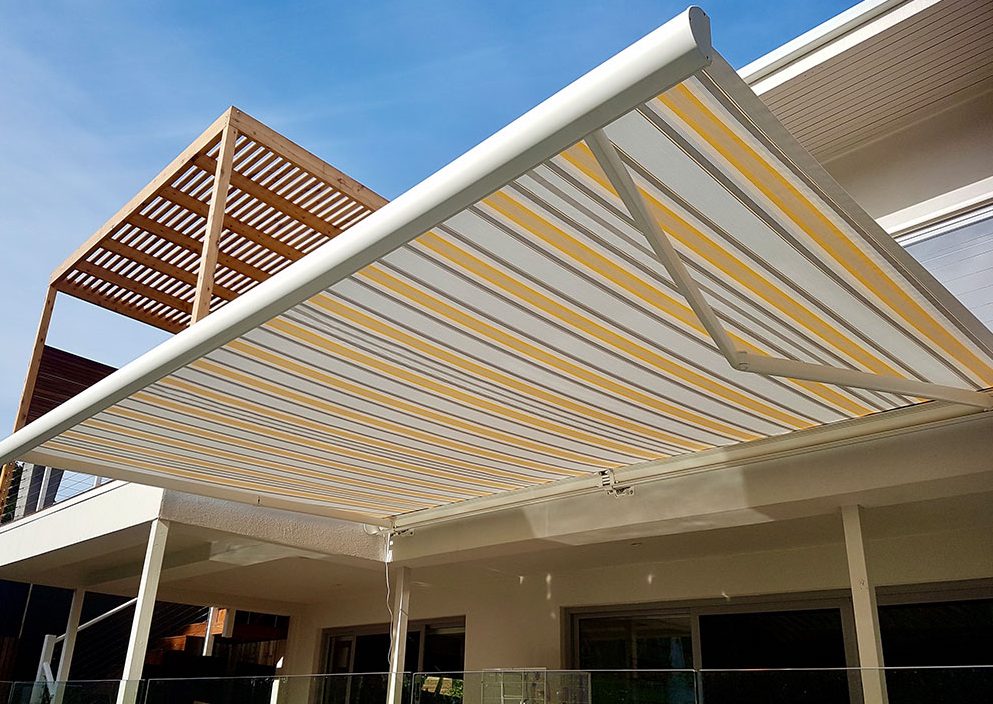
Table of Contents
- What Is the Structural Difference Between Open Cassette Awning and Closed Cassette Awning?
- How Do Performance and Durability Compare in Real Outdoor Conditions?
- How Should You Choose Based on Installation Environment and Budget?
- What Are the Key Technical Specifications of Our Retractable Awnings?
- Why Does the Right Choice Improve Long-Term Project Value?
- FAQ: What Is the Difference Between Open and Closed Cassette Awning?
What Is the Structural Difference Between Open Cassette Awning and Closed Cassette Awning?
To clearly understand what is the difference between open and closed cassette awning, we must begin with structural design. The term cassette refers to the protective housing that encloses the fabric and roller tube when the awning retracts.
How Does an Open Cassette Awning Work?
An Open Cassette Awning features a partially exposed roller tube. When retracted, the fabric rolls around the tube but remains visible from the bottom and partially from the top. This design reduces manufacturing complexity and lowers cost.
- No full aluminum housing enclosure
- Fabric exposed to dust and rain when closed
- Lighter overall system weight
- Cost-effective for sheltered installations
- Ideal under roof eaves or balconies
Because there is no full cassette cover, installation is generally simpler and structural load on walls is lower. Our factory designs reinforced aluminum arms to ensure stable tension control even in larger projection sizes.
How Does a Closed Cassette Awning Differ?
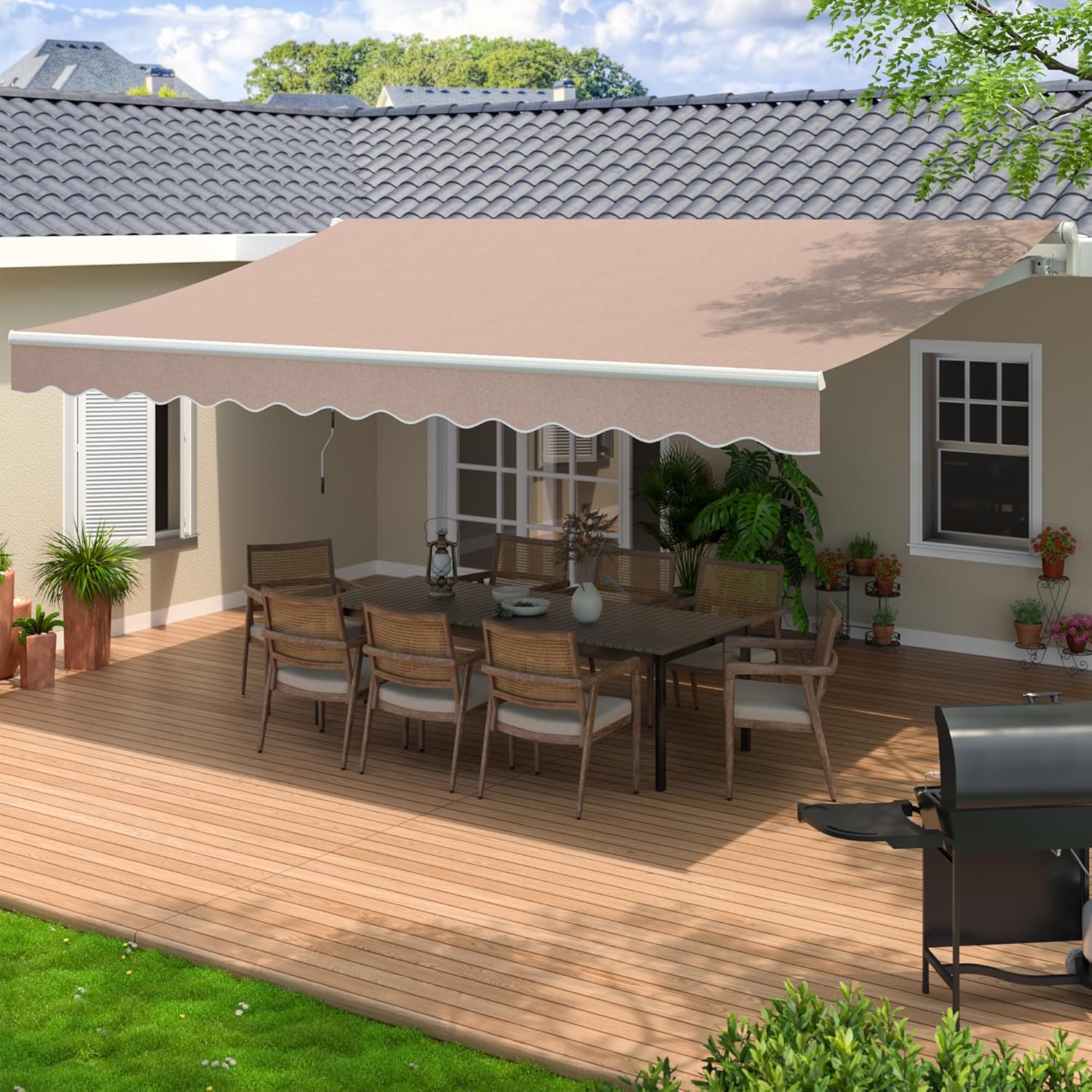
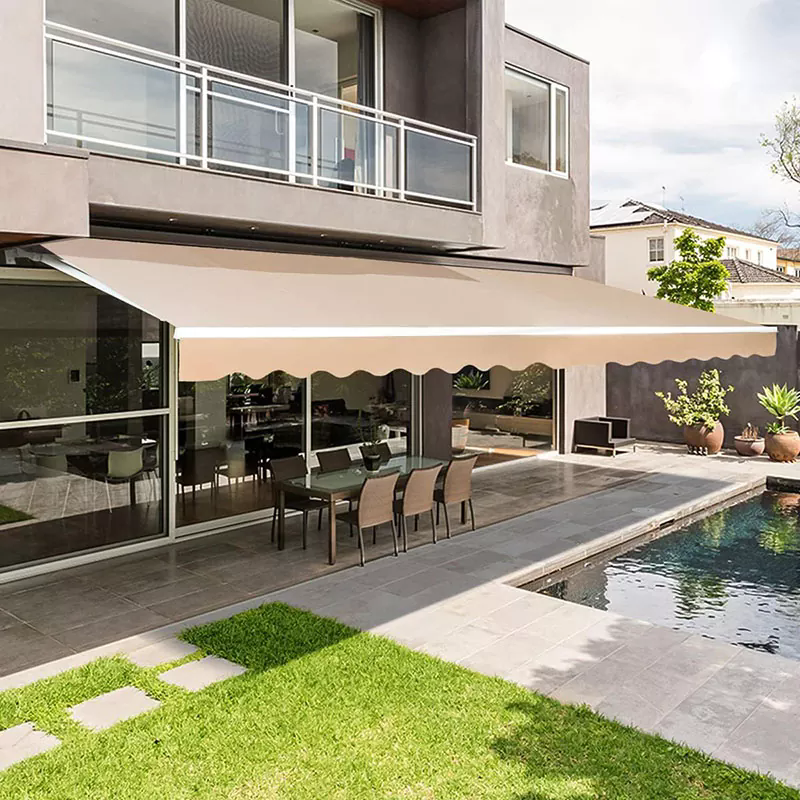
A closed cassette awning, sometimes referred to as a full cassette Retractable Awnings system, encloses the fabric, roller tube, and arms completely inside an aluminum housing when retracted.
- Full aluminum enclosure protection
- Superior resistance to dust, rain, and UV exposure
- Enhanced modern appearance
- Longer fabric lifespan
- Recommended for fully exposed façades
When evaluating what is the difference between open and closed cassette awning from a structural standpoint, the core distinction is exposure protection. A closed cassette system acts like a protective shell, reducing long-term environmental degradation.
Structural Comparison Table
| Feature | Open Cassette Awning | Closed Cassette Awning |
| Fabric Protection | Partially exposed | Fully enclosed |
| Aluminum Housing | Minimal top cover | Full cassette shell |
| Weight | Lighter | Heavier |
| Maintenance Frequency | Moderate | Low |
| Recommended Installation Area | Semi-covered areas | Fully exposed outdoor spaces |
At Vionta Metal, we engineer both systems using high-grade extruded aluminum profiles with powder coating that meets international corrosion resistance standards. Our quality control process ensures dimensional precision and smooth mechanical operation.
How Do Performance and Durability Compare in Real Outdoor Conditions?
Understanding what is the difference between open and closed cassette awning becomes even more important when we evaluate real-world performance. Outdoor shading systems are constantly exposed to UV radiation, wind pressure, dust accumulation, humidity, and rainfall.
How Does Environmental Exposure Impact Fabric Longevity?
In an Open Cassette Awning, the fabric remains partially exposed when retracted. Over time, continuous exposure can lead to:
- Gradual fading due to UV radiation
- Dust accumulation on upper surfaces
- Increased cleaning requirements
- Shorter service intervals
In contrast, closed cassette Retractable Awnings fully protect the fabric. This reduces weathering and significantly extends fabric lifespan.
Wind Resistance Comparison
Both systems use articulated arms with tension springs or chain mechanisms. However, due to structural enclosure, closed cassette systems often provide slightly enhanced rigidity.
| Performance Parameter | Open Cassette Awning | Closed Cassette Awning |
| Max Width | 2m to 6m | 2m to 7m |
| Max Projection | 1.5m to 3m | 2m to 3.5m |
| Wind Resistance Level | Class 1 to 2 | Class 2 to 3 |
| Fabric Option | Polyester or Acrylic | Solution-dyed Acrylic |
Our engineering team designs reinforced arm brackets and precision-machined roller tubes to ensure stable extension. When clients ask how Retractable Awnings perform in coastal areas, we recommend closed cassette models combined with marine-grade powder coating.
Vionta Metal has delivered projects for cafes, hotels, residential villas, and commercial storefronts. In high UV regions, our closed cassette systems demonstrate significantly reduced fabric aging compared to open structures.
How Should You Choose Based on Installation Environment and Budget?
When buyers ask what is the difference between open and closed cassette awning, they are often trying to decide which option aligns with their project conditions and financial planning.
When Is an Open Cassette Awning the Right Choice?
- Installation under balcony slabs
- Covered terraces
- Budget-sensitive residential projects
- Short-term commercial use
- Low rainfall regions
Our factory frequently supplies Open Cassette Awning systems to distributors serving temperate climates. Because there is partial protection from building overhangs, the exposed fabric remains adequately protected.
When Should You Choose a Closed Cassette Awning?
- Fully exposed exterior walls
- Coastal environments
- Luxury villas and premium storefronts
- Long-term commercial installations
- High UV intensity regions
If appearance is a priority, closed cassette Retractable Awnings provide a sleek integrated look. When retracted, only the compact aluminum cassette is visible.
At Vionta Metal, our project consultants analyze wall structure, load-bearing capacity, projection depth, and wind zone classification before recommending a configuration. Our experience ensures structural compatibility and installation safety.
What Are the Key Technical Specifications of Our Retractable Awnings?
To help buyers fully understand what is the difference between open and closed cassette awning, we provide detailed engineering parameters.
| Parameter | Specification |
| Frame Material | Extruded Aluminum Alloy 6063 T5 |
| Surface Finish | Outdoor Powder Coating |
| Fabric Weight | 280g to 320g per sqm |
| UV Protection | UPF 50 plus |
| Operation | Manual Crank or Motorized |
| Motor Brand Option | Tubular Motor Compatible |
| Installation Type | Wall Mount or Ceiling Mount |
Our factory conducts torque testing, arm fatigue testing, and coating adhesion testing before shipment. Every Open Cassette Awning and closed cassette system is inspected for alignment precision.
Vionta Metal supports OEM and custom size production. Our engineering drawings ensure seamless integration into residential and commercial architecture. When clients evaluate how Open Cassette Awning systems compare to other Retractable Awnings, our technical data provides measurable clarity.
Why Does the Right Choice Improve Long Term Project Value?
Ultimately, what is the difference between open and closed cassette awning is not simply about appearance. It affects maintenance cost, replacement cycle, aesthetic integration, and brand perception for commercial spaces.
An Open Cassette Awning offers economic efficiency and practical shading under sheltered environments. A closed cassette system provides maximum protection and longer durability in demanding climates.
At Vionta Metal, our mission is to deliver shading systems that balance structural safety, visual harmony, and operational longevity. Our production capacity and strict quality control enable consistent supply for distributors and contractors worldwide.
If you are planning a residential, hospitality, or commercial shading project, our team can provide customized solutions, technical drawings, and competitive quotations. Contact Vionta Metal today to discuss how our factory can support your next Retractable Awnings project and optimize your outdoor living spaces.
FAQ: What Is the Difference Between Open and Closed Cassette Awning?
What is the difference between open and closed cassette awning in terms of fabric protection?
An Open Cassette Awning leaves fabric partially exposed when retracted, while a closed cassette system fully encloses the fabric inside an aluminum housing, significantly reducing UV and weather exposure.
What is the difference between open and closed cassette awning regarding maintenance requirements?
Open systems may require more frequent cleaning due to dust accumulation, whereas closed cassette Retractable Awnings protect internal components, reducing maintenance frequency.
What is the difference between open and closed cassette awning in coastal environments?
Closed cassette models perform better in coastal areas because full enclosure minimizes salt exposure and corrosion risk, extending system lifespan.
What is the difference between open and closed cassette awning for commercial storefronts?
Closed cassette systems provide a cleaner aesthetic and stronger brand presentation when retracted, making them preferred for premium retail and hospitality applications.
What is the difference between open and closed cassette awning in overall investment value?
While open systems have lower initial cost, closed cassette models often offer better long-term value due to extended durability and reduced replacement cycles.
Previous :
Related News
- Are Jalousie Windows Easy to Break Into?
- Is Stainless Steel Glass Railing Safe?
- How waterproof is an aluminum louvered pergola during heavy rain, and how should its drainage capacity be tested?
- How Strong Is Aluminum Railing Compared With Steel Railing?
- How to Choose Metal Railing for Residential and Commercial Projects
- How To Remove Hard Water Stains From Glass Railings?
Leave me a message