Rotating vs. Retractable Louvered Pergolas: What Should Buyers Know?
Vionta Metal introduces a pergola with two roof movements
Look up through a rotating pergola and you can still see the blades. They turn on their pivots, letting sunshine between them, but they do not go anywhere. Retract the roof and the picture changes: the blades gather at one end, leaving a larger opening above you.
That is the distinction behind Vionta Metal’s new motorized aluminum pergola. Its roof does both jobs. The louvers tilt, and they can also be drawn back.
For a buyer choosing stock for a showroom or specifying a terrace, the question is what the customer expects an “open roof” to look like.
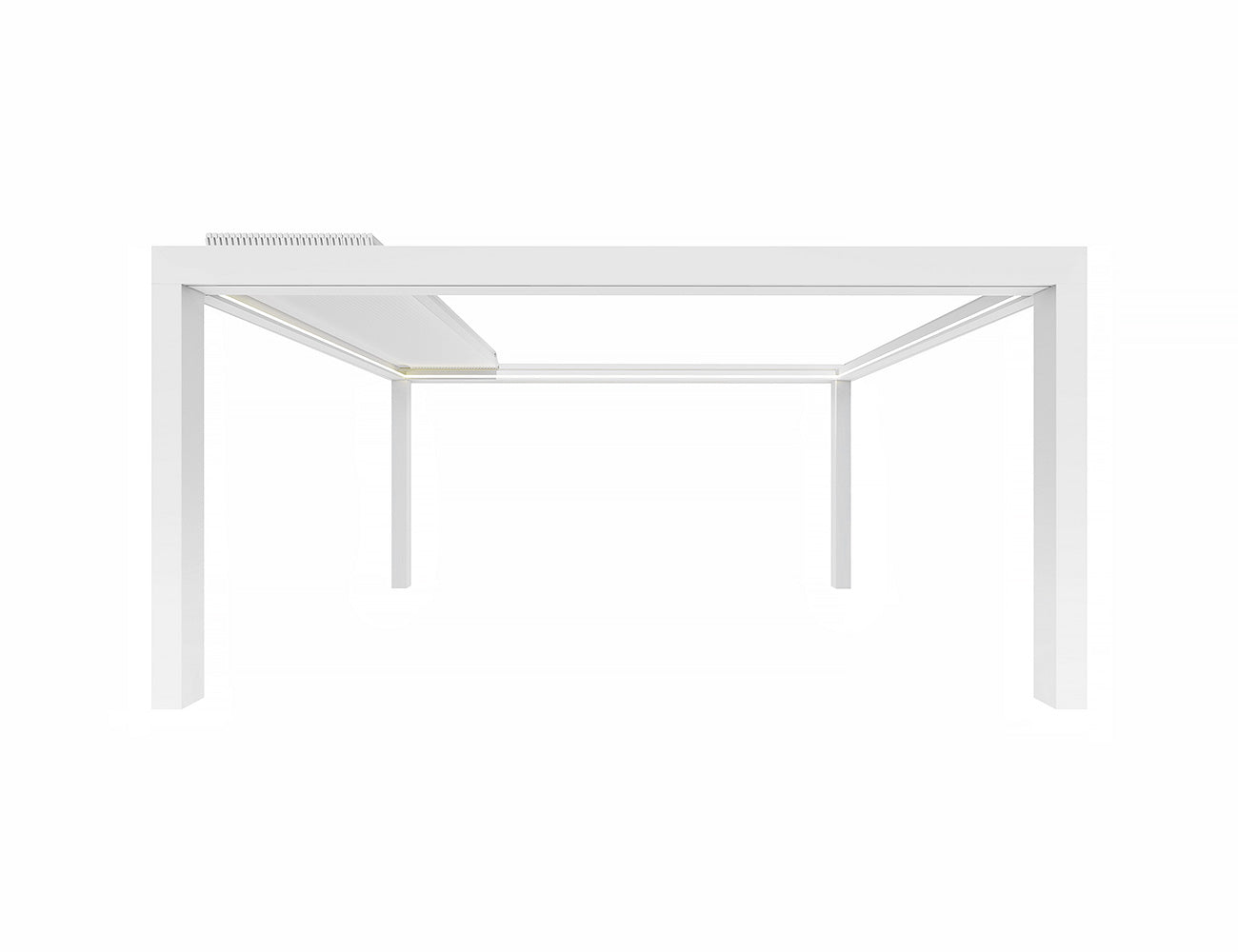
Does Rotating Mean Retractable?
No. A rotation-only roof keeps its blades distributed across the frame. Tilting changes the sunlight coming through and leaves gaps for air. It suits someone who wants to adjust shade throughout the day without moving the roof out of the way.
Retraction is a different movement. The blades travel and collect together. Some designs combine that travel with tilting; others have their own operating arrangements. Ask to see both movements rather than relying on the name in a quotation.
There will still be a frame. There will also be a bundle of louvers somewhere. Buyers need to know how much room that bundle takes up.、
What Changes with Vionta’s New Roof?
The extra movement gives the owner another way to use the same terrace. Keep the louvers tilted while sitting outside in bright weather. Draw them back when an opening overhead matters more than shade.
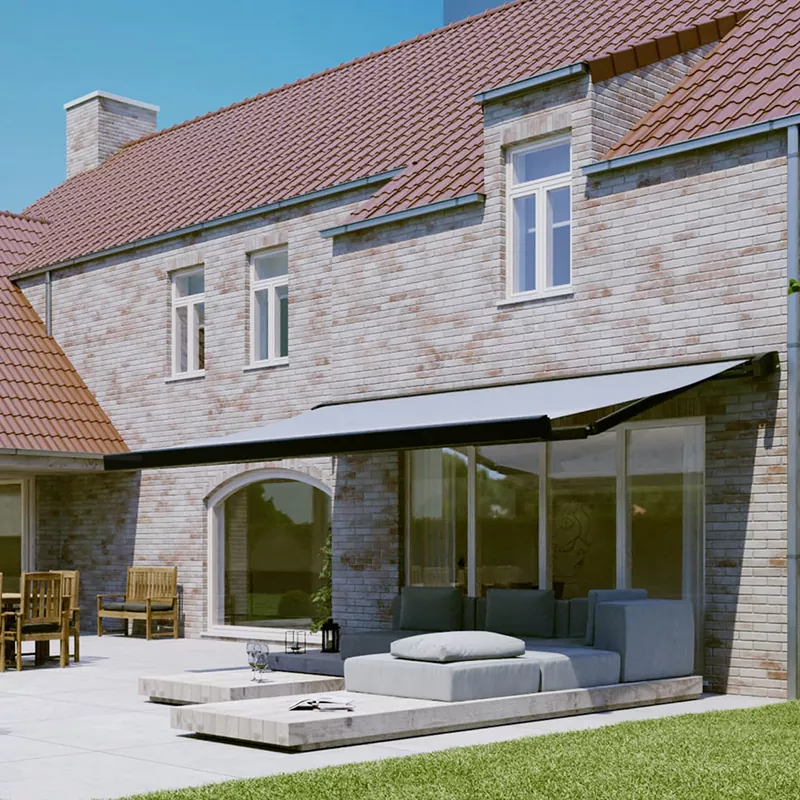
Beside a house, there is another consideration: the adjacent windows. Before approving the layout, check whether the collected blades will sit near those windows or at the opposite end. That detail deserves a place on the drawing.
Which Roof Costs More?
Compare two quotations for the same dimensions and accessories. A roof that tilts and retracts has additional moving parts, so the travel mechanism, installation work and access for servicing all need to be included in the comparison.
Paying for retraction makes sense when the customer wants that larger opening. If adjustable shade is enough, a rotation-only roof may already do the job.
And When It Rains?
Neither the word “rotating” nor “retractable” is a waterproof rating. Look at the closed joints, drainage route and installation instructions. Ask what rain testing covers the proposed configuration.
The same applies to wind and snow. A demonstration of the roof moving tells you nothing about its structural load capacity. Obtain the relevant documents and confirm the operating limits for the chosen size and site.
What Should a Buyer Ask to See?
Start with a drawing of the roof closed and retracted. Ask for the clear opening, the stacking dimensions and the operating sequence. Then check the supplied controls, installation instructions and spare-parts arrangements.
Vionta Metal welcomes project and wholesale enquiries for its motorized pergola range. Send your location, dimensions and quantity, together with the roof movement you need. Those details give our team a useful starting point for discussing the configuration and preparing a quotation.
Related News
- Why Is a Corten Steel Privacy Screen the Perfect Choice for Modern Outdoor Spaces
- How to Mount a Metal Privacy Screen on Concrete?
- How to Prepare Metal Balcony Railings for Winter: Maintenance Tips for Different Materials
- What Are the Different Types of Glass Railing Systems?
- How Can Glass Railing for Mono Stringer Stairs Transform Modern Staircase Design
- Framed vs Frameless Glass Railings — Which Should I Get?
Leave me a message

News Recommendations