What Awning Fabric and Frame Options Are Available?
When you're specifying an awning for a residential patio, a commercial storefront, or a hospitality space, the two decisions that impact longevity, appearance, and performance the most are the fabric and the frame. After two decades in the metal and shading industry, Vionta Metal has seen how these choices separate a 3-year awning from a 15-year one. In this guide, We'll walk you through the real-world options—what holds up, what doesn't, and how to match materials to your climate and usage. At our factory, we build frames and supply complete systems, so we'll also share what we see on the production floor and in the field.
If you're sourcing an aluminum awning or a retractable awning, this article gives you a clear, practical comparison. Let's get into it.
Table of Contents
- What awning fabric options are available and how do they perform?
- What frame options work best for different awning types?
- How do retractable awning fabric and frame choices differ?
- How to match fabric and frame to your climate and use case?
- FAQ: Retractable Awning Common Questions
What awning fabric options are available and how do they perform?
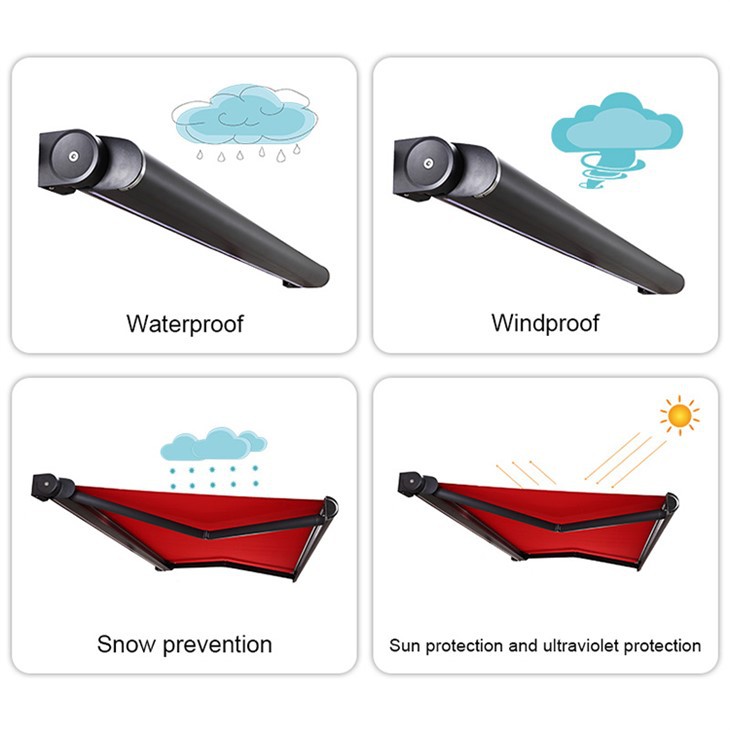
Fabric is the most visible and most frequently replaced component of an awning. The right choice depends on UV exposure, rain, wind, and how often you retract the unit. Below are the dominant fabric categories we work with every day at Vionta Metal, along with their real-world strengths and limits.
1. Solution-dyed acrylic
- What it is: Acrylic fibers dyed before weaving, often with a fluoropolymer finish.
- Strengths: Excellent UV fade resistance (5–10+ years), breathable, mildew resistant, natural hand.
- Weaknesses: Not fully waterproof; can wick water in prolonged rain; higher cost.
- Best for: Sunny, dry climates and residential patios where appearance matters.
2. Solution-dyed polyester
- What it is: Polyester base with solution-dyed color, often laminated or coated.
- Strengths: Better water resistance than acrylic, strong colorfastness, lower cost than acrylic.
- Weaknesses: Less breathable; can feel stiffer; heat buildup in direct sun.
- Best for: Mixed climates and budget-conscious projects needing good UV performance.
3. PVC-coated polyester (laminated)
- What it is: Polyester scrim coated with PVC on both sides.
- Strengths: Fully waterproof, easy to clean, very durable against abrasion.
- Weaknesses: Heavy, less breathable, can crack in extreme cold, not ideal for retractable mechanisms that fold tightly.
- Best for: Fixed frame awnings and commercial canopies where waterproofing is critical.
4. Olefin / polypropylene
- What it is: Synthetic fiber often used in budget or temporary awnings.
- Strengths: Low cost, quick-drying, mildew resistant.
- Weaknesses: Poor UV stability (fades in 2–3 years), lower tensile strength.
- Best for: Short-term or seasonal shade where replacement is acceptable.
At our factory, we often recommend solution-dyed acrylic for high-end retractable awning projects because it folds well, resists fading, and maintains a premium look. For fixed aluminum awnings, a PVC-coated polyester is often the better match because it handles rain without wicking.
What frame options work best for different awning types?
The frame determines structural integrity, wind resistance, and how smoothly a unit operates. While steel and wood exist in older or custom builds, aluminum dominates modern awning construction for good reason. Here's what we see in demand and what we manufacture at Vionta Metal.
Aluminum frames: the industry standard
- Why aluminum: Lightweight, rust-proof, easy to powder-coat, and strong enough for most residential and light commercial spans.
- Common alloys: 6061-T6 and 6063-T5 for extrusions; wall thickness typically 1.5–2.5 mm for retractable arms.
- Finish options: Powder coating in any RAL color, anodized silver or bronze, and wood-grain sublimation for a traditional look.
- Limitations: Not as stiff as steel; very wide spans may need steel reinforcement or additional brackets.
Steel frames
- When used: Large commercial canopies, heavy-duty fixed awnings, and areas with extreme wind loads.
- Pros: High strength and rigidity; can span longer distances with less deflection.
- Cons: Heavy, requires galvanizing or powder coating to prevent rust, more expensive to ship and install.
Stainless steel components
- Where they matter: Coastal areas and poolside installations where salt spray is constant.
- Typical parts: Arms, brackets, and fasteners. Full stainless frames are rare due to cost and weight.
Wood frames
- Niche use: Historic restorations and custom architectural awnings.
- Drawbacks: Requires regular sealing, prone to rot and warping, limited structural predictability.
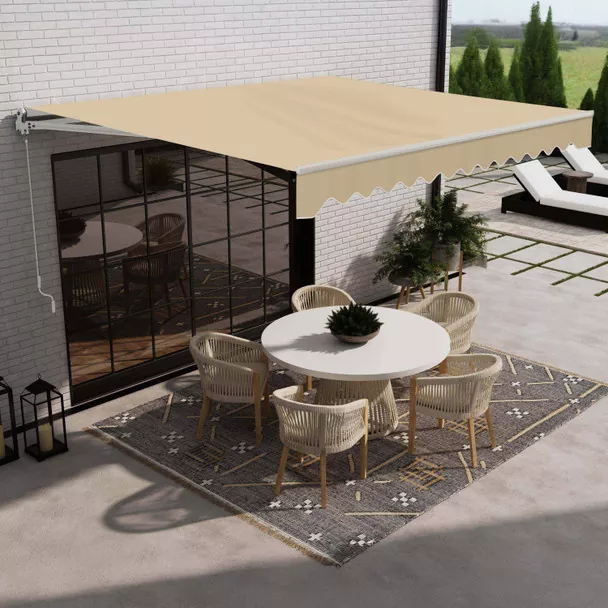
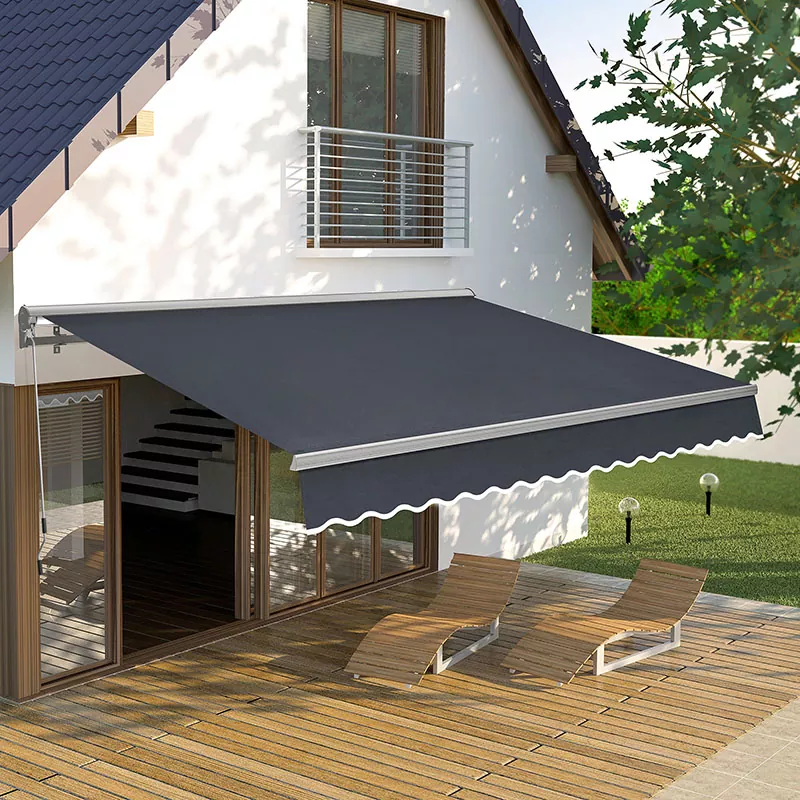
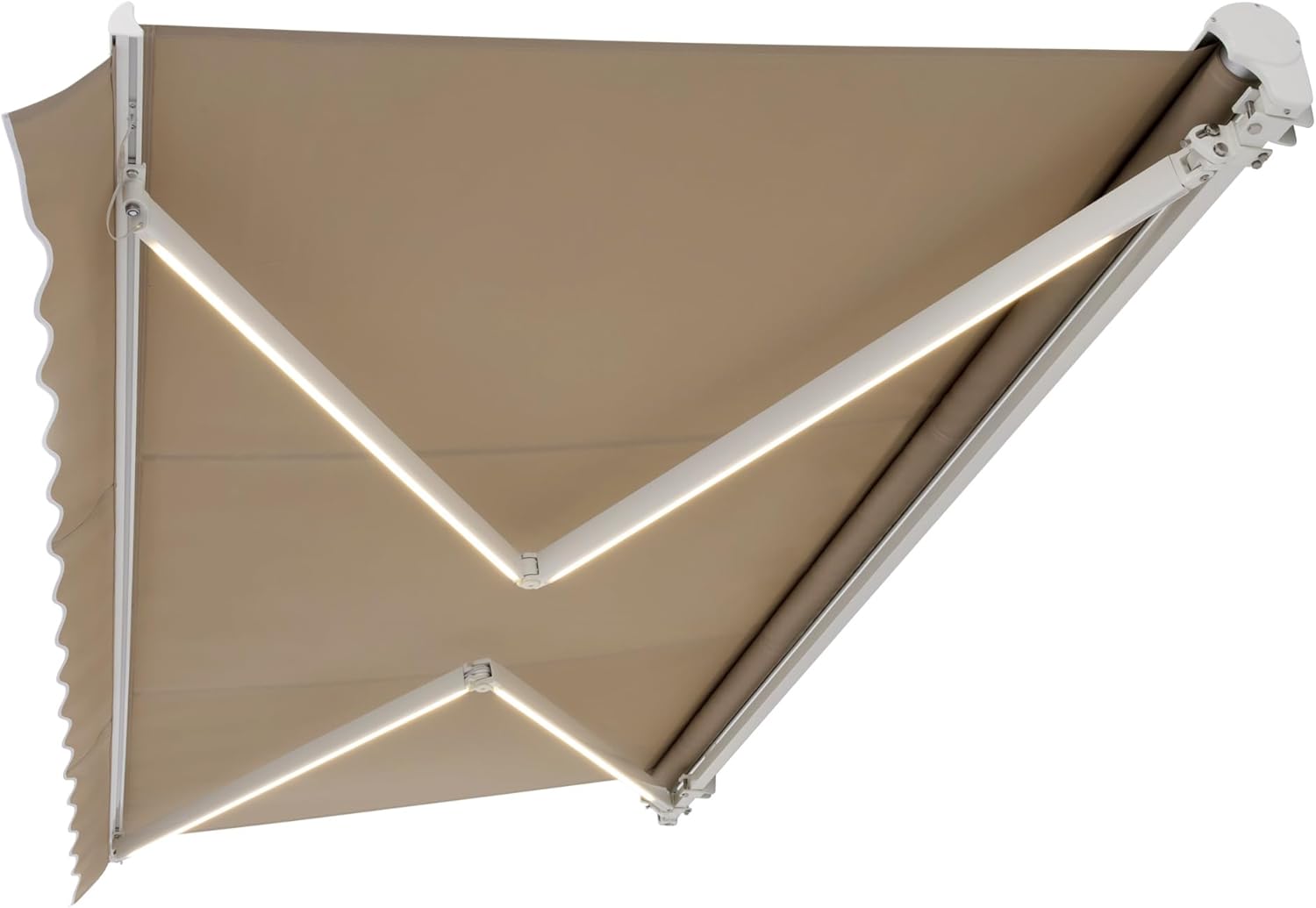
For a retractable awning, the frame is a system: lateral arms, torsion bar, brackets, and sometimes a cassette or hood. Aluminum is almost always the right call here because it keeps the unit light enough for the mechanism and resists corrosion. Our factory produces aluminum profiles specifically for retractable systems, and we can match powder-coat colors to fabric selections.
How do retractable awning fabric and frame choices differ?
A retractable awning is a different animal from a fixed one. The fabric must fold repeatedly without creasing or delaminating, and the frame must be engineered for smooth extension and retraction thousands of times. Here's how the options shift when you're specifying a retractable unit.
Fabric for retractable awnings
- Acrylic wins: Solution-dyed acrylic is the most common choice because it remains flexible in cold and heat, resists mold in damp folds, and holds color.
- Weight matters: Heavier PVC fabrics can strain the motor and arms over time. We typically recommend fabrics in the 260–320 g/m² range for retractables.
- Coating: A fluoropolymer or Teflon finish helps water bead and dirt release, which is important when the fabric rolls up.
- Valance options: Straight, scalloped, or decorative valances are available, but keep in mind they add wind load.
Frame and mechanism for retractable awnings
- Aluminum arms: Powder-coated or anodized; often with internal springs or gas struts for tension.
- Torsion bar: Galvanized steel or aluminum; must be sized to the fabric width and weight.
- Cassette or hood: Full cassette (encloses fabric and arms) vs. open roll. Full cassette protects the fabric and looks cleaner but costs more.
- Mounting brackets: Aluminum or stainless steel; must be anchored into structural framing, not just siding.
What retractable awning frame configuration is best for high wind? Look for a unit with reinforced arms, a heavy-duty torsion bar, and a full cassette. We build our aluminum awning profiles with thicker walls for these applications, and we test cycle counts to make sure the mechanism holds up.
How to match fabric and frame to your climate and use case?
There's no single “best” combination. The right choice depends on where the awning lives and how it will be used. Use the table below as a starting point, then refine with your supplier.
| Climate / Use | Recommended Fabric | Recommended Frame | Notes |
| Sunny, dry (e.g., Arizona, Spain) | Solution-dyed acrylic | Aluminum, powder-coated | Fade resistance is key; breathability helps. |
| Rainy, mild (e.g., UK, Pacific NW) | PVC-coated polyester or acrylic with water-repellent finish | Aluminum, full cassette | Consider a hood to protect fabric when retracted. |
| Coastal / salt spray | Solution-dyed acrylic (mold-resistant) | Aluminum with stainless hardware | Rinse regularly; avoid steel fasteners. |
| High wind / commercial | Heavy acrylic or PVC | Steel or reinforced aluminum | Wind sensors and auto-retract are strongly advised. |
| Residential patio, moderate | Solution-dyed acrylic or polyester | Aluminum, open roll or cassette | Balance cost, appearance, and ease of use. |
At Vionta Metal, we help clients match fabric and frame by asking three questions: How often will it be retracted? What's the maximum wind exposure? And what maintenance is realistic? From there, we can specify an aluminum awning frame that fits the fabric weight and a fabric that won't fail in the first few seasons.
Why does frame finish matter for retractable awning longevity? Because powder coating and anodizing protect the aluminum from oxidation and UV degradation. A cheap paint job will chalk and peel; a proper powder coat will hold color for a decade or more.
FAQ: Retractable Awning Common Questions
Q: What is the most durable fabric for a retractable awning?
A: Solution-dyed acrylic is generally the most durable for retractable use. It resists UV fading for 5–10+ years, stays flexible when folded, and resists mildew if kept dry. PVC-coated polyester is more waterproof but heavier and less breathable, which can strain the retraction mechanism over time.
Q: Can I use a PVC fabric on a retractable awning?
A: Yes, but with caution. PVC-coated polyester is heavy and does not fold as tightly as acrylic. It can cause the arms to sag or the motor to work harder. If you need waterproof performance, choose a lighter PVC or a laminated fabric specifically rated for retractable systems.
Q: How often should I replace the fabric on a retractable awning?
A: With solution-dyed acrylic, expect 8–12 years in moderate climates and 5–8 years in high-UV areas. PVC fabrics may last 10–15 years but can become brittle. Inspect for fading, cracking, and mildew annually, and replace when the fabric no longer retracts smoothly or leaks at the seams.
Q: What frame material is best for a motorized retractable awning?
A: Aluminum is the best all-around choice. It's light enough for the motor and arms, resists rust, and can be powder-coated to match any exterior. For very large spans or high-wind zones, steel reinforcement at the mounting points may be necessary, but the main frame should remain aluminum to keep the system balanced.
Q: Do I need a full cassette for my retractable awning?
A: A full cassette protects the fabric and arms when retracted, which extends fabric life and keeps the unit looking clean. It's especially useful in rainy or dusty environments. If your awning is under a covered patio or in a dry climate, an open roll model can be a cost-effective alternative.
Final thoughts on awning fabric and frame selection
Choosing the right fabric and frame is a balance of climate, usage, and budget. Aluminum frames—especially powder-coated or anodized—offer the best combination of strength, weight, and corrosion resistance for most awnings. For fabric, solution-dyed acrylic remains the top choice for retractable units, while PVC-coated polyester suits fixed aluminum awnings in wet conditions. At Vionta Metal, we build aluminum awning frames and supply complete systems, so we've seen what lasts. If you're planning a project, start with the environment and work backward to materials. That's how you get an awning that performs for years, not just one season.
Have a specific question about fabric weight, frame load ratings, or retractable awning mechanisms? Our team is ready to help you specify the right combination.
Published by the technical team at Vionta Metal. We manufacture aluminum awning frames and supply retractable awning components to fabricators and installers worldwide.
Related News
- Why Stainless Cable Railing Shines in Winter?
- How Can a Snow Load Aluminum Pergola Deliver Reliable Year-Round Outdoor Protection
- Is Glass Railing Safe for Balconies and Terraces?
- What Makes Stainless Steel the Ideal Material for Outdoor Railings?
- Are Jalousie Windows Easy to Break Into?
- Is Stainless Steel Glass Railing Safe?
Leave me a message