Is Glass Railing Safe for Balconies and Terraces?
Glass railing is widely used on balconies, terraces, decks, stairways, and other elevated outdoor spaces because it provides a clear barrier without blocking the view. But when safety is the main concern, appearance should never be the starting point. The important questions are how the glass is selected, how the railing is engineered, how the panels are supported, and whether the complete system meets the building requirements for the project.
So, is glass railing safe for balconies and terraces? Yes, a properly designed, correctly specified, and professionally installed glass railing system can provide a safe guard for an elevated outdoor space. However, the word “glass” alone does not determine safety. The glass type, support system, connection details, guard height, opening limitations, structural loads, and installation quality all matter.
At Vionta Metal, we approach glass railing as a complete railing system rather than simply a glass panel. Our factory can coordinate glass panels with aluminum or stainless steel posts, handrails, channels, clamps, brackets, and other railing components according to project requirements. For contractors, architects, distributors, and homeowners, this system-level approach is important because a strong glass panel cannot compensate for an unsuitable support structure or poor installation.
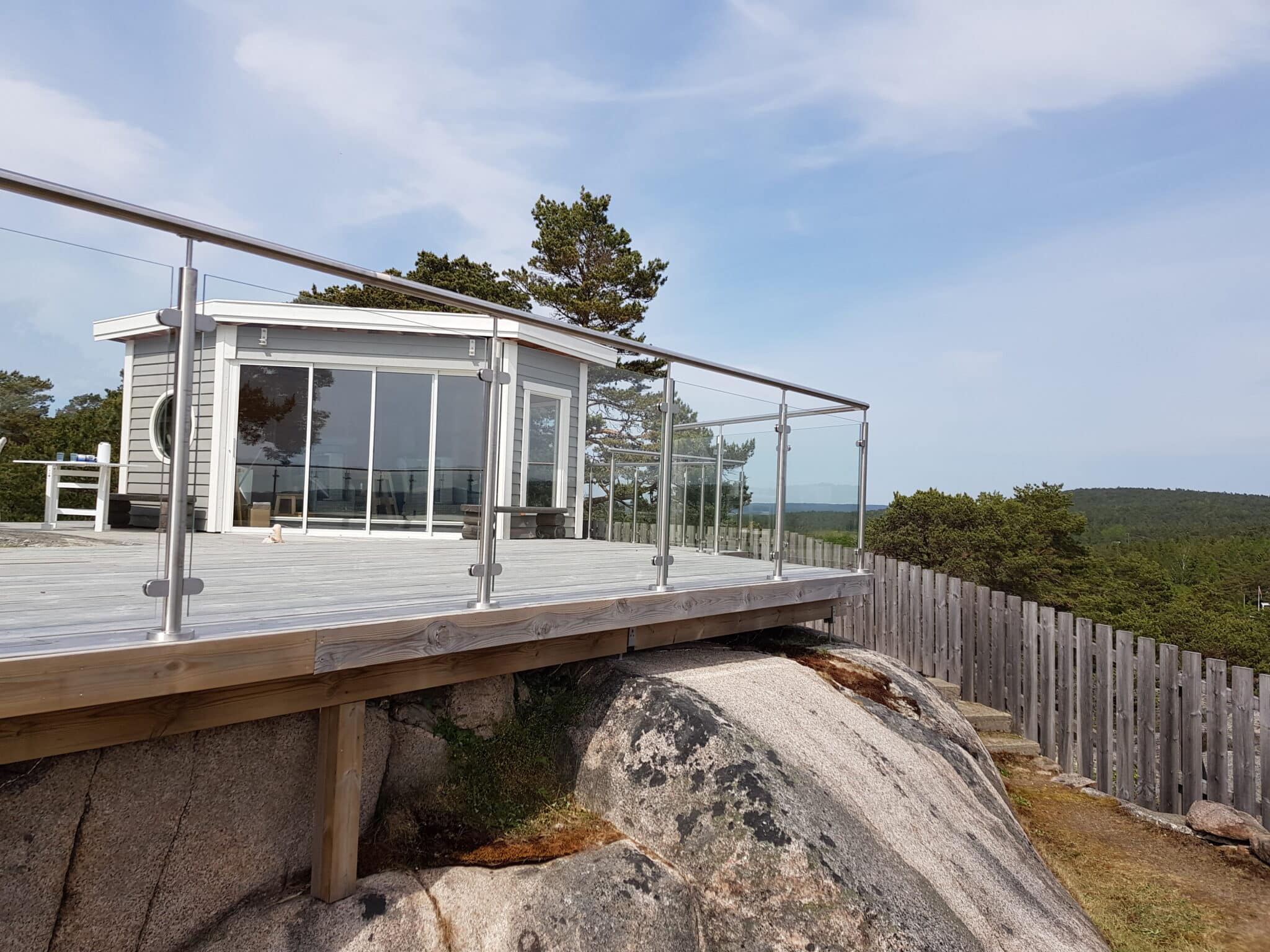
This guide explains what makes a glass railing safe, why tempered and laminated glass matter, how glass railing performs on balconies and terraces, and what buyers should check before ordering.
Table of Contents
- What Makes Glass Railing Safe for Balconies and Terraces?
- What Type of Glass Is Used for Balcony and Terrace Railings?
- How Does the Railing Support System Affect Safety?
- Why Is Aluminum Glass Railing Popular for Outdoor Projects?
- How Does Glass Railing Work on Balconies?
- How Does Glass Railing Perform on Terraces and Decks?
- How Should Glass Railings Be Designed for Outdoor Conditions?
- How Should Glass Railing Be Installed and Inspected?
- What Should Buyers Ask Before Ordering Glass Railing?
- What Should You Remember About Glass Railing Safety?
- What Are the Most Common Glass Railing Questions?
What Makes Glass Railing Safe for Balconies and Terraces?
The safety of a balcony or terrace railing depends on the performance of the complete guard system, not just the glass itself. A properly engineered system must work as a barrier and transfer loads safely into the supporting structure.
For example, the 2024 International Building Code addresses guards where glass is used as part of the guard system. It also specifies guard height and opening limitations in applicable situations. The code requires required guards to be at least 42 inches high in many occupancies, with specific residential exceptions, and generally limits openings so that a 4-inch sphere cannot pass through them. Local amendments and project-specific requirements can differ, so the applicable jurisdiction should always be checked before finalizing a design.
For a glass railing system, several factors work together:
- Glass selection: The glass must be an approved safety glazing material suitable for the application.
- Glass configuration: Tempered, laminated, or laminated tempered/heat-strengthened glass may be specified depending on the system and local requirements.
- Panel support: Posts, channels, clamps, brackets, or other supports must transfer loads safely.
- Connections: Anchors and fasteners must be compatible with the substrate and project loads.
- Guard height: The finished railing must meet the applicable local building requirements.
- Opening size: The completed system must prevent unacceptable openings where required.
- Installation: Even correctly specified components can become unsafe if installed incorrectly.
- Maintenance: Connections, glass edges, hardware, and seals should be periodically inspected.
This is why our team at Vionta Metal does not treat the glass panel as an isolated product. When developing a glass railing for a project, we consider the glass, metal structure, hardware, dimensions, installation conditions, and intended application together.
What Type of Glass Is Used for Balcony and Terrace Railings?
One of the most important questions is what type of glass should be used in a railing. Ordinary annealed window glass should not simply be substituted for safety glazing in a guard application.
Modern building requirements commonly address safety glazing specifically for guards and railings. For example, the 2025 California Building Code states that glass used in a handrail or guard must generally be laminated glass constructed from fully tempered or heat-strengthened glass and must meet specified safety glazing requirements. The code also contains an exception for certain single fully tempered glass applications where there is no walking surface beneath the glass or the walking surface is permanently protected from falling glass.
How Does Tempered Glass Improve Railing Safety?
Tempered glass is heat-treated to increase its strength compared with ordinary annealed glass. If fully tempered glass breaks, it generally breaks into many smaller pieces rather than large sharp shards.
That breakage pattern is one reason safety glass is used in many architectural applications. However, tempered glass is not unbreakable. A strong impact, damaged edge, manufacturing defect, or unsuitable installation condition can still result in breakage.
Why Is Laminated Glass Important for Some Glass Railings?
Laminated glass consists of two or more glass plies bonded together with an interlayer. If one glass ply breaks, the interlayer can help hold the fragments together and maintain the integrity of the panel.
This characteristic is particularly relevant to guard applications because a railing is intended to remain a barrier even under abnormal events. The National Glass Association notes that fully tempered laminated glass is widely suited to guardrail applications and that building codes specifically address glass used in guardrails.
The exact glass construction should therefore be selected according to the local building code, engineering requirements, railing system, span, loads, and installation method rather than simply choosing a thickness based on appearance.
How Does the Railing Support System Affect Safety?
A common mistake when evaluating glass railing is to focus entirely on the glass. In reality, the support system is equally important.
Imagine a strong glass panel installed into an inadequate base channel. The glass itself may have good strength, but the complete guard system may still fail to perform as intended. The same principle applies to posts, anchors, brackets, clamps, and handrails.
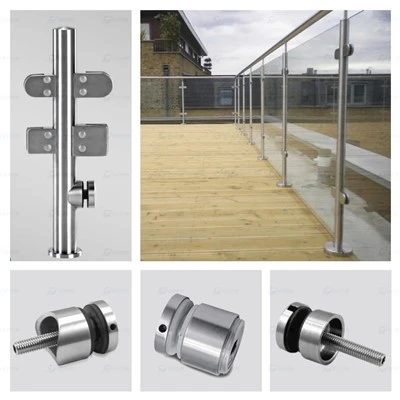
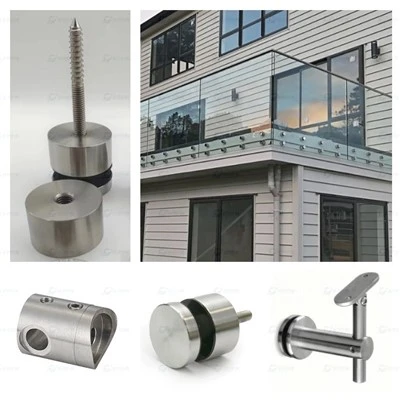
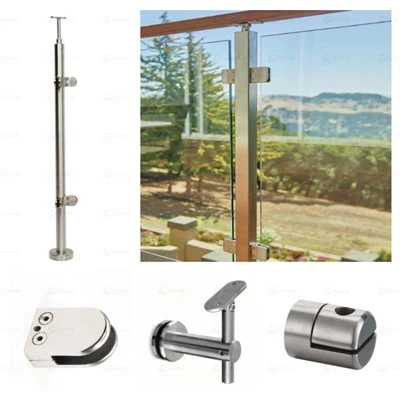
A complete glass railing system may include:
- Glass panels
- Aluminum or stainless steel posts
- Top handrails or caps where required
- Base shoes or channels
- Glass clamps
- Stainless steel brackets
- Anchoring components
- End fittings and connectors
- Drainage or sealing details for outdoor applications
For structural glass baluster systems, the requirements can be particularly specific. For example, the 2021 IRC treats glazing in guards and railings as a hazardous location and includes requirements concerning structural glass baluster panels and their ability to remain in place if one panel fails.
This is why Vionta Metal considers the relationship between glass and metal components when preparing railing solutions. For a custom project, dimensions, mounting conditions, substrate, railing layout, and intended use should be reviewed before production.
Why Is Aluminum Glass Railing Popular for Outdoor Projects?
Aluminum Glass Railing combines transparent glass panels with an aluminum support structure. It is commonly selected for balconies, terraces, decks, stairs, patios, and modern architectural projects where the owner wants a barrier without visually closing the space.
Aluminum is useful for outdoor railing applications because it offers a relatively lightweight structural material and can be finished for exterior use. It also allows manufacturers to create different post, handrail, base-channel, and mounting configurations.
What Are the Practical Benefits of Aluminum Glass Railing?
- Open sightlines: Clear glass preserves views across balconies and terraces.
- Outdoor suitability: Properly finished aluminum can be used in exterior environments.
- Design flexibility: Aluminum profiles can be configured for different railing layouts.
- Low visual obstruction: Glass creates a cleaner appearance than many solid guard systems.
- Material coordination: Aluminum can be combined with different glass and hardware configurations.
- Custom fabrication: Project-specific dimensions can be considered during manufacturing.
At Vionta Metal, we manufacture metal railing systems for residential and commercial applications. Depending on the project, our factory can work with aluminum railing components, stainless steel hardware, glass panels, and custom dimensions supplied by the customer.
How Does Glass Railing Work on Balconies?
Balconies present a particular safety requirement because the railing separates an occupied walking area from an elevated edge. The system must therefore act as a reliable fall-protection barrier while withstanding the loads applicable to the building and location.
Glass Railing for Balcony applications is often selected when the project needs both safety and visibility. Clear panels allow residents to see the surrounding landscape while maintaining a physical barrier at the balcony edge.
When evaluating a balcony glass railing, buyers should consider:
- Required guard height under the local code
- Applicable wind and structural loads
- Glass safety classification
- Panel dimensions and unsupported spans
- Post or channel spacing
- Balcony slab construction
- Anchor type and edge distance
- Drainage and water exposure
- Local corrosion conditions
- Installation access and replacement requirements
For multi-family, hotel, commercial, and high-occupancy projects, these considerations become even more important because the railing may experience more frequent use and inspection requirements than a private residential balcony.
A good purchasing process therefore starts with project information rather than a generic product photograph. At Vionta Metal, we recommend providing drawings, dimensions, mounting conditions, project location, and application details so the railing configuration can be evaluated before production.
How Does Glass Railing Perform on Terraces and Decks?
Terraces and decks can have different structural conditions from balconies, but the basic principle remains the same: the guard must be designed as a complete system that provides an appropriate barrier at the exposed edge.
Glass Railing for Decks is especially popular around outdoor living areas because it maintains the visual connection between the deck and the surrounding garden, pool, landscape, or view.
What Should You Consider for Glass Railing on a Deck?
For a deck application, the supporting structure deserves particular attention. A railing may be installed on a concrete slab, timber deck, steel structure, composite deck, or another substrate. The correct anchoring method can therefore vary significantly.
- Check whether the deck structure can accept the railing loads.
- Confirm the thickness and condition of the supporting substrate.
- Choose anchors appropriate for the substrate.
- Keep the glass away from direct contact with hard structural surfaces where the system design requires isolation.
- Ensure the base connection is properly aligned and tightened.
- Provide suitable drainage where water can accumulate around the railing base.
- Inspect the glass edges for chips, cracks, or impact damage.
Outdoor decks can also experience temperature changes, rain, snow, wind, humidity, and repeated cleaning. The metal finish and hardware should therefore be selected for the actual environmental conditions rather than simply for indoor appearance.
How Should Glass Railings Be Designed for Outdoor Conditions?
Outdoor railing safety is not only about impact resistance. Long-term exposure can affect metal components, fasteners, seals, finishes, and connections.
For coastal projects, for example, salt-laden air can increase corrosion risk for exposed metal components. For locations with frequent rainfall, water management around channels and posts becomes important. For cold climates, freeze-thaw conditions may also affect the supporting structure and anchoring environment.
What Outdoor Conditions Should Buyers Consider?
| Condition | What to Check |
| Coastal environment | Consider corrosion-resistant materials and suitable finishes for exposed metal and hardware. |
| Heavy rain | Review drainage, water accumulation, seals, and the condition of the supporting substrate. |
| Strong wind | Confirm that the complete railing system has been designed for the project-specific structural loads. |
| Snow and ice | Consider additional environmental loads and the condition of the deck or balcony structure. |
| High-temperature exposure | Consider thermal movement and the suitability of materials and finishes for the location. |
| Frequent public use | Pay greater attention to connection durability, impact exposure, inspection, and maintenance. |
These factors do not mean that glass railing is unsuitable for outdoor use. They simply show why the railing should be treated as an engineered architectural system rather than a decorative glass panel.
Vionta Metal works with customers on railing applications for residential, multi-family, commercial, and outdoor architectural projects. Our approach is to match the railing configuration with the customer's drawings, dimensions, installation requirements, and target market.
How Should Glass Railing Be Installed and Inspected?
Correct installation is one of the most important parts of railing safety. Even compliant components can perform poorly if the installation does not follow the approved system design.
What Should Happen During Installation?
- Confirm dimensions. Check the finished opening, post positions, glass sizes, and base conditions before installation.
- Check the substrate. Verify that the supporting structure is suitable for the specified anchors.
- Install posts or channels accurately. Alignment and spacing should follow the approved design.
- Install glass carefully. Glass edges should be protected from impact and unsuitable contact with metal or other hard surfaces.
- Secure hardware. Clamps, brackets, anchors, and fasteners should be installed according to the system requirements.
- Check the finished guard. Confirm height, alignment, openings, stability, and visible damage.
- Inspect before use. The railing should not be put into service if cracks, loose components, damaged edges, or other installation problems are found.
For larger commercial or multi-family projects, the installation should also be coordinated with the project's engineering documents, inspection procedures, and applicable local regulations.
At Vionta Metal, we can discuss drawings and project dimensions before production so that the supplied components are aligned with the intended installation method.
What Should Buyers Ask Before Ordering Glass Railing?
If you are purchasing glass railing from a manufacturer or supplier, asking the right questions before placing an order can prevent problems later.
What Glass Specification Will Be Supplied?
Ask for the exact glass construction and applicable safety standard rather than simply asking whether the glass is “strong.” The required specification depends on the project location, railing design, loading conditions, and applicable code.
How Is the Glass Supported?
Ask whether the system uses posts, a base shoe, clamps, channels, or another support method. The connection between the glass and structure is part of the safety system.
What Is the Mounting Method?
Confirm whether the railing is top-mounted, side-mounted, embedded, or installed using another configuration. The supporting substrate should be considered before selecting anchors.
Can the Manufacturer Work From Project Drawings?
For custom projects, drawings and dimensions are often more useful than choosing a standard product from a photograph. A manufacturer should be able to understand the intended layout and coordinate the components accordingly.
What Documentation Is Available?
Depending on the market and project requirements, buyers may need glass certificates, material information, finish specifications, test reports, drawings, installation instructions, or other documentation.
These questions are particularly useful for importers, distributors, contractors, architects, and developers who need a repeatable railing system rather than a one-off decorative product.
What Should You Remember About Glass Railing Safety?
Glass railing can be a safe solution for balconies, terraces, and decks when it is designed, manufactured, and installed as a complete guard system. The key is not simply choosing thick glass or a visually attractive railing. Safety depends on the relationship between the glass, support structure, connections, dimensions, loads, installation method, and applicable building requirements.
For balcony and terrace projects, the most important checks are:
- Use the appropriate safety glazing for the application.
- Confirm the applicable local building requirements.
- Design the support system for the relevant structural loads.
- Use suitable anchors and connections for the substrate.
- Maintain the required guard height and opening limitations.
- Protect glass edges during transportation and installation.
- Inspect the finished railing before it is put into service.
- Consider the environmental conditions of the installation location.
Our team at Vionta Metal works with aluminum, stainless steel, glass, and related railing components for different architectural applications. If you are sourcing Glass Railing for Balcony, Glass Railing for Decks, or Aluminum Glass Railing, you can send us your drawings, dimensions, project photos, or basic requirements. We can then discuss the appropriate railing configuration and manufacturing details for your project.
What Are the Most Common Glass Railing Questions?
Is glass railing safe for balconies?
Yes, glass railing can be used safely on balconies when the complete guard system is designed and installed according to the applicable building requirements. Safety depends on the approved glass type, panel configuration, support system, connections, guard height, opening limitations, structural loads, and installation quality. Buyers should also confirm the requirements of the specific jurisdiction because building codes are not identical everywhere.
Is tempered glass strong enough for a balcony railing?
Tempered glass is commonly used as safety glazing, but the suitability of a particular glass configuration cannot be determined from the word “tempered” alone. The required glass construction depends on the railing design, panel dimensions, support conditions, loads, and applicable code. In some guard applications, laminated glass constructed from fully tempered or heat-strengthened glass is required. The complete railing system, including its support structure, must also satisfy the relevant requirements.
Can glass railing break on a terrace?
Yes. No glass railing should be described as unbreakable. Glass can be damaged by severe impact, edge damage, unsuitable installation, or other abnormal conditions. The reason safety glazing and properly engineered railing systems are important is that the system is designed to reduce the consequences of glass breakage and maintain an appropriate barrier where required. Laminated glass can help retain broken glass through its interlayer, while the supporting system must also be designed for the application.
Is aluminum glass railing suitable for outdoor use?
Aluminum glass railing can be suitable for balconies, terraces, decks, patios, and other outdoor applications when the aluminum finish, hardware, connections, glass, and support structure are selected for the environment. Coastal areas, heavy rainfall, snow, high humidity, and frequent public use may require additional consideration. The correct configuration should be determined from the project location, installation conditions, applicable loads, and local requirements rather than from appearance alone.
What should I check before buying glass railing for a balcony or deck?
Before ordering, confirm the glass safety specification, railing dimensions, guard height, support method, mounting substrate, anchor system, applicable structural loads, hardware materials, exterior finish, installation method, and documentation required for your market. For a custom project, provide drawings or dimensions whenever possible. At Vionta Metal, our factory can review project information and coordinate the glass railing components according to the intended application and manufacturing requirements.
Looking for a glass railing supplier for your next balcony, terrace, or deck project? Send Vionta Metal your project drawings, dimensions, application details, or reference photos. Our team can discuss aluminum glass railing, glass railing for balconies, glass railing for decks, and related metal railing components for residential and commercial projects.