How Are Glass Railings Shaping Contemporary Architectural Safety Standards?
Article Abstract
Glass railings have become a defining element in modern architectural projects, balancing transparency, structural integrity, and regulatory compliance. This article provides a structured and technical overview of glass railing systems, focusing on material composition, engineering parameters, installation logic, and application scenarios. By addressing common industry questions and aligning with established safety standards, the content aims to support architects, developers, contractors, and procurement specialists in making informed decisions when specifying glass railings for diverse environments.

Table of Contents
- Outline Overview
- Product Overview and Core Purpose
- Technical Parameters and Specifications
- Application Scenarios and System Logic
- Glass Railings FAQ
- Industry Perspective and Contact Information
Outline Overview
- Definition and structural role of glass railings
- Material selection and performance requirements
- Key parameters influencing safety and durability
- Common questions from buyers and specifiers
- Industry alignment and brand perspective
Product Overview and Core Purpose
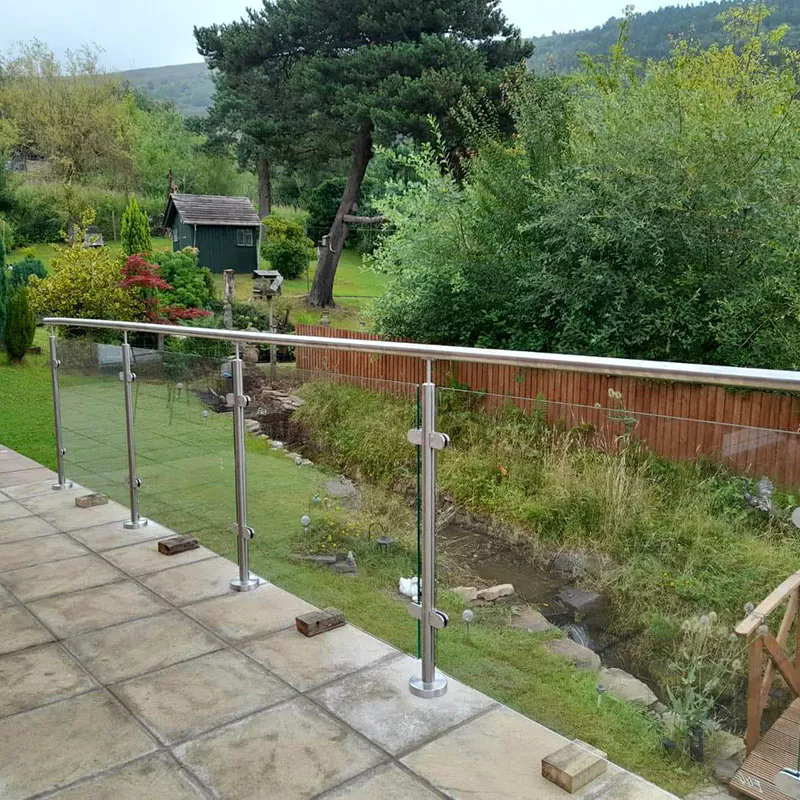
Glass railings are architectural barrier systems engineered to provide fall protection while preserving visual openness. Commonly installed on balconies, staircases, terraces, decks, and mezzanines, these systems integrate tempered or laminated safety glass with precision-fabricated support components. The central objective of glass railing design is to meet safety regulations without obstructing sightlines, making them suitable for both residential and large-scale commercial developments.
This article centers on how glass railings are specified, evaluated, and implemented from a professional standpoint. Emphasis is placed on measurable parameters, compliance considerations, and long-term performance rather than stylistic description. The content is structured to reflect practical decision-making processes within architectural and construction workflows.
Technical Parameters and Specifications
The performance of a glass railing system is determined by a combination of glass composition, thickness, mounting method, and load-bearing capability. The following table outlines commonly referenced parameters used in technical evaluations.
| Parameter | Specification Range | Technical Significance |
|---|---|---|
| Glass Type | Tempered / Laminated Safety Glass | Ensures impact resistance and controlled breakage |
| Glass Thickness | 10 mm – 21.52 mm | Directly affects load capacity and deflection limits |
| Interlayer (Laminated) | PVB / SGP | Improves post-breakage stability and structural retention |
| Mounting Method | Base Shoe / Standoff / Post System | Defines installation tolerance and force distribution |
| Design Load | 0.74 – 3.0 kN/m | Compliance with building code safety requirements |
| Surface Treatment | Clear / Frosted / Tinted | Controls privacy and glare without compromising safety |
These parameters are typically aligned with regional building codes and international testing standards. Selection should be based on environmental exposure, anticipated traffic, and project-specific regulatory obligations.
Application Scenarios and System Logic
Glass railing systems are applied across a wide range of structural contexts. In residential environments, they are frequently used on balconies and staircases to maintain open views. In commercial and public buildings, glass railings contribute to crowd management while supporting visual supervision and spatial continuity.
System logic varies depending on application. Base-mounted systems prioritize minimal visual interruption, while post-supported systems emphasize modularity and ease of replacement. Engineers assess slab conditions, anchoring depth, and edge distances to ensure structural compatibility before final specification.
Glass Railings FAQ
Q: How do glass railings maintain safety without visible barriers?
A: Glass railings rely on tempered or laminated safety glass engineered to withstand specified horizontal and vertical loads. Structural calculations ensure that the glass and its supports meet or exceed code-mandated safety thresholds, even in high-traffic environments.
Q: How is glass thickness determined for a specific project?
A: Thickness selection is based on railing height, load requirements, mounting configuration, and local regulations. Laminated glass with structural interlayers is often specified for higher loads or elevated installations to ensure redundancy after breakage.
Q: How do glass railings perform in outdoor environments?
A: Outdoor performance depends on proper material selection, corrosion-resistant hardware, and suitable drainage design. When specified correctly, glass railings maintain structural integrity and clarity under varying temperature and moisture conditions.
Industry Perspective and Contact Information
From an industry standpoint, glass railings represent a convergence of engineering precision and architectural functionality. Their continued adoption reflects evolving expectations for safety systems that integrate seamlessly into built environments. Manufacturers and solution providers focus on refining material performance, installation efficiency, and compliance alignment to meet diverse project requirements.
Within this context, Vionta approaches glass railing solutions with an emphasis on technical consistency, parameter transparency, and application-driven system design. By aligning product development with recognized standards and real-world installation conditions, Vionta supports long-term project reliability across residential and commercial sectors.
For project consultations, technical documentation, or specification support related to glass railing systems, interested parties are encouraged to contact the Vionta team for detailed assistance and professional guidance.
Related News
- Are Jalousie Windows Easy to Break Into?
- Is Stainless Steel Glass Railing Safe?
- How waterproof is an aluminum louvered pergola during heavy rain, and how should its drainage capacity be tested?
- How Strong Is Aluminum Railing Compared With Steel Railing?
- How to Choose Metal Railing for Residential and Commercial Projects
- How To Remove Hard Water Stains From Glass Railings?
Leave me a message