What is an Aluminium Barbecue Pergola?
Introduction
Outdoor living has become an essential part of modern residential and commercial design. As homeowners and hospitality operators seek to extend usable space beyond interior walls, functional shade structures play a critical role. Among these solutions, the Aluminium Barbecue Pergola has emerged as a practical and durable option for creating a comfortable barbecue area while maintaining safety, ventilation, and long-term performance.
Unlike traditional wooden gazebos or temporary shade canopies, a well-engineered Barbecue Pergola provides a stable structure that can withstand heat, smoke, weather exposure, and frequent use. At our factory, we focus on combining structural reliability with clean architectural lines, allowing outdoor cooking spaces to remain both functional and visually integrated with the surrounding environment.
As outdoor kitchens and barbecue zones continue to grow in popularity, choosing the right pergola system becomes more than a design decision. It directly affects safety, durability, maintenance costs, and long-term user experience. This article explains how an Aluminium Pergola designed specifically for barbecue use addresses these concerns and why it has become a preferred choice in many markets.
Table of Contents
- What is an Aluminium Barbecue Pergola and how does it differ from traditional pergolas
- Why choose an Aluminium Pergola for barbecue use and long-term outdoor performance
- How does a Barbecue Pergola perform under heat smoke wind and outdoor conditions
- Where can an Aluminium Barbecue Pergola be used effectively
- Frequently asked questions about barbecuing under metal pergolas
What is an Aluminium Barbecue Pergola and how does it differ from traditional pergolas
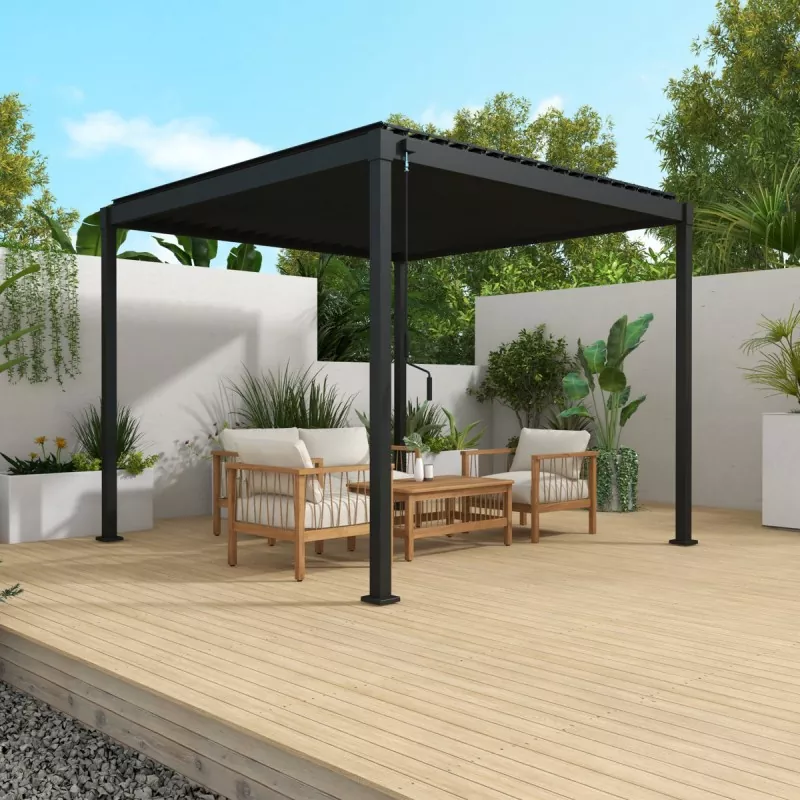
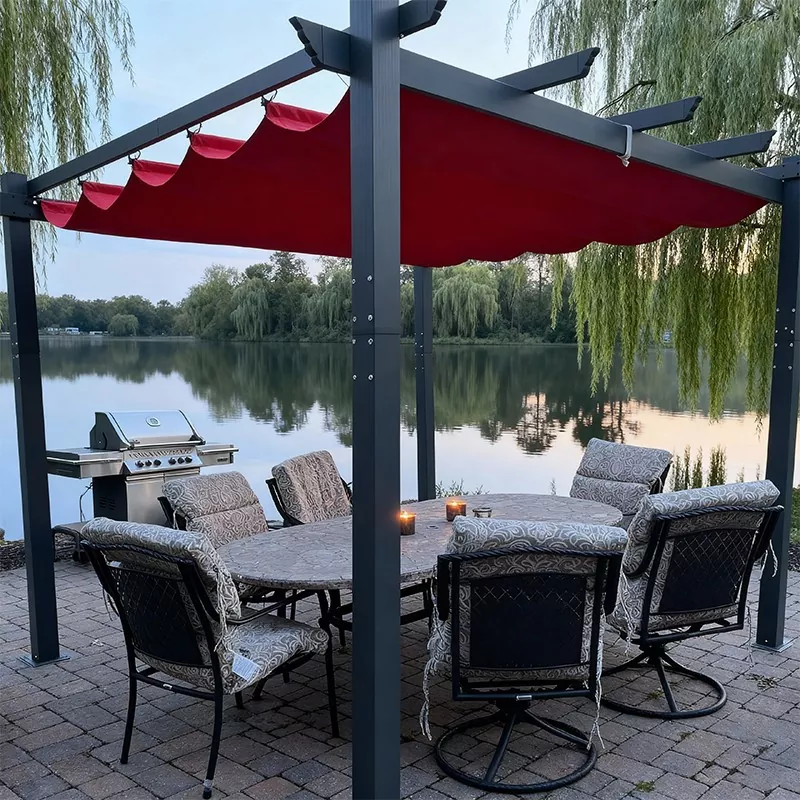
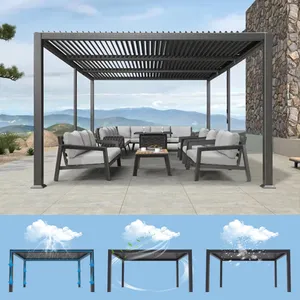
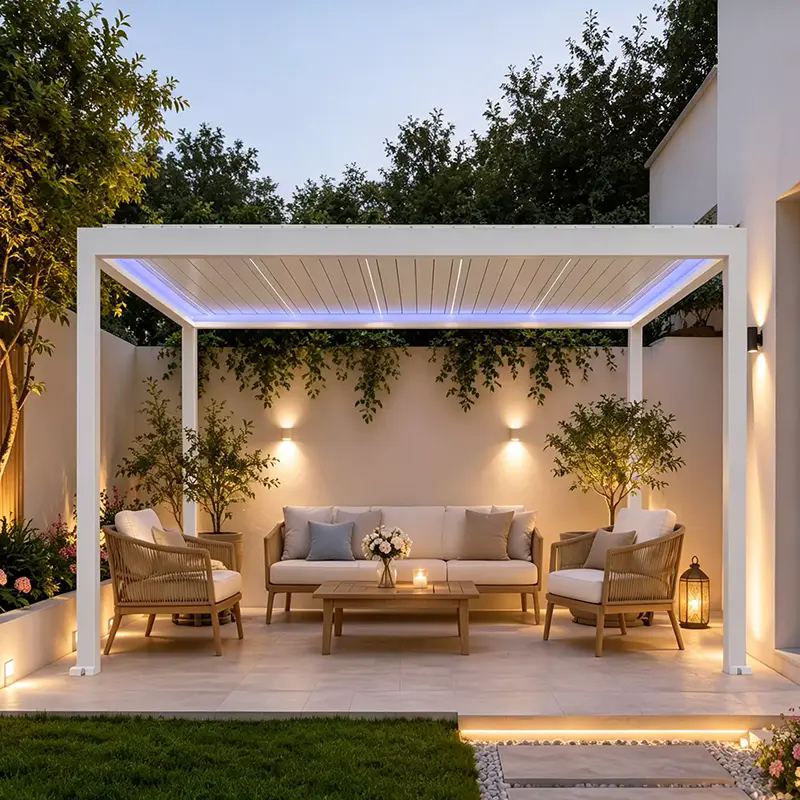
An Aluminium Barbecue Pergola is a permanent outdoor structure engineered to provide overhead protection and partial enclosure for barbecue and outdoor cooking areas. Unlike decorative pergolas designed purely for shade, this system is developed with functional performance in mind, especially in environments where heat, smoke, grease, and weather exposure are constant factors.
Traditional pergolas, particularly those made from wood, often prioritize appearance over performance. While visually appealing, wood structures are vulnerable to heat damage, smoke staining, moisture absorption, and insect infestation. Over time, these issues increase maintenance demands and reduce structural lifespan. An Aluminium Pergola addresses these challenges through material stability, precision manufacturing, and modular structural design.
From a structural standpoint, aluminium offers consistent dimensional accuracy. This allows each component to be produced with tight tolerances, ensuring that the pergola frame remains square, level, and stable even after years of outdoor exposure. At our factory, profile thickness, joint reinforcement, and surface treatment are carefully controlled to support long-term outdoor use.
How aluminium pergolas redefine outdoor barbecue spaces
A Barbecue Pergola is no longer viewed as a decorative accessory. In many projects, it functions as an extension of the living area, creating a defined cooking and dining zone that can be used across seasons. Aluminium systems enable this transformation through several key characteristics.
- Structural consistency that supports lighting, ceiling fans, and ventilation components without deformation
- Non-combustible material properties that reduce fire risk near grills and open flames
- Smooth surface finishes that resist grease buildup and simplify cleaning
- Modular design options that adapt to different barbecue layouts and site conditions
Compared to steel, aluminium provides a favorable balance between strength and weight. This allows for easier installation while maintaining the rigidity required for outdoor use. For residential patios, gardens, and commercial barbecue zones, this balance improves both safety and practicality.
What distinguishes a barbecue-specific pergola from standard aluminium pergolas
Not all aluminium pergolas are suitable for barbecue use. A structure designed for general shading does not necessarily address the thermal and ventilation demands created by grills. A barbecue-oriented design focuses on airflow, clearance, and material behavior under elevated temperatures.
Key distinctions include roof configuration, beam spacing, and load-bearing capacity. Open-louver or partially open roof designs help disperse smoke, while reinforced beams ensure that the structure remains stable even when additional accessories are installed. Our approach emphasizes functional engineering rather than purely aesthetic features.
Vionta Metal develops pergola systems with these practical considerations in mind. Each design reflects real outdoor cooking conditions, ensuring that the pergola enhances usability rather than restricting it. This attention to functional detail is essential for long-term satisfaction in both private and commercial installations.
Why aluminium is increasingly favored in global outdoor construction
Across many regions, aluminium has become the preferred material for outdoor architectural elements. Climate variability, rising maintenance costs, and stricter safety standards have accelerated this shift. Aluminium does not warp, crack, or rot, making it well suited for environments where temperature changes and moisture are unavoidable.
For barbecue applications, these properties are especially important. Exposure to heat and smoke can degrade many materials over time. Aluminium maintains its structural integrity and surface quality, reducing the need for frequent repairs or refinishing. Our experience shows that this stability directly contributes to lower total ownership costs.
From a sustainability perspective, aluminium is recyclable and supports long product life cycles. This aligns with modern construction preferences that emphasize durability and responsible material use. When integrated into a Barbecue Pergola system, these advantages translate into a reliable outdoor structure that performs consistently year after year.
Vionta Metal continues to refine its Aluminium Pergola designs to meet evolving outdoor living requirements. By focusing on material performance and real-world application scenarios, our factory delivers solutions that support safe, comfortable, and well-organized barbecue spaces.
Why choose an Aluminium Pergola for barbecue use and long-term outdoor performance
When planning an outdoor barbecue area, the choice of structure directly affects safety, durability, and usability. A pergola used near grills and cooking equipment must perform under conditions that include high temperatures, smoke exposure, grease residue, and changing weather. This is why an Aluminium Pergola has become a preferred solution for barbecue environments across residential and commercial projects.
Unlike decorative shade structures, a Barbecue Pergola must function as part of the cooking space. It needs to support airflow, resist heat-related deformation, and remain stable over years of outdoor exposure. Our experience shows that aluminium delivers these capabilities more consistently than traditional materials.
How aluminium material improves safety in barbecue environments

Safety is the primary concern when installing any structure near open flames or high-heat equipment. Aluminium is a non-combustible material, meaning it does not ignite, char, or release harmful fumes when exposed to elevated temperatures. This property alone makes it significantly safer than wood in barbecue applications.
A well-designed Barbecue Pergola also maintains adequate clearance between the roof structure and the grill area. Aluminium profiles retain their shape even under thermal stress, ensuring that clearances remain consistent over time. At our factory, profile thickness and connection design are engineered to prevent sagging or distortion.
- Non-combustible aluminium reduces fire risk around grills
- Stable profiles maintain safe clearances above cooking zones
- Secure joints prevent loosening caused by repeated heat cycles
These factors contribute to a safer outdoor cooking environment, especially in homes with frequent barbecue use or in commercial hospitality settings.
Why aluminium performs better than wood and steel under heat and smoke
Heat and smoke are unavoidable in any barbecue setup. Over time, these elements can degrade materials that are not designed for such exposure. Wood absorbs smoke particles and grease, leading to discoloration, odor retention, and surface damage. Steel, while strong, is prone to corrosion if protective coatings are compromised.
An Aluminium Pergola avoids these issues through inherent material properties. Aluminium does not absorb smoke or grease, and its surface finishes are designed to resist staining. This makes cleaning easier and preserves the appearance of the structure with minimal effort.
In addition, aluminium naturally forms a protective oxide layer that resists corrosion. When combined with high-quality surface treatments, this protection allows the pergola to perform reliably in outdoor environments where moisture and temperature changes are common.
- No smoke absorption or grease penetration
- Corrosion resistance suitable for outdoor conditions
- Stable appearance with reduced maintenance requirements
For long-term use, these advantages translate into lower maintenance costs and fewer structural concerns compared to alternative materials.
How structural design supports ventilation and smoke dispersion
Effective ventilation is essential for any barbecue area. Trapped smoke not only affects comfort but can also damage surrounding surfaces. A properly engineered Barbecue Pergola addresses this through roof design and beam spacing that promote natural airflow.
Aluminium systems allow for precise fabrication of open or adjustable roof configurations. Whether using fixed slats or partially open designs, the structure can be optimized to release smoke while still providing shade and weather protection. Our factory focuses on balancing coverage with ventilation to support real cooking conditions.
The rigidity of aluminium enables wider spans without excessive cross-bracing. This openness improves airflow and prevents smoke buildup, making the space more comfortable during extended use.
- Open roof designs improve upward smoke release
- Consistent beam spacing enhances air circulation
- Structural rigidity supports ventilation accessories if required
These design principles ensure that an Aluminium Pergola functions as an active component of the barbecue area rather than a passive shelter.
What long-term durability means for outdoor barbecue structures
Outdoor structures are exposed to more than just cooking-related stress. Sunlight, rain, wind, and temperature changes all affect performance over time. Aluminium excels in these conditions because it does not warp, crack, or rot.
For homeowners, this durability means consistent appearance and performance without frequent repairs. For commercial operators, it means predictable maintenance schedules and reduced downtime. Our experience shows that aluminium pergolas retain their structural integrity even after years of exposure.
Surface treatments further enhance durability by protecting against UV fading and environmental wear. At our factory, coating processes are selected based on outdoor performance rather than purely aesthetic considerations.
- Resistance to weather-related deformation
- Long service life with minimal upkeep
- Stable performance in varied climate conditions
These characteristics make aluminium a practical investment for any barbecue-focused outdoor structure.
Why project planners and homeowners prioritize aluminium pergolas
From a planning perspective, an Aluminium Pergola simplifies both installation and long-term management. The material’s strength-to-weight ratio allows for efficient transport and assembly without compromising stability. This reduces installation time and labor complexity.
For homeowners, ease of use and reliability are key. A Barbecue Pergola should enhance outdoor living without introducing ongoing maintenance concerns. Aluminium meets these expectations by delivering consistent performance with minimal intervention.
Vionta Metal designs pergola systems with these priorities in mind. By focusing on material behavior, structural logic, and real usage scenarios, our factory supports projects that demand both functionality and durability.
How does a Barbecue Pergola perform under heat smoke wind and outdoor conditions
A barbecue environment places unique demands on any outdoor structure. Heat from grills, rising smoke, grease particles, wind exposure, and changing weather all interact with the pergola on a daily basis. Understanding how a Barbecue Pergola performs under these combined conditions is essential for long-term safety and usability.
An Aluminium Pergola designed for barbecue use must do more than provide shade. It must actively support airflow, remain structurally stable under thermal stress, and resist environmental wear. These performance factors are not accidental. They are the result of deliberate material selection and engineering decisions made during design and manufacturing.
How aluminium structures respond to continuous heat exposure
Heat resistance is one of the most critical performance requirements for a barbecue pergola. While aluminium is a metal, it behaves differently from steel or iron under elevated temperatures. Aluminium does not burn, and its thermal expansion is predictable and manageable when profiles are properly engineered.
In barbecue applications, heat exposure is typically localized and intermittent rather than constant across the entire structure. Aluminium profiles are well suited to this condition because they dissipate heat efficiently, preventing localized overheating. At our factory, wall thickness and profile geometry are selected to maintain rigidity even when exposed to repeated heat cycles.
Unlike wood, which can dry out, crack, or char, aluminium maintains its physical integrity. This stability ensures that the pergola retains its original geometry, preserving clearances and preventing long-term deformation that could compromise safety.
- Predictable thermal expansion maintains structural alignment
- Efficient heat dissipation reduces localized stress
- Non-combustible behavior enhances overall fire safety
These characteristics allow a Barbecue Pergola to function reliably in close proximity to grills without introducing additional risk.
How smoke behavior influences pergola design
Smoke management is a defining factor in barbecue pergola performance. Trapped smoke reduces comfort, affects visibility, and can stain surrounding surfaces. An effective Aluminium Pergola incorporates design features that guide smoke away from the cooking area.
Roof openness, beam spacing, and vertical clearance all play a role. Open or partially open roof configurations allow smoke to rise and disperse naturally. Aluminium fabrication enables precise control of these dimensions, ensuring consistent airflow across the entire structure.
Because aluminium profiles maintain their shape over time, airflow paths remain unobstructed even after years of use. This consistency is essential in barbecue settings where repeated smoke exposure is expected.
- Open roof layouts encourage vertical smoke release
- Stable beam geometry preserves airflow channels
- Smooth surfaces reduce smoke residue buildup
These design considerations transform the pergola from a passive cover into an active component of the outdoor cooking environment.
How wind load and outdoor forces affect pergola stability

Outdoor barbecue areas are often located in open spaces such as gardens, patios, or rooftop terraces. These locations expose the pergola to wind forces that vary by region and installation height. A reliable Barbecue Pergola must be engineered to remain stable under such conditions.
Aluminium offers an excellent strength-to-weight ratio, allowing for rigid frames without excessive mass. This balance reduces wind-induced movement while keeping installation manageable. Our factory designs connection points and base plates to distribute loads evenly, minimizing stress on individual components.
Proper anchoring is equally important. Whether the pergola is surface-mounted or embedded, aluminium components work with standardized anchoring systems to maintain long-term stability. This is especially important in regions with seasonal storms or high wind exposure.
- Rigid frames resist lateral wind forces
- Lightweight construction reduces structural strain
- Engineered connections maintain stability over time
These features ensure that an Aluminium Pergola remains secure without sacrificing openness or visual appeal.
How weather exposure impacts long-term performance
Beyond heat and smoke, weather is a constant factor in outdoor structures. Rain, humidity, ultraviolet radiation, and temperature fluctuations all influence material behavior. Aluminium performs exceptionally well under these conditions due to its inherent resistance to corrosion and degradation.
Surface treatments further enhance weather performance by protecting against UV fading and environmental wear. Unlike painted steel or treated wood, aluminium coatings are designed to bond permanently with the substrate, reducing the risk of peeling or flaking.
This resilience is particularly valuable for barbecue pergolas, where cleaning routines may involve water or mild detergents. Aluminium surfaces tolerate regular maintenance without damage, supporting both hygiene and appearance.
- Corrosion resistance supports outdoor longevity
- UV-stable finishes preserve visual quality
- Moisture resistance prevents structural degradation
As a result, aluminium pergolas maintain consistent performance across diverse climates and usage patterns.
How engineering details influence real-world usability
The difference between a generic pergola and a barbecue-optimized structure often lies in small engineering details. Beam spacing, profile thickness, and connection design all influence how the pergola behaves during daily use.
An Aluminium Pergola engineered for barbecue applications considers accessory integration from the outset. Lighting, fans, and ventilation components can be incorporated without compromising structural integrity. This flexibility enhances usability and allows the pergola to evolve with user needs.
Vionta Metal applies practical engineering principles to ensure that these details align with real-world requirements. Our factory focuses on functional performance rather than purely decorative features, resulting in pergola systems that support everyday outdoor cooking activities.
By addressing heat, smoke, wind, and weather as interconnected factors, a Barbecue Pergola becomes a dependable foundation for outdoor living rather than a temporary shelter.
How Does an Aluminium Barbecue Pergola Perform in Real Outdoor Conditions?
When planning an outdoor cooking area, performance over time matters more than appearance alone. A well-engineered Barbecue Pergola must withstand heat, smoke, rain, wind, and seasonal temperature changes without compromising safety or comfort. This is where an Aluminium Pergola shows clear advantages.
At Vionta Metal, our factory focuses on structural stability, surface durability, and long-term usability. Every Barbecue Pergola we manufacture is designed for real-life outdoor environments, not showroom conditions.
Structural Stability Under Load and Wind
Our Aluminium Pergola systems are engineered using reinforced profiles and calculated load-bearing capacity. Roof frames and columns are designed to resist wind uplift and lateral movement.
- Reinforced aluminum beams with internal ribs
- Wide base plates for strong ground anchoring
- Tested resistance to strong wind zones
- Stable performance on patios, decks, and concrete slabs
This makes our Barbecue Pergola suitable for residential homes as well as commercial hospitality projects.
Heat Resistance and Smoke Handling
A common concern with any Barbecue Pergola is exposure to high temperatures. Aluminum does not burn, warp, or emit harmful substances when exposed to heat from grills.
- Non-combustible aluminum structure
- Optional open-louver or vented roof design
- Safe clearance design above barbecue equipment
Our factory designs ensure heat can dissipate naturally, maintaining comfort and safety during cooking.
Weather Resistance and Low Maintenance
Outdoor structures must perform year-round. Our Aluminium Pergola systems use powder-coated finishes that resist corrosion, UV exposure, and moisture.
- No rust or peeling paint
- Color stability under sunlight
- Easy cleaning with water only
This performance advantage makes our Barbecue Pergola ideal for long-term outdoor use with minimal maintenance.
Where Can an Aluminium Barbecue Pergola Be Used Effectively?
The flexibility of an Aluminium Pergola allows it to adapt to a wide range of outdoor spaces. Our experience as a China manufacturer and supplier shows that demand spans across private homes and commercial environments.
Residential Applications
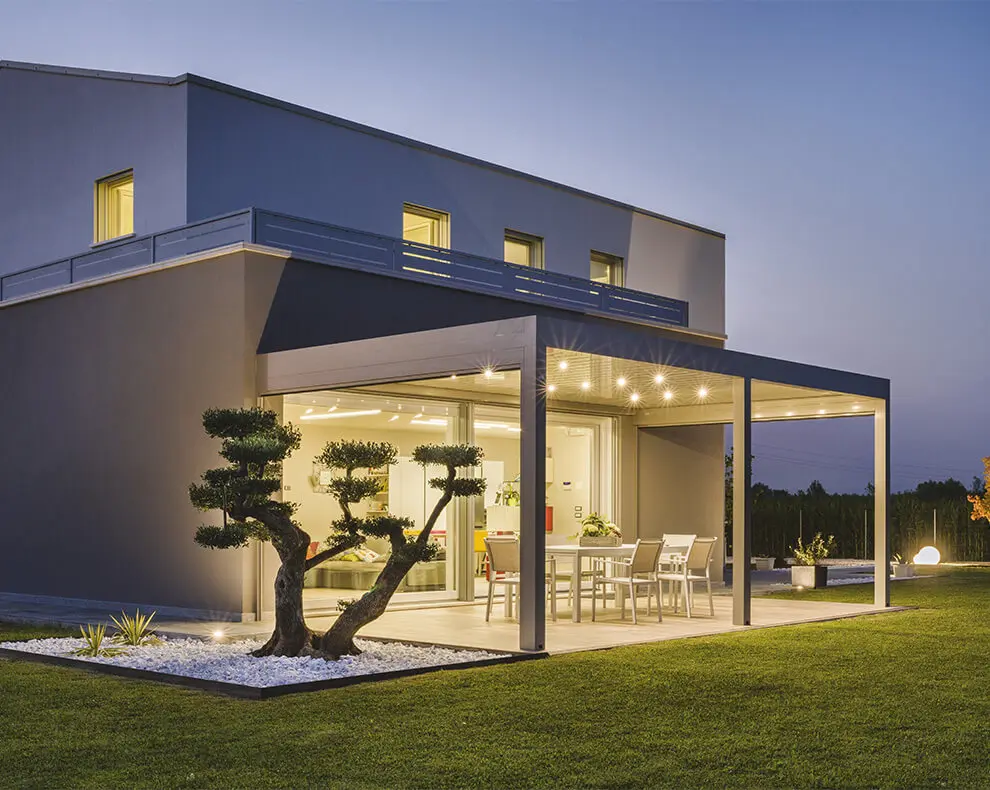
- Backyard barbecue zones
- Garden cooking and dining areas
- Patio grill shelters
- Poolside barbecue spaces
A Barbecue Pergola enhances outdoor living while creating a defined and safe cooking zone.
Commercial and Hospitality Projects
- Restaurants with outdoor grilling areas
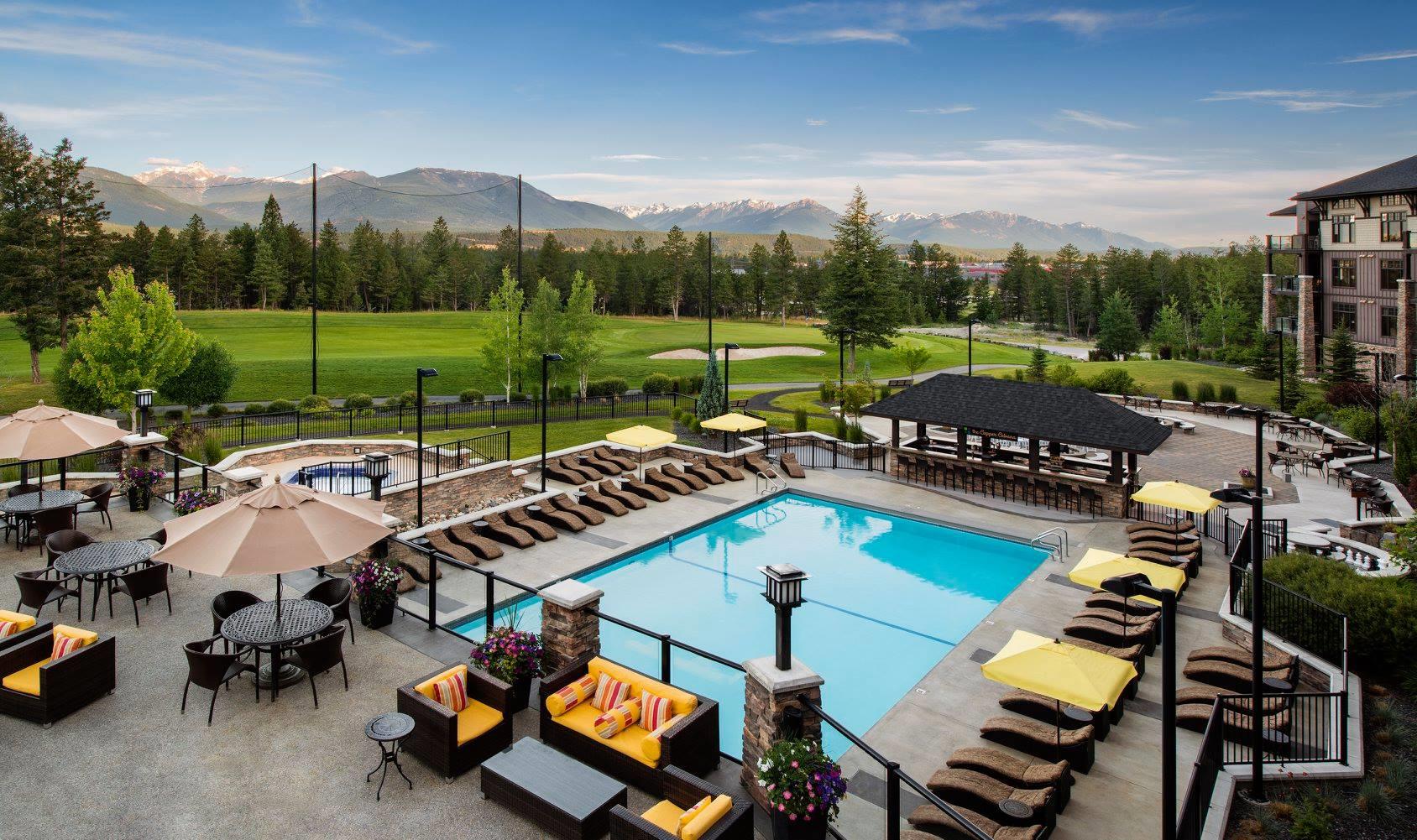
- Hotels and resorts
- Rooftop terraces
- Event venues
Our factory supports bulk orders and project-based customization, making Vionta Metal a reliable partner for international buyers.
Customization for Local Market Requirements
As a China-based manufacturer, we understand that design preferences and building codes vary by region. Our Aluminium Pergola solutions can be adjusted in size, finish, and configuration to match local regulations and aesthetic expectations.
Why Is an Aluminium Barbecue Pergola a Long-Term Investment?
Choosing an Aluminium Pergola is not only about shelter but also about durability, safety, and design flexibility. Compared with traditional wood or steel structures, aluminum offers a balanced solution with lower lifetime costs.
At Vionta Metal, our factory integrates design, production, and quality control to deliver Barbecue Pergola systems that meet international standards. Our experience as a China manufacturer and supplier allows us to support projects of different scales with consistent quality.
For buyers looking for reliability, customization, and professional manufacturing, our Barbecue Pergola solutions provide both functional value and long-term performance.
If you are planning to develop an outdoor cooking space or source a dependable Aluminium Pergola supplier, our team is ready to support your project with practical solutions and stable production capacity.
FAQ
Can you barbecue under a metal pergola safely?
Yes, you can barbecue under a metal pergola when it is properly designed. An Aluminium Pergola is non-combustible and does not ignite from grill heat. Proper height, ventilation, and clearance are essential for safety.
Can you barbecue under a metal pergola without smoke buildup?
Yes, with correct ventilation design. Our Barbecue Pergola systems can include open louvers or adjustable roof sections that allow smoke to escape naturally during cooking.
Can you barbecue under a metal pergola in rainy weather?
Yes. A well-designed Aluminium Pergola provides rain protection while maintaining airflow. This allows grilling to continue comfortably during light to moderate rain.
Can you barbecue under a metal pergola with gas or charcoal grills?
Both gas and charcoal grills can be used under a metal pergola when proper safety clearances are maintained. Our factory designs take different grill types into account.
Can you barbecue under a metal pergola all year round?
Yes. With weather-resistant aluminum construction and optional side panels or accessories, a Barbecue Pergola can be used throughout the year in most climates.
If you are searching for a dependable Barbecue Pergola solution from an experienced China manufacturer, Vionta Metal is ready to work with you. Our factory offers stable production, flexible customization, and consistent quality control.
Contact our team to discuss your Aluminium Pergola project and discover how our manufacturing expertise can support your outdoor space with confidence.
Related News
- Are Jalousie Windows Easy to Break Into?
- Is Stainless Steel Glass Railing Safe?
- How waterproof is an aluminum louvered pergola during heavy rain, and how should its drainage capacity be tested?
- How Strong Is Aluminum Railing Compared With Steel Railing?
- How to Choose Metal Railing for Residential and Commercial Projects
- How To Remove Hard Water Stains From Glass Railings?
Leave me a message