Vinyl Railing
High-Quality and Cost-Effective Vinyl Railing
Vinyl railing is a popular, low-maintenance alternative to wood, made from durable PVC. It's designed to resist rot, insects, and weather damage without the need for painting or staining widely used for decks, balconies, and outdoor spaces.
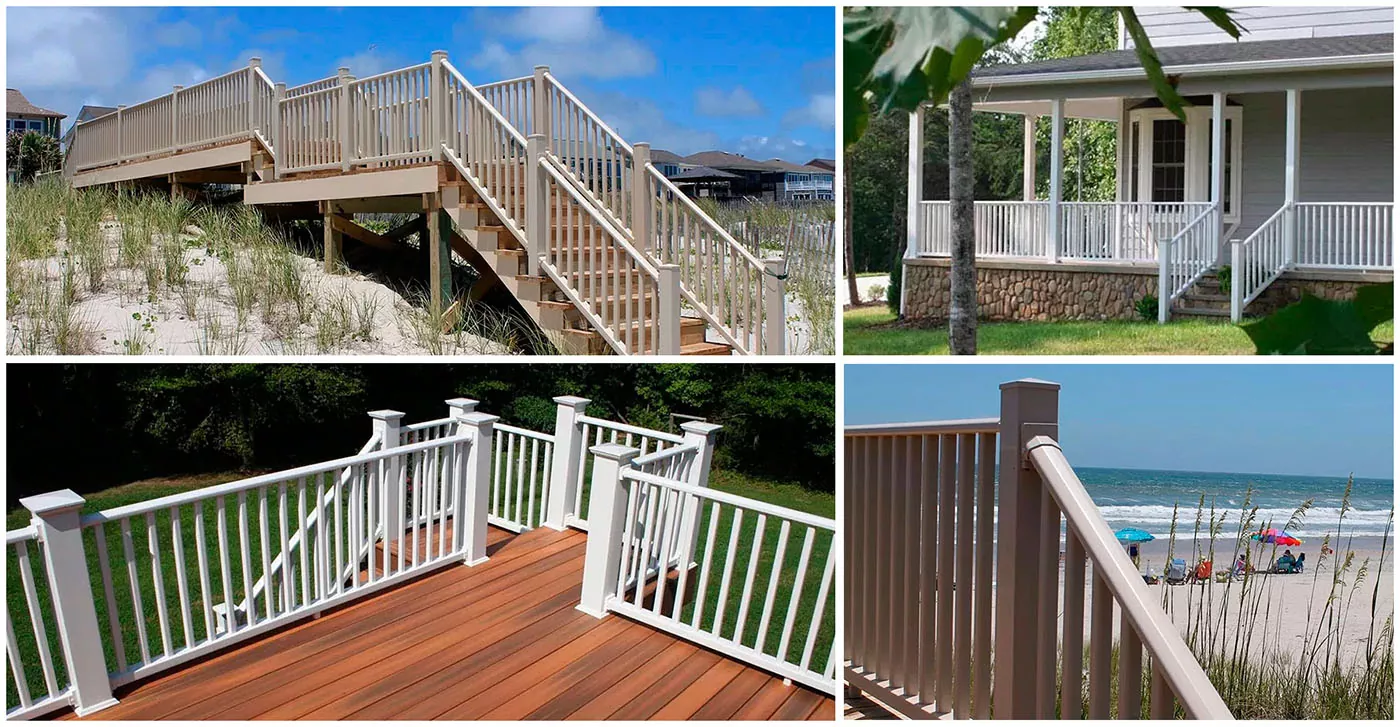
At Vionta Metal, we offer high-quality vinyl railings at wholesale prices, providing cost-effective solutions for contractors and businesses that require large quantities of railing materials. Our vinyl railing system is durable, weather resistant, and requires minimal maintenance, making it a practical and long-lasting choice for various projects.
To meet various aesthetic needs, Vionta offers a variety of vinyl railings with variable colors and surface treatments. Historic, contemporary, and modern designs are among these styles. The team works closely with customers to ensure that the most creative and unique products are introduced to the market, allowing you to obtain the best quality at reasonable prices. Contact us immediately.
Key Advantages
● Low Maintenance – No painting, staining, or sealing required
● Weather Resistant – UV protection, moisture-proof, and corrosion-free
● Durable Structure – Optional metal reinforcement for added strength
● Easy Installation – Modular system for fast assembly
● Cost-Effective – Lower lifecycle cost compared to wood
Why Choose Vionta as Your Vinyl Railing Supplier?
As an leading custom vinyl railing factory in China, Vionta focuses on delivering consistent quality and flexible solutions:
● Direct supply from China manufacturer
● OEM & ODM customization available
● Stable production capacity for bulk orders
● Strict quality control and export standards
● Competitive pricing for global buyers
Get Your Exclusive Vinyl Railing Solution
Applications
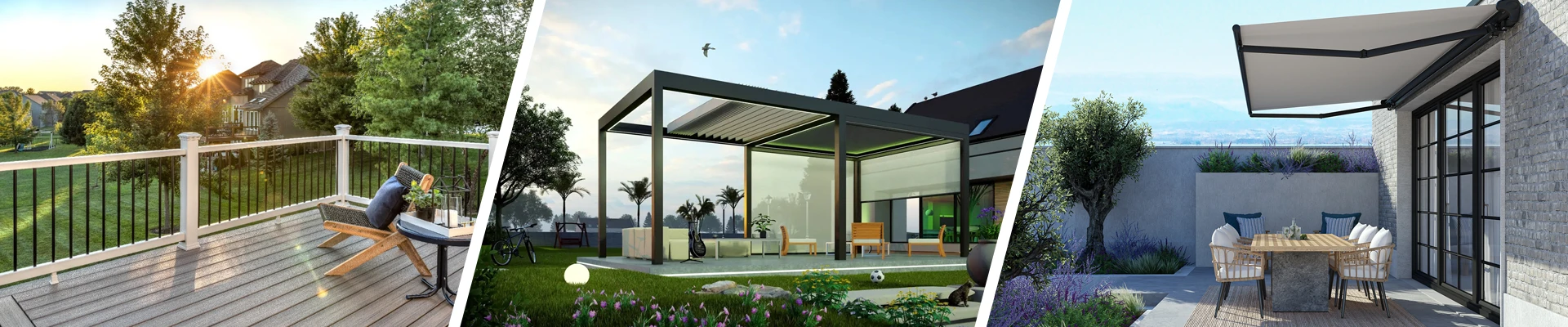
Vionta vinyl railing systems are widely used in:● Residential decks and balconies
● Commercial buildings and apartments
● Outdoor stairs and walkways
● Horse fence and farm fence
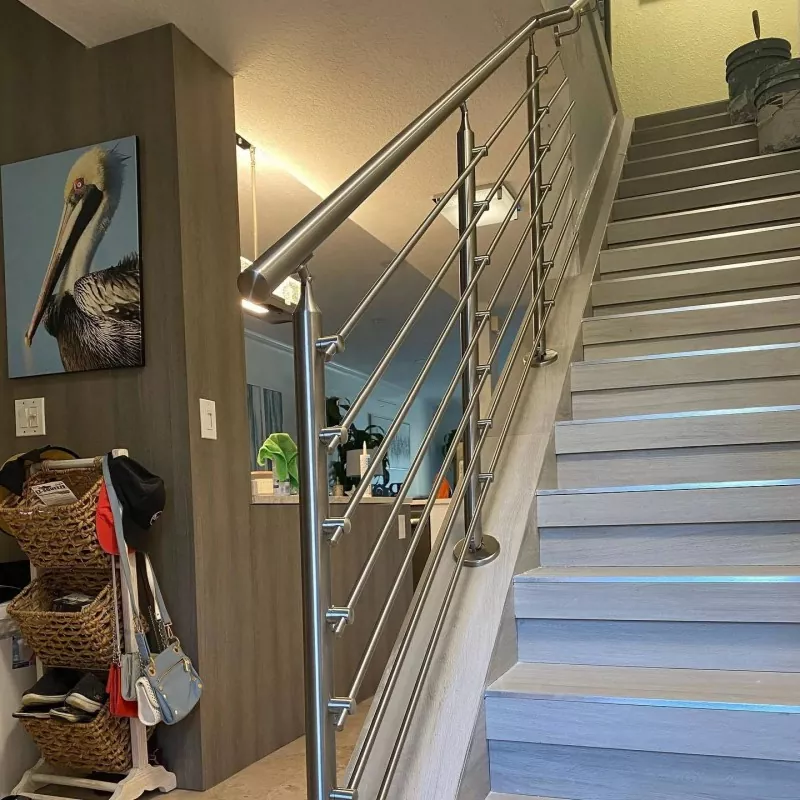
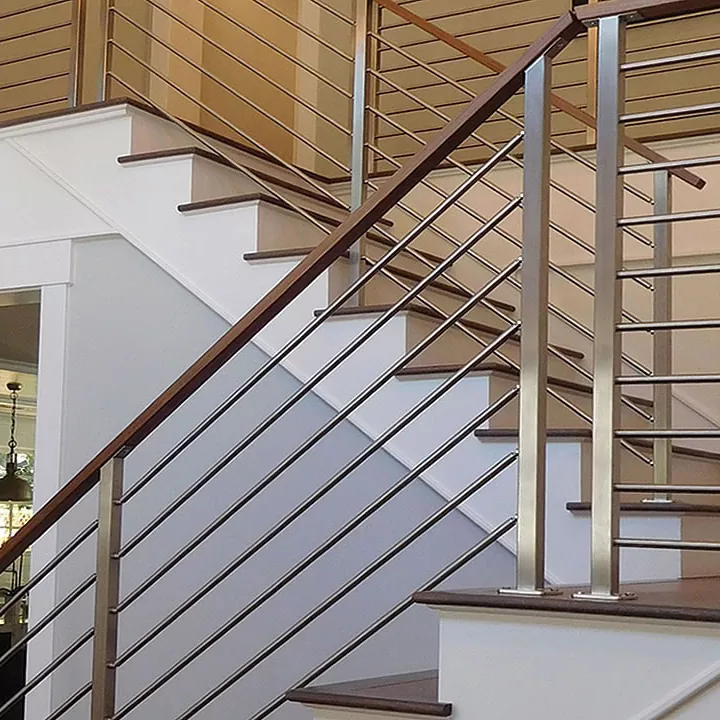
- View as
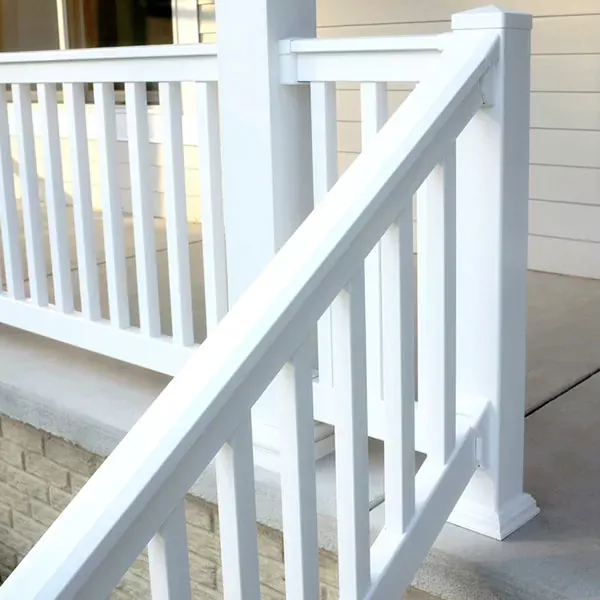
Vinyl Railing For Steps
Vinyl Railing For Steps is a complete stair railing system built from architectural-grade PVC (polyvinyl chloride) extrusions, combined with stair-specific angled connectors, adjustable post bases, and raking top and bottom rails. Unlike flat-run deck railing, the steps series is structurally adapted for stair pitch angles — typically 30° to 40° — allowing posts, rails, and pickets to align continuously along the stair slope without field fabrication or custom welding.
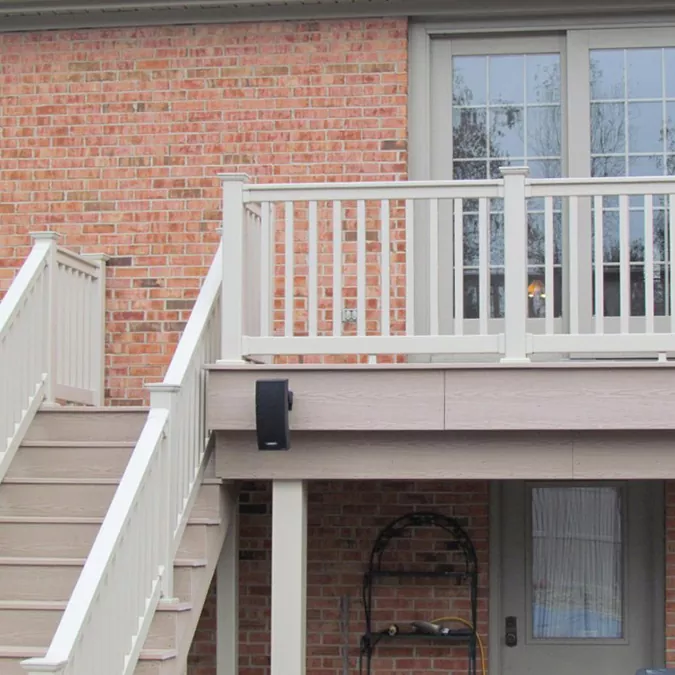
Vinyl Deck Railing
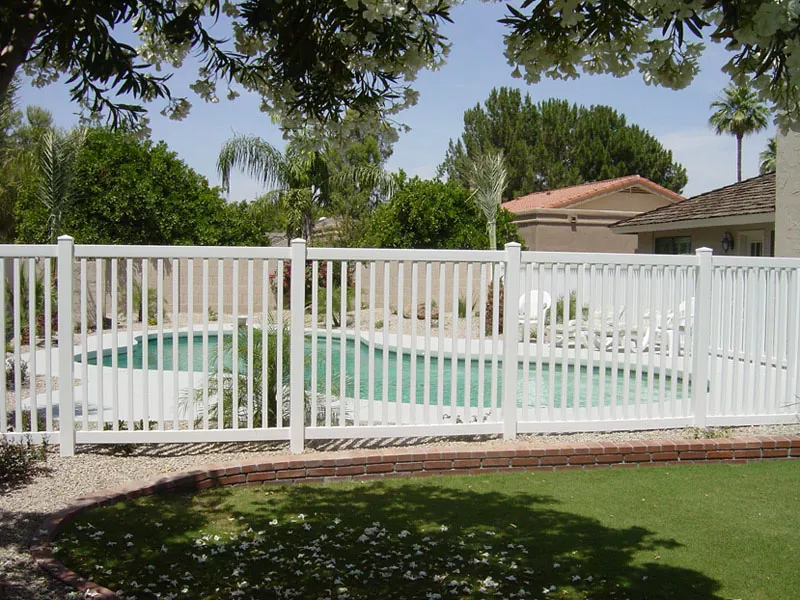
Vinyl Deck Railing is an outdoor fencing system made using a modified polyvinyl chloride (PVC) extrusion process. It is widely used on residential patios, commercial decks, pool fences, and sidewalks. Compared to traditional wood or aluminum fencing, vinyl fencing offers significant advantages in weather resistance, low maintenance costs, and long-lasting aesthetics.
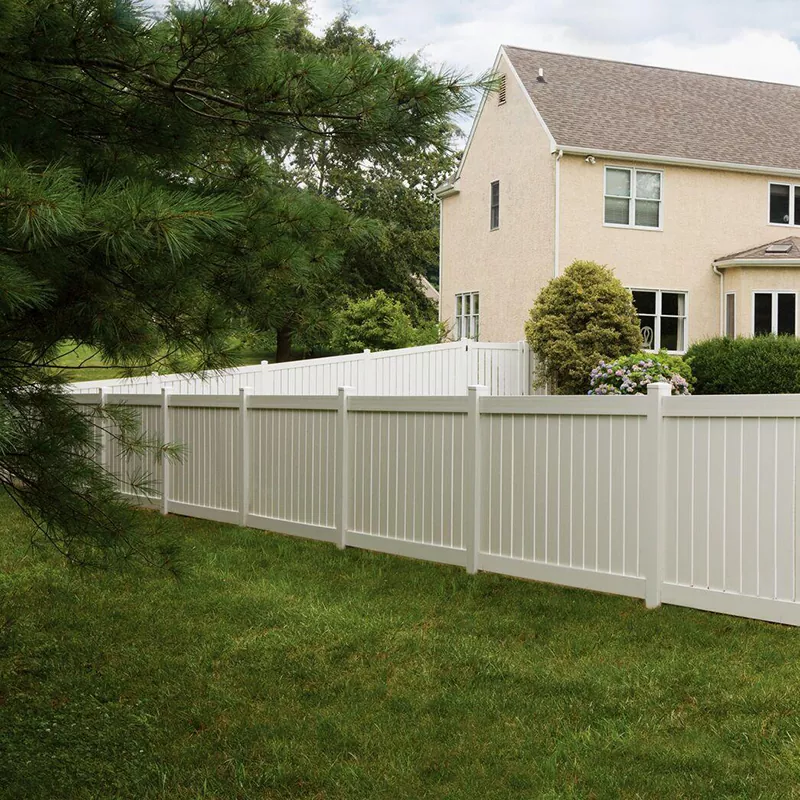
Vinyl Privacy Fence
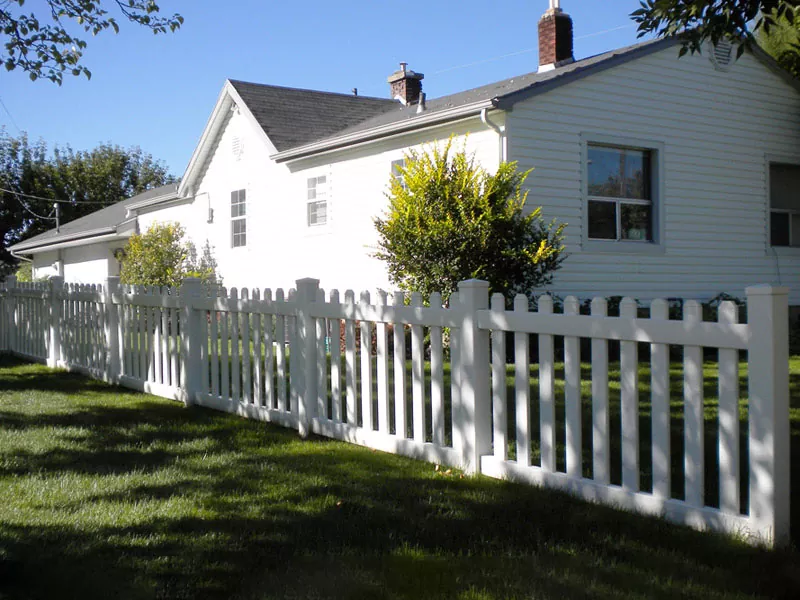
Vionta, a leading fence manufacturer in China, specializes in customized production for the North American, European, and global markets. Our full range of Vinyl Privacy Fences requires no painting or maintenance, are UV resistant and corrosion resistant, and are suitable for residential yards, commercial real estate, and industrial sites.
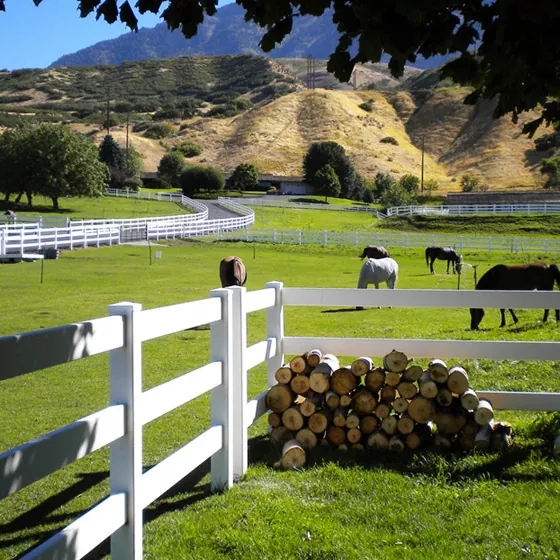
3 Rail Vinyl Fence
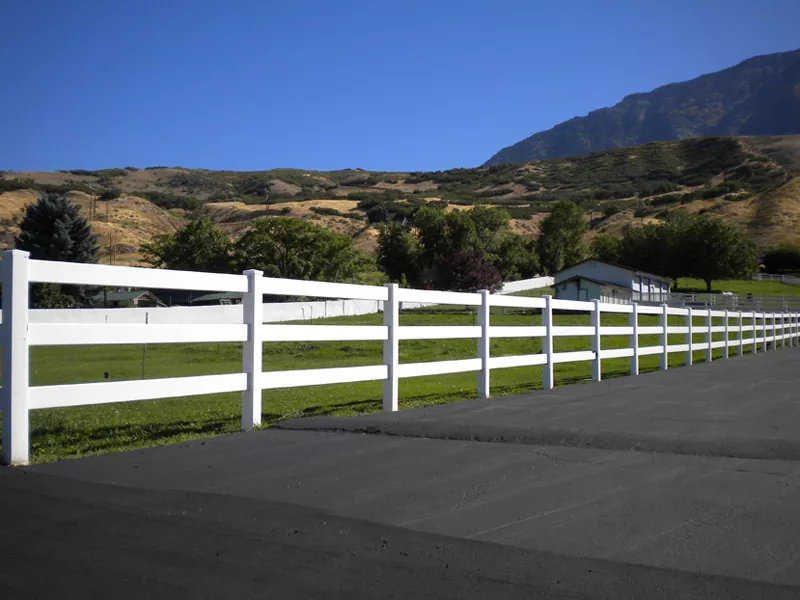
Vionta 3 Rail Vinyl Fence is a durable and low-maintenance fencing solution, ideal for wholesale buyers, contractors, and distributors seeking high-quality vinyl fence panels with factory direct supply, competitive pricing, and reliable bulk procurement options.

Vinyl Porch Railing
Vionta Vinyl Porch Railing offers weather-resistant durability, low maintenance, and easy installation, making it a good choice for contractors, builders, and wholesalers seeking high-quality porch railing systems with factory direct supply and competitive bulk pricing.
What Is Vinyl Railing?
An overview of the material, how it is manufactured, and why it has become a popular choice for residential decks, porches, and fencing applications from Vionta.
Vinyl railing — also called PVC railing — is a barrier and safety system made from polyvinyl chloride, a rigid plastic that has been widely used in outdoor construction for decades. It is extruded into hollow profiles and assembled into posts, rails, and balusters that connect to form a complete railing system.
The material does not absorb water, does not rot, and cannot rust. Unlike wood, it does not need to be sanded, stained, or painted on a regular schedule. Unlike steel or wrought iron, it is not vulnerable to moisture-driven corrosion. This combination makes it a practical choice for homeowners who want a clean look without ongoing upkeep.
Most vinyl railing is white or off-white, though tan, clay, and gray colors are commonly available. The color is molded throughout the entire profile — it does not sit on the surface as a coating — so minor scratches are far less visible than they would be on powder-coated metal.
Vinyl railing systems are typically sold as panel kits or component sets. A basic kit includes posts, top and bottom rails, and balusters. Hardware, post mounts, and post caps are usually included or sold as add-ons. Installation does not require welding or specialized tools, making it accessible for DIY projects.
Key Material Advantages
- Will not rot, rust, splinter, or absorb moisture
- Color runs through the entire profile — not a surface coating
- No painting, staining, or sealing required
- Resistant to insects including termites
- Lightweight — easy to handle and cut on site
- Smooth surface cleans easily with soap and water
- Does not conduct electricity
- Available in pre-assembled panel kits for faster installation
Types of Vinyl Railing Systems
Vinyl railing is available in several system configurations. The right type depends on your application, the look you want, and local building code requirements.
Vinyl Deck Railing
The most widely used type. Designed for residential decks, back porches, and elevated platforms. Sold as panel kits with posts, rails, and balusters. Surface-mount and fascia-mount post bases available.
Vinyl Porch Railing
Designed for front porches at grade level or slightly elevated. Usually features a decorative top rail profile and routed balusters for a traditional appearance. Common in colonial and craftsman-style homes.
Vinyl Stair Railing
Angled sections designed to follow the pitch of a staircase. Requires raking rail brackets or adjustable connectors. Graspable handrail profiles are available to meet building code requirements for stair safety.
Vinyl Fence Railing
Used as a fencing system or property boundary barrier. Rail sections fit into routed fence posts. Popular for ranch-style properties and paddock fencing. Typically 2-rail, 3-rail, or 4-rail configurations.
Vinyl Pool Railing
Installed around pool decks and spa areas. Vinyl is a natural fit for pool environments because it resists chemical exposure and does not corrode. Self-closing gate kits available for code compliance.
Vinyl Panel Railing
Uses solid or semi-solid vinyl panels as infill between posts, instead of individual balusters. Creates a more private feel. Common on balconies and elevated decks where wind or privacy is a concern.
Vinyl with Metal Insert Railing
Vinyl posts and rails with a steel or aluminum insert inside the hollow profile. The insert adds structural rigidity, allows wider post spacing, and improves resistance to lateral force. Recommended for taller applications.
Vinyl Wall-Mount Handrail
A single graspable rail fixed to a wall via brackets. Used on indoor and outdoor staircases, ramps, and hallways. Does not require posts or balusters. Available in round and flat-bottom profiles.
Vinyl Railing vs. Other Materials
How vinyl compares to wood, aluminum, steel, and composite railing across the factors that matter most for outdoor projects.
| Factor | Vinyl / PVC | Wood | Aluminum | Steel / Wrought Iron | Composite |
| Rust / Rot Resistance | ✔ Excellent | ✘ Rots over time | ✔ Excellent | ✘ Rusts | ✔ Good |
| Maintenance Required | Very Low | High (annual) | Very Low | Moderate | Low |
| Painting / Staining | ✔ Not needed | ✘ Required regularly | ✔ Not needed | ✘ Needed over time | ✔ Not needed |
| Structural Strength | Moderate | Moderate | High | Very High | Moderate |
| Weight | Light | Moderate | Light | Heavy | Moderate |
| Color Options | Limited (white, tan, gray) | Any (painted or stained) | Wide (powder coat) | Wide (painted) | Moderate |
| Upfront Cost | Low–Moderate | Low–Moderate | Moderate | High | Moderate–High |
| Outdoor Lifespan | 15–25 years | 5–15 years | 20–50 years | 15–40 years | 15–25 years |
| DIY-Friendly | ✔ Yes | ✔ Yes | ✔ Yes | ✘ Welding needed | ✔ Yes |
| Recyclable | ✘ Difficult | ✔ Yes | ✔ 100% | ✔ Yes | ✘ Partial |
Bottom line: Vinyl railing is the best choice when low upfront cost, zero maintenance, and a clean white appearance are the top priorities. If you need maximum structural strength or a wide range of colors, aluminum is a better fit. If budget and traditional aesthetics are the main driver, wood remains competitive but requires ongoing care.
Maintenance and Long-Term Care
Vinyl railing needs less attention than almost any other railing material. Here is what minimal maintenance actually looks like in practice.
Regular Cleaning
Rinse vinyl railing a few times per year with a garden hose. For surface dirt, mildew, or pollen, wash with warm water and mild dish soap using a soft sponge or cloth. Avoid abrasive scrubbing pads — they scratch the gloss surface and make it harder to clean in the future.
Removing Stubborn Stains
For mildew or green algae, a solution of one part bleach to four parts water applied with a soft brush works well. Rinse thoroughly after. For rust stains (usually from nearby metal fasteners), a dedicated vinyl cleaner or oxalic acid-based cleaner is more effective than bleach.
Seasonal Checks
Inspect post bases, rail brackets, and fasteners once a year. Re-tighten any loose connections. Check that post caps are still seated. Replace any cracked balusters or rail sections — vinyl components are sold individually by most manufacturers and are straightforward to swap out.
Cold Weather Behavior
Vinyl becomes more brittle in very cold temperatures. Avoid impact loads on railing in freezing weather. Do not use metal scrapers to remove ice from vinyl surfaces — use a plastic scraper or warm water instead.
Maintenance Schedule
- Every 3 months: Rinse with garden hose to clear debris
- Every 6 months: Full wash with soap and water
- Once a year: Inspect fasteners and post bases; re-tighten
- Once a year: Check post caps are sealed; re-seat if loose
- After storms: Check for cracked balusters, loose panels
- As needed: Remove stains with vinyl cleaner
- Every 5 years: Assess UV discoloration; replace yellowed sections if needed
Frequently Asked Questions
Straightforward answers to the most common questions about vinyl railing.
How long does vinyl railing last?
Quality vinyl railing made from virgin PVC with UV stabilizers typically lasts 15–25 years outdoors with minimal maintenance. The material will not rust or rot, but UV exposure can cause gradual yellowing over time, especially in regions with intense sunlight. Most reputable manufacturers offer lifetime or 25-year limited warranties on their railing systems.
Does vinyl railing turn yellow over time?
It can, depending on the PVC formulation and the amount of direct UV exposure. Lower-quality vinyl with minimal UV stabilizers will yellow faster. Products made from virgin PVC with titanium dioxide (TiO2) added to the resin hold their white color significantly better. If yellowing does occur, products like vinyl-specific whiteners can restore some brightness.
Is vinyl railing strong enough to meet building code?
Yes — properly specified vinyl railing can meet IBC and IRC load requirements when installed correctly with the right post base hardware and steel inserts where needed. However, not all vinyl railing products are tested to the same standard. Always ask your supplier for load test documentation if you need code compliance for a permit inspection.
Can I paint vinyl railing?
Technically yes, but it is generally not recommended by manufacturers. Standard latex or oil-based paint does not bond well to vinyl and will peel relatively quickly. If you want a different color, look for vinyl railing products that come in that color from the factory, or consider switching to aluminum railing which offers a much wider range of powder coat color options.
How do I clean mold or mildew off vinyl railing?
Mix one part household bleach with four parts water. Apply the solution to the affected area with a soft brush or sponge, let it sit for a few minutes, then scrub gently and rinse thoroughly with clean water. For heavier buildup, a vinyl-specific cleaner or a pressure washer on a low fan setting works well. Avoid abrasive scrubbers that can scratch the surface.
What is the difference between vinyl railing and composite railing?
Vinyl railing is made entirely from PVC plastic. Composite railing is made from a blend of wood fiber and plastic resin. Composite tends to look more like real wood and holds paint or stain better than vinyl, but it can still absorb some moisture over time and typically costs more. Vinyl is lighter, fully moisture-proof, and requires less maintenance but offers fewer color options.
Do I need a steel insert in my vinyl posts?
For 36" railing applications on low decks, hollow vinyl posts may be sufficient in many systems. For 42" railing, elevated decks, or anywhere you expect high lateral loads, a steel or aluminum insert is strongly recommended and sometimes required by code. The insert dramatically reduces post flex and improves the overall feel and safety of the railing.
Can vinyl railing be used in cold climates?
Yes, but with some caveats. Vinyl becomes more brittle in sub-zero temperatures, which makes it more susceptible to impact cracking. Avoid striking the railing with hard objects in freezing conditions, and do not use metal scrapers to remove ice. In very cold climates, cellular PVC tends to handle thermal expansion and contraction slightly better than standard solid-wall PVC.
Ready to Order Vinyl Railing?
Whether you need a small residential deck kit or a large supply order, Vionta can help you find the right system at the right price. Send us your project details for a fast, accurate quote.
Fast Lead Times · Custom Sizes Available · OEM & Wholesale Welcome · Export Packaging