Aluminum Glass Railing
When architects pursue openness and fluidity, aluminum glass railings have become the preferred choice for high-end building projects worldwide. It combines the strength of aluminum alloy with the transparency of glass, not only breaking the boundaries of architecture, but also reflecting the progress of modern design.
Aluminum Glass Railing is a railing system that pairs an aluminum alloy structural frame with safety glass infill panels. Among the many configurations available, Vionta specialises in the frameless top-rail design — a system where the glass panels extend to full height with no visible horizontal aluminum bar capping the top edge. The clean, uninterrupted glass line is the defining visual characteristic of this style, and it is the primary reason architects and developers specify it for premium residential and commercial projects.
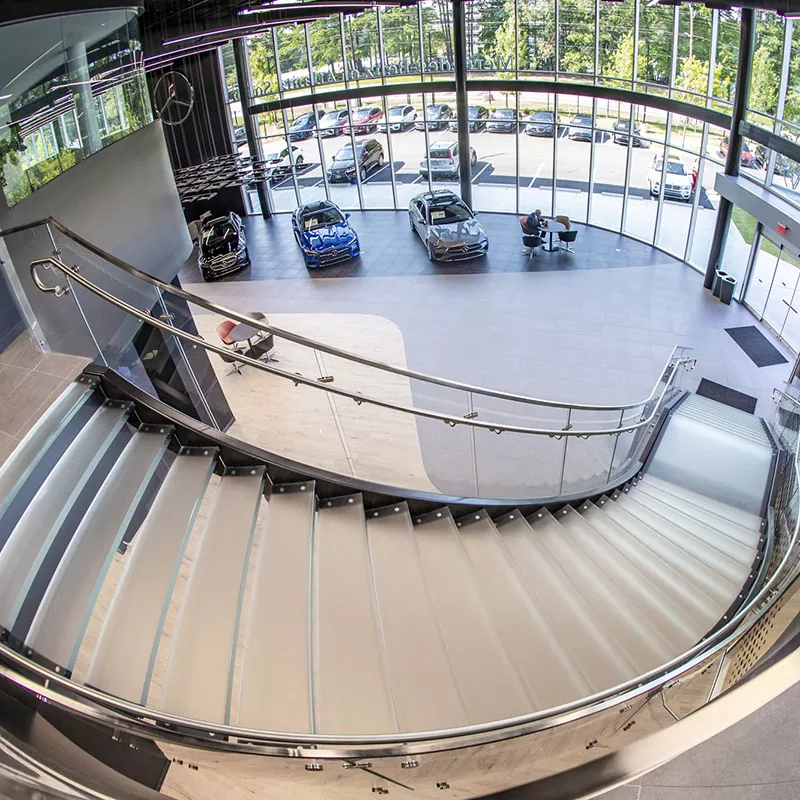
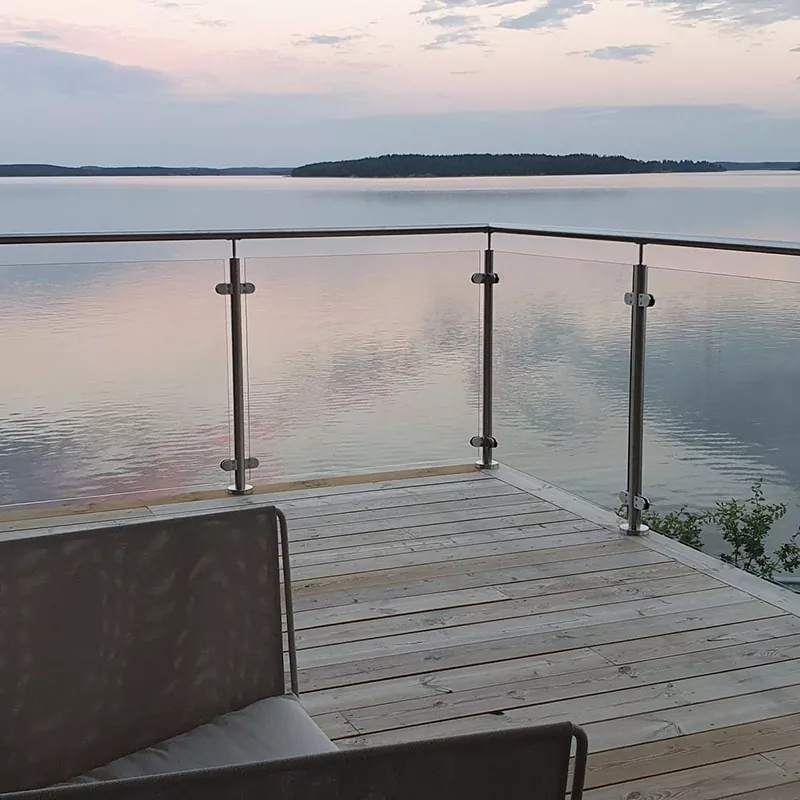
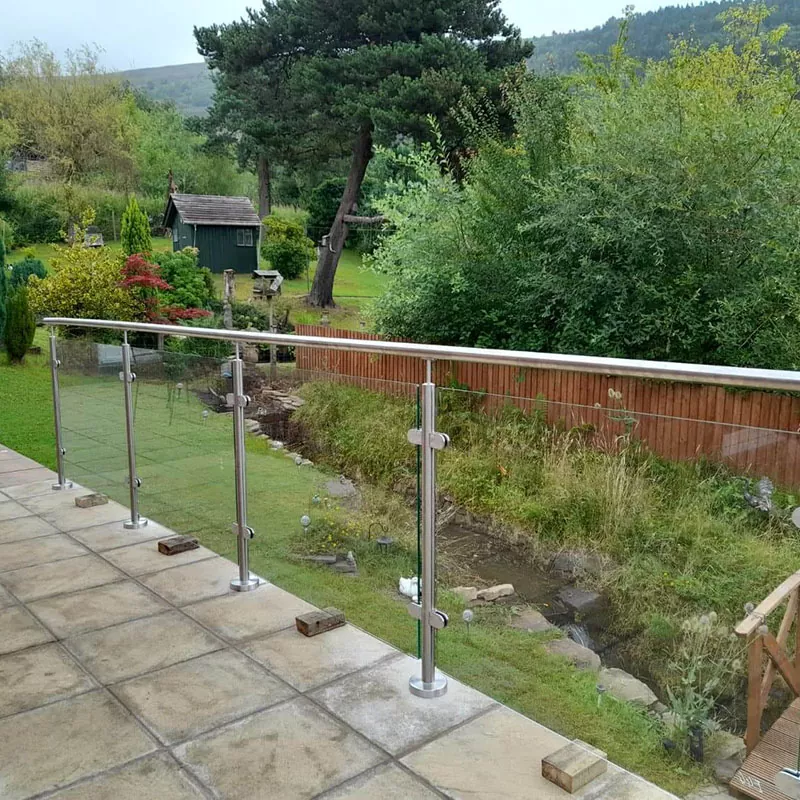
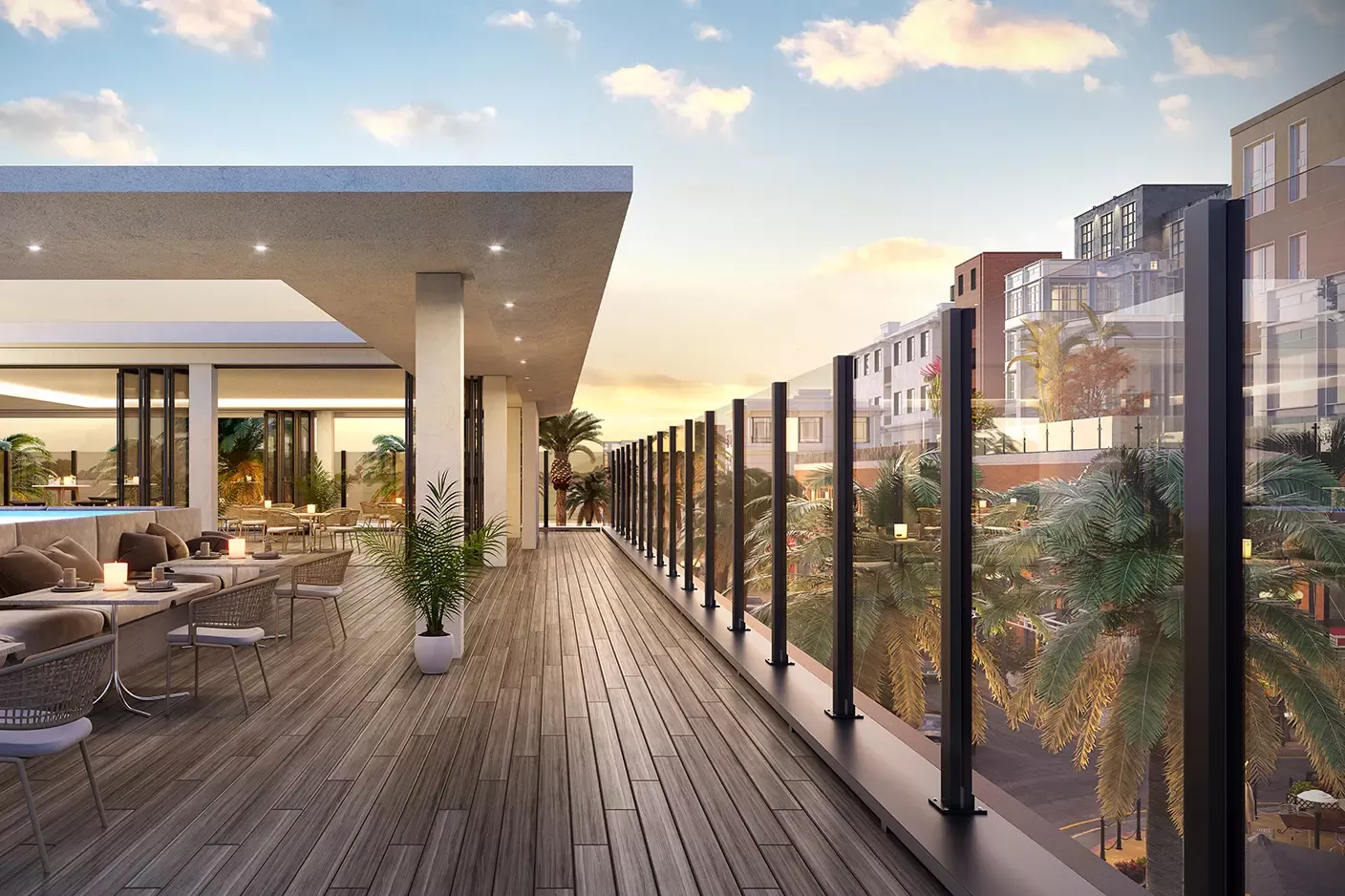
This type of railing appears on balconies, terraces, pool decks, staircases, mezzanine floors, and hotel corridor edges — anywhere that preserving a sightline or creating a sense of open space is a design priority. Because the aluminum is concentrated at the base and posts rather than framing the glass on all four sides, the structure recedes from view and the glass becomes the focus.
Frameless Top Design: What It Is and Why It Matters
In a conventional aluminum glass railing, a horizontal aluminum top rail runs along the full length of the system, capping the glass panels and tying the posts together at the top. The aluminum is visible from both sides, creates a horizontal line that divides the view, and defines the system as clearly man-made architecture sitting in front of whatever is beyond it.
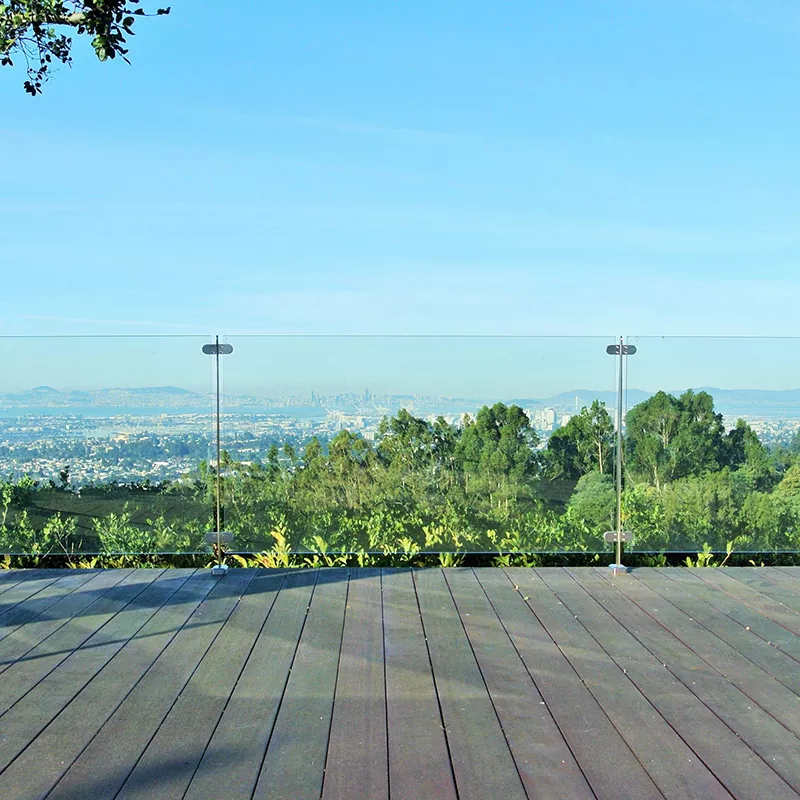
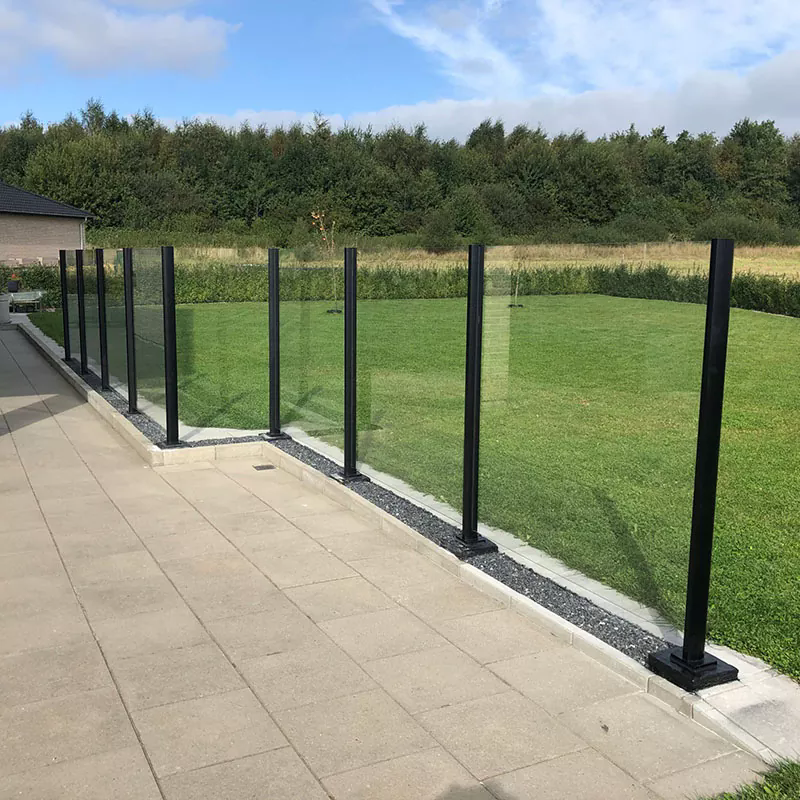
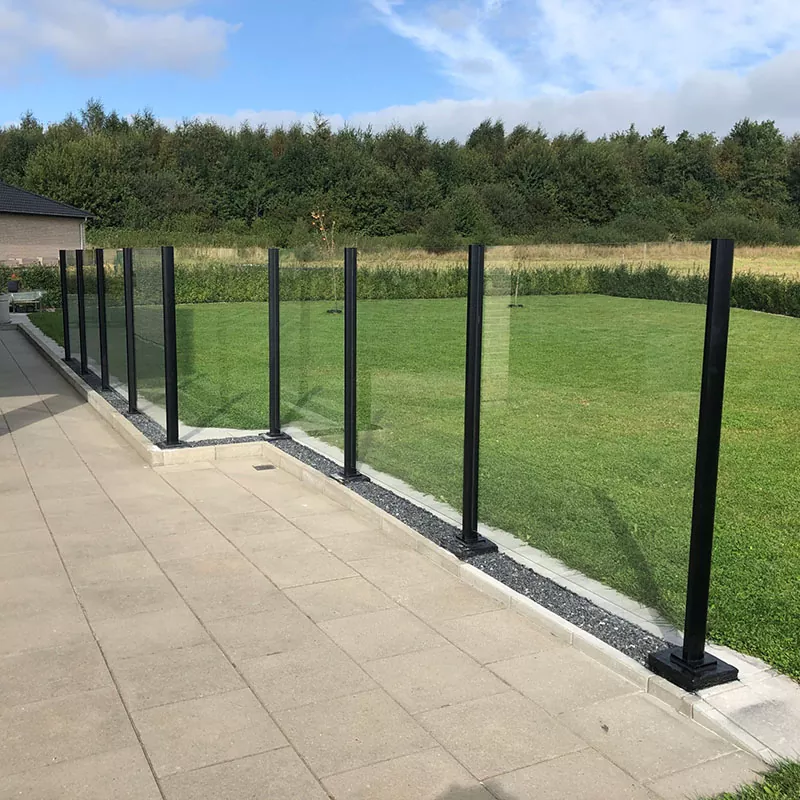
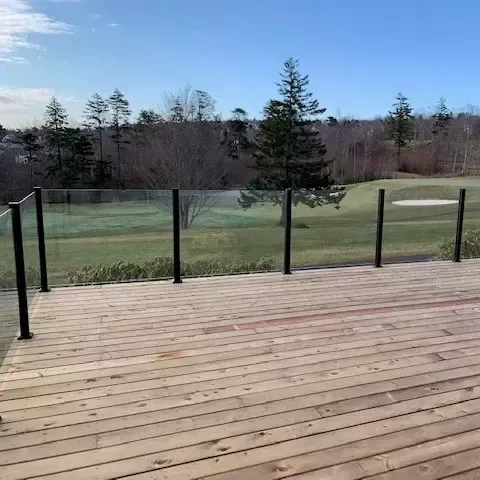
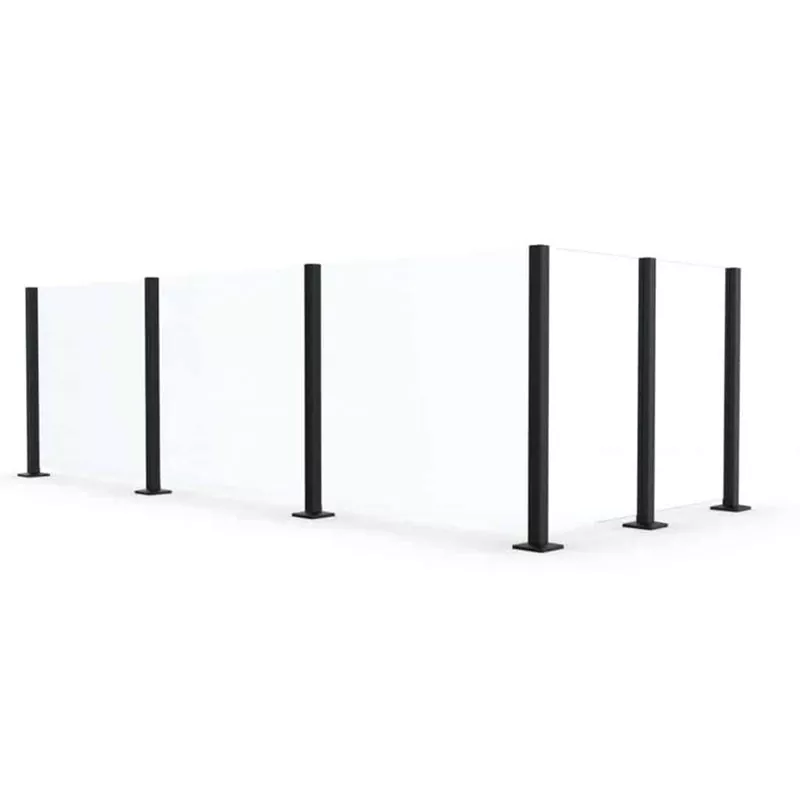
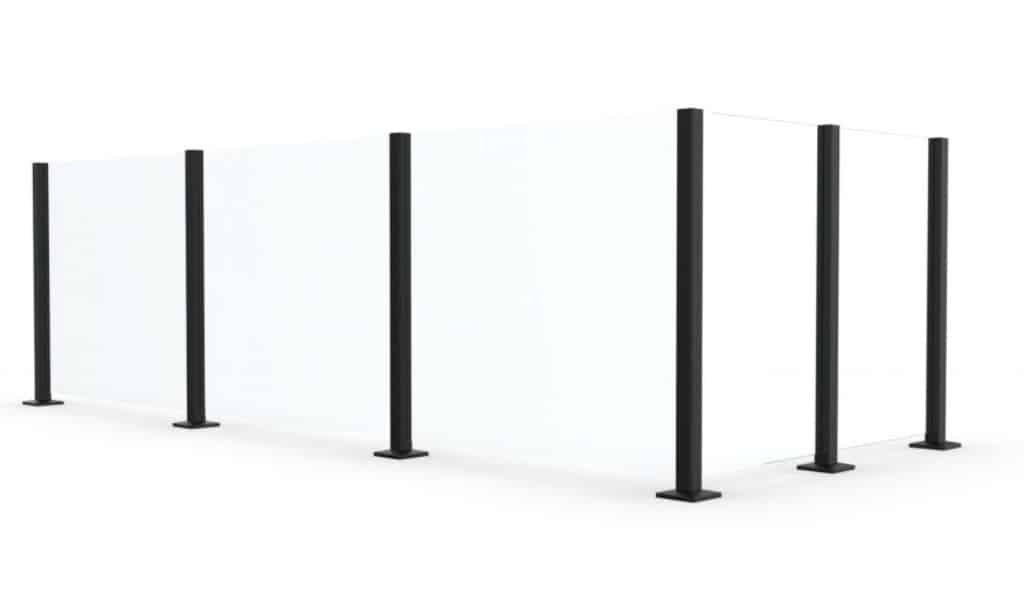
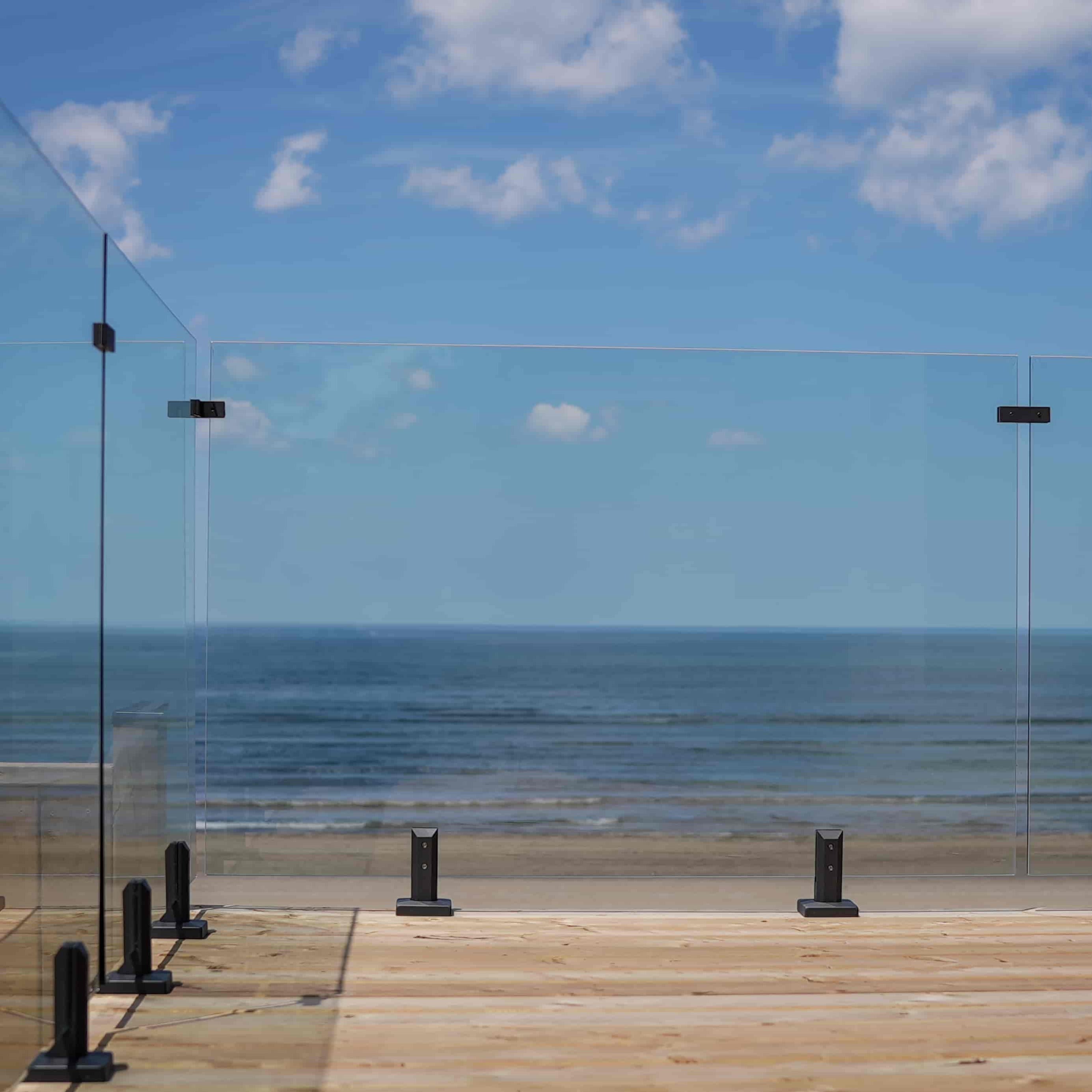
In a frameless top design, that top rail is removed entirely or replaced by a slim glass-edge cap that is nearly invisible at a distance. The glass panels stand at full height, their top edges either polished and exposed or fitted with a minimal U-profile that does not project above the glass line. From a standing or seated position, the visual result is a transparent plane from ankle to eye level with no horizontal interruption — the view beyond reads as continuous, unbroken space.
This is not simply an aesthetic preference. Research in residential real estate and hospitality design consistently shows that unobstructed views increase perceived property value and guest satisfaction. A balcony where you can see the ocean, garden, or skyline without a bar of aluminum crossing your field of vision is a fundamentally different experience from one where the view is divided. For developers, specifying a frameless top system is one of the most cost-effective ways to elevate the perceived quality of an outdoor space.
Frameless Top vs. Other Railing Styles: A Direct Comparison
Understanding where the frameless top design fits relative to other common railing configurations helps clarify which system suits a given project.
Frameless Top Aluminum Glass Railing (This Product)
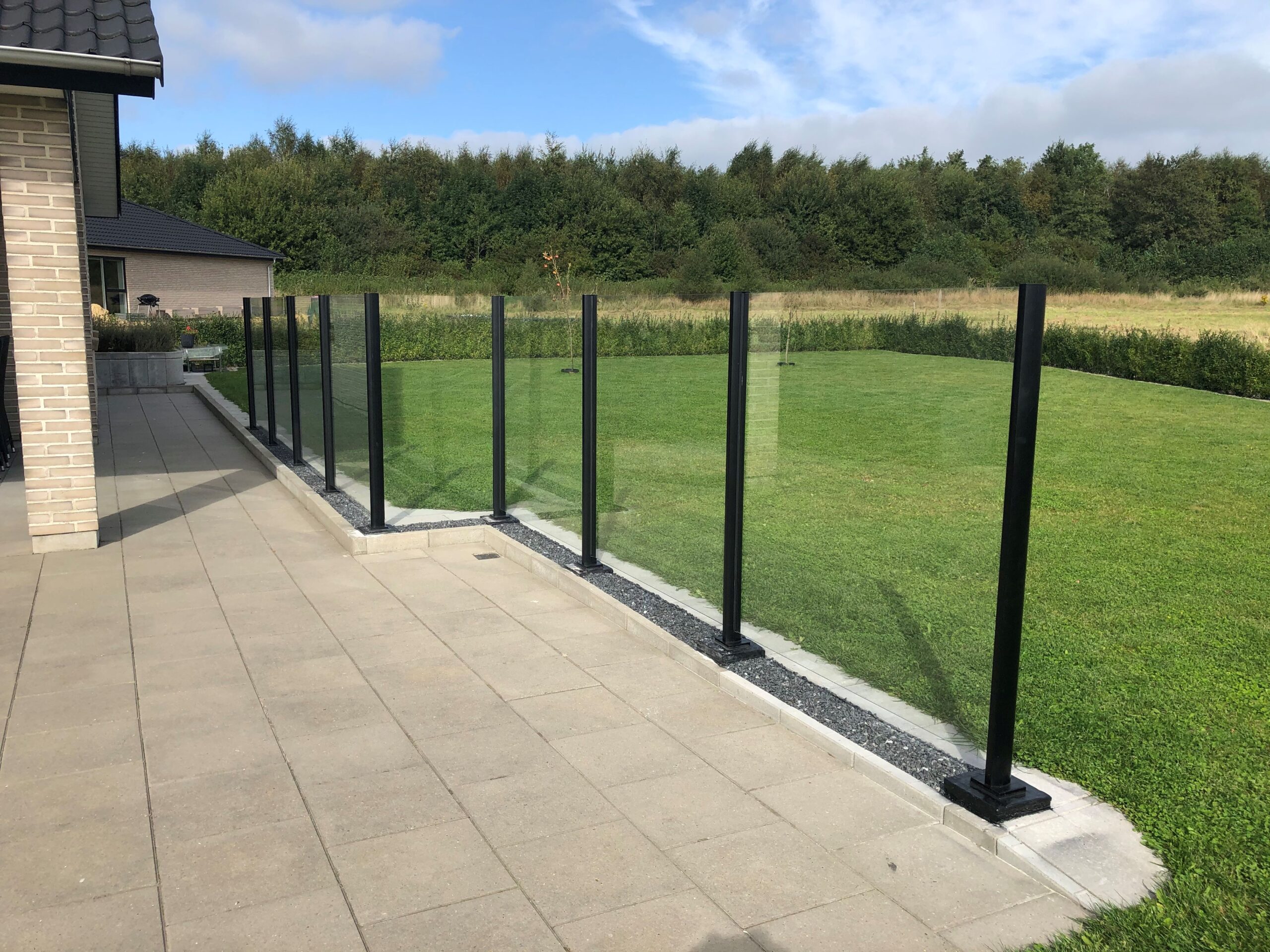
Posts and a base channel carry the structural load; the glass stands at full height with no top rail. The view above the glass line is completely clear. Installation is moderately straightforward — the base channel and post positions must be accurately set out, but there is no top rail to align and level. This is the style Vionta specialises in and the one best suited to balconies, pool decks, and any location where view preservation is the priority.
Full-Frame Aluminum Glass Railing
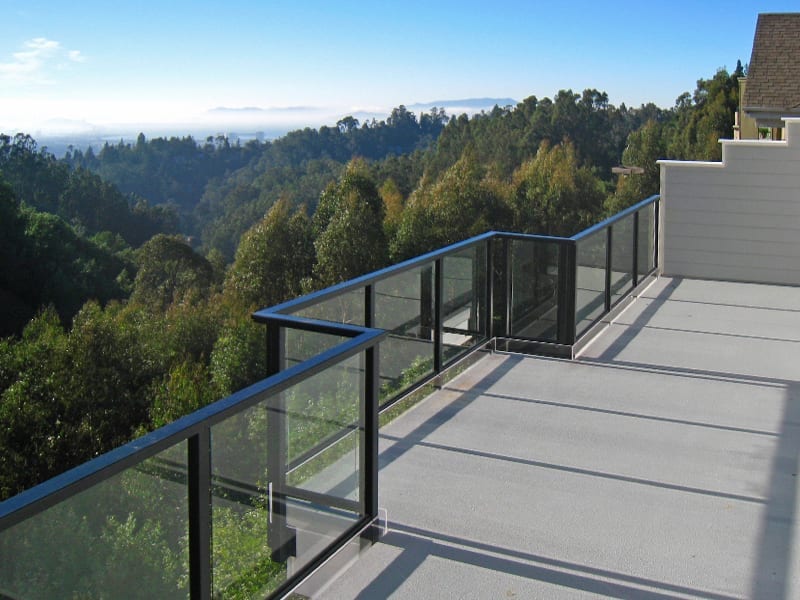
Aluminum profiles run along the top, bottom, and both sides of each glass panel, forming a complete rectangular frame around the glass. The system is very rigid and the glass is well protected, but the aluminum is visible on all edges and the horizontal top rail creates a strong visual line at eye level. This style is more common in commercial and industrial settings where robustness matters more than aesthetics, or in applications where building codes require a continuous graspable handrail at the top.
Top-Rail (Capped) Glass Railing
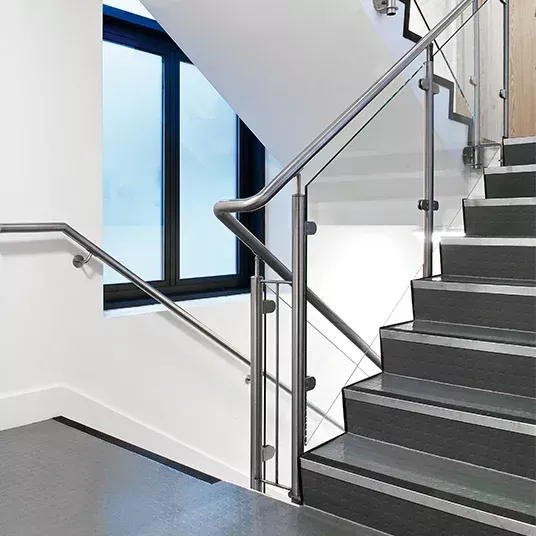
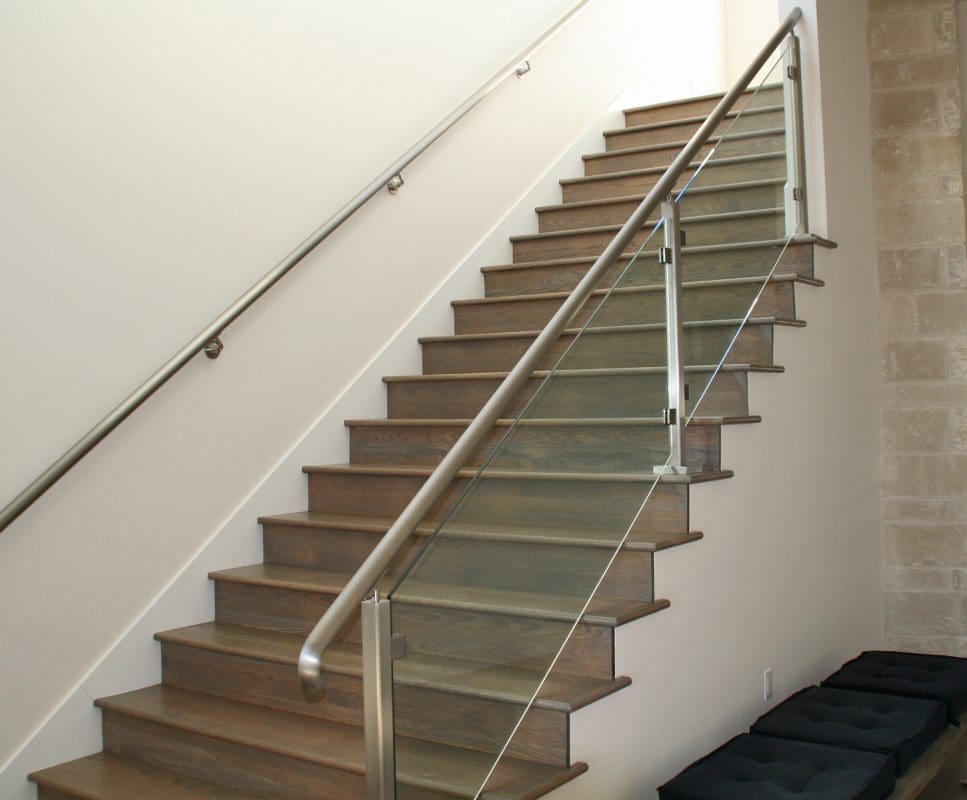
Posts support the glass panels, and a continuous top rail connects the posts and caps the glass edges. The top rail is typically a round or square tube that also serves as the graspable handrail. It is more visible than the frameless top style but less obstructive than full framing. This is a practical middle ground for staircases and ramps where a graspable rail is required by code, but the designer still wants the openness of glass infill rather than solid panels or balusters.
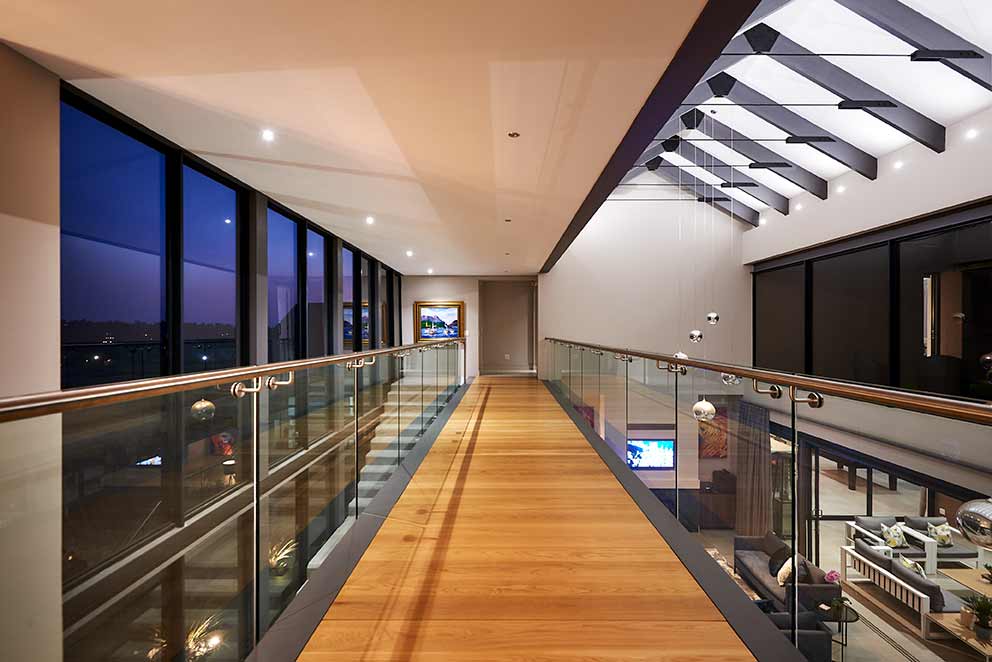
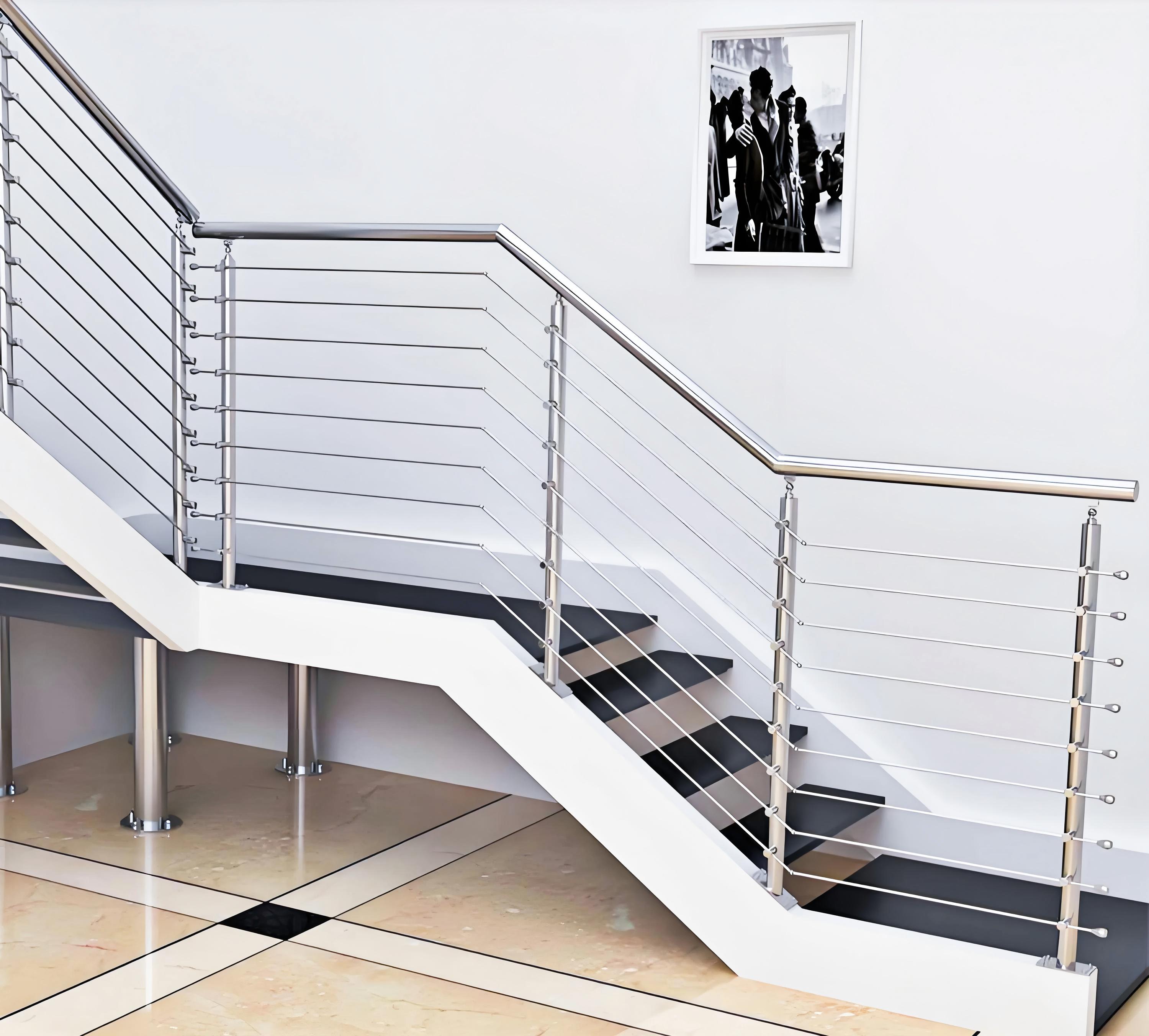
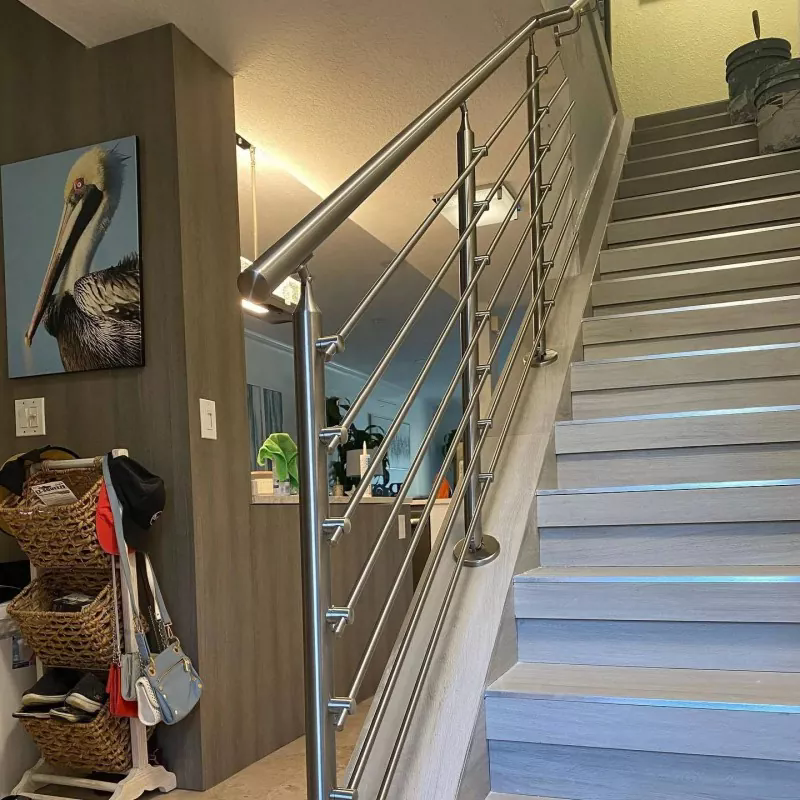
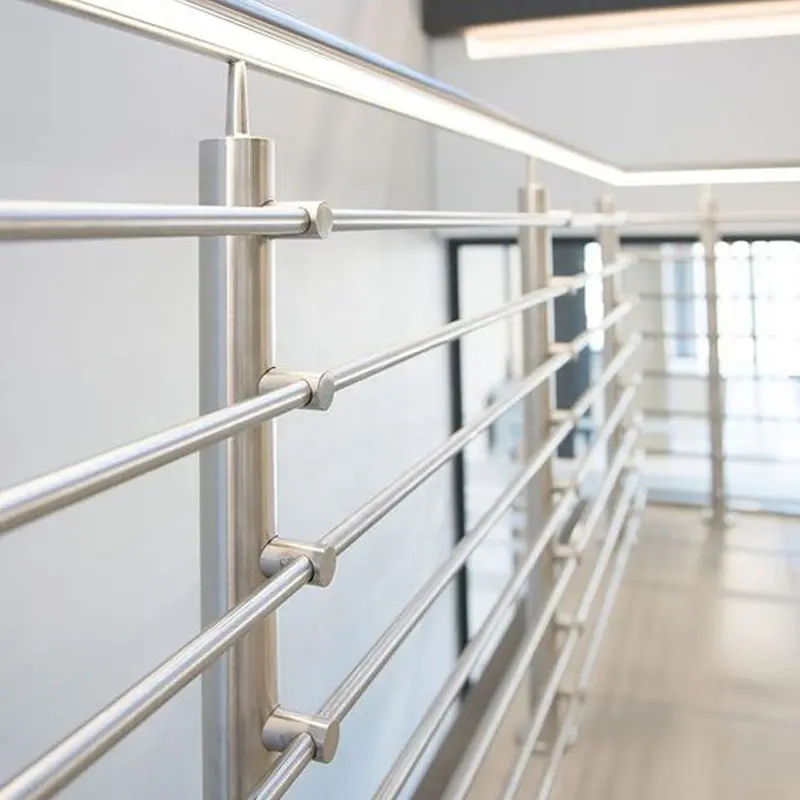
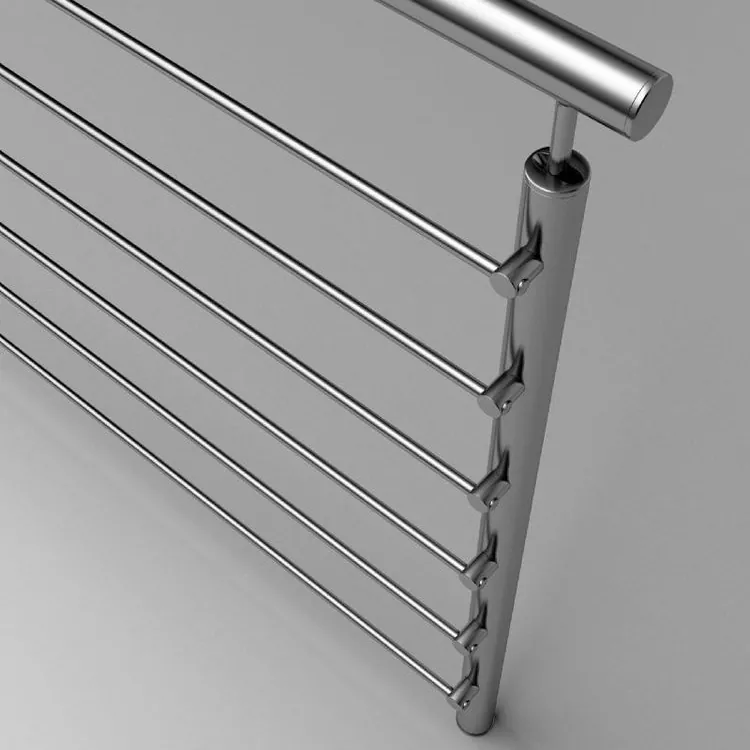
Functionally similar to aluminum glass railing, but with stainless steel posts, fittings, and top rail in place of aluminum. Stainless steel has a higher tensile strength and a distinctive polished or brushed metallic surface that some designers prefer. It is heavier and typically more expensive than aluminum. The frameless top style is also available in stainless steel — Vionta supplies both — and the choice between the two materials often comes down to aesthetic preference, budget, and the corrosion environment. For coastal projects with direct salt-spray exposure, marine grade SS316 stainless steel is technically the more durable choice; for most other locations, aluminum with a quality powder-coat finish performs equally well at lower cost.
Fully Frameless (Post-Free) Glass Railing
The most minimal configuration: glass panels slot directly into a continuous base channel with no visible posts between them at all, creating an uninterrupted glass wall. The glass — typically 12 mm or 15 mm toughened or laminated — acts as the structural element, cantilevering from the base. This achieves the absolute maximum in visual openness but requires careful structural engineering, a perfectly level and rigid substrate for the base channel, and a higher glass specification. It is the premium option for high-end projects where budget is not a constraint.
Product Specifications
The following table covers standard configuration parameters for Vionta's frameless top aluminum glass railing systems. All dimensions and specifications are customisable — provide your project drawings and we will confirm the appropriate configuration.
| Parameter | Standard Options / Range |
| System Style | Frameless top (primary); top-rail capped version also available |
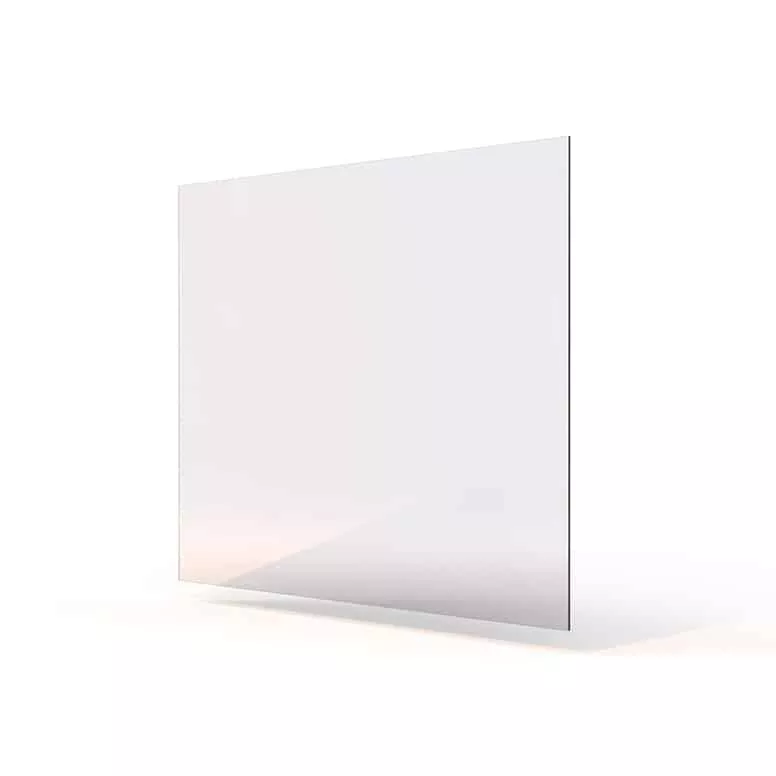
| Glass Type | Tempered (toughened) glass; Laminated glass; Ultra-clear (low-iron) tempered glass |
| Glass Thickness | 8 mm / 10 mm / 12 mm / 15 mm (custom thicknesses available on request) |
| Aluminum Alloy Grade | 6063-T5 (standard); 6061-T6 for higher-load applications |
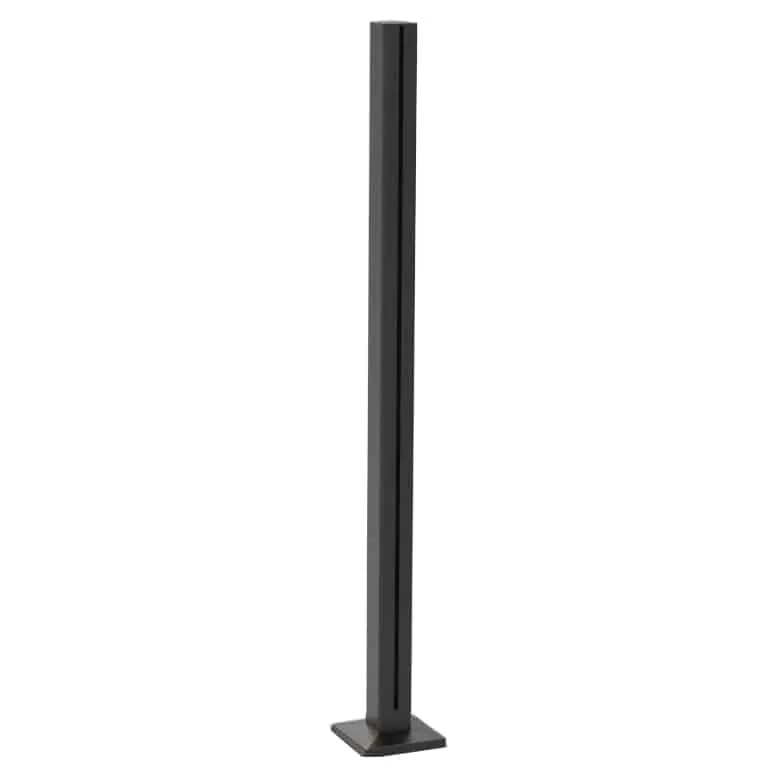
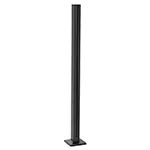
| Post Profile | Square post; Round post; Flat (blade) post |
| Surface Treatment | Powder coating (any RAL colour); Anodising (silver, bronze, black, champagne) |
| Top Edge Treatment | Polished exposed glass edge; Slim aluminum or stainless U-cap (near-invisible profile) |
| Installation Method | Top mount (surface fix); Side mount (face fix); Base channel (frameless post-free system) |
| Standard Railing Heights | 900 mm / 1,050 mm / 1,100 mm / 1,200 mm (custom heights available) |
| Design Wind Pressure | 0.5 – 3.0 kPa (engineered to project-specific requirements) |
| Applicable Locations | Balconies, pool decks, terraces, staircases, mezzanines, hotel corridors, commercial atriums |
| Packaging | Export wooden crates for glass; foam-wrapped and palletised aluminum components |
| Lead Time | 20 – 30 working days (bulk orders); samples within 7 – 10 working days |
Material Details: Aluminum Alloy and Safety Glass
Aluminum 6063-T5: Why This Grade
The 6063 alloy — sometimes called architectural aluminum — is the standard specification for extruded aluminum profiles used in windows, curtain walls, and railings. Its 0.45% magnesium and 0.6% silicon content give it good tensile strength (minimum 130 MPa yield strength in T5 temper) while remaining easy to extrude into complex shapes with tight dimensional tolerances. For a frameless top system, where the post profile needs to be both structurally adequate and visually slim, 6063-T5 strikes the right balance. It also has excellent corrosion resistance and accepts both powder coating and anodising with high quality results.
Glass Selection for Frameless Top Systems
In a frameless top design, the top edge of the glass is exposed rather than enclosed in an aluminum channel, which means the edge finish and glass quality are more visible than in a framed system. Vionta uses toughened or laminated glass with a flat polished edge as standard for this style.
Tempered glass is the standard choice for most projects — heat-treated to approximately four times the strength of ordinary glass and designed to break into small rounded granules rather than sharp shards. It is available in 8 mm, 10 mm, and 12 mm thicknesses for post-supported frameless top systems; 12 mm or 15 mm is recommended for wider panel spans or higher wind exposure.
Laminated glass is specified where post-breakage panel retention is required — the PVB or SGP interlayer holds the glass together even after breakage, so the panel stays in place rather than falling away. This is the preferred glass type for elevated locations, public buildings, and any project where the consequence of a panel falling is serious.
Ultra-clear (low-iron) glass eliminates the faint green tint visible on the edge and face of standard glass. For a frameless top system where the glass edge is deliberately exposed and visible, specifying low-iron glass produces a noticeably cleaner, more neutral appearance — particularly on thicker panels and in settings with white or light-coloured adjacent surfaces.
Frequently Asked Questions
Q1: Does removing the top rail affect structural safety or code compliance?
No — the structural load in a frameless top system is carried by the posts, base channel, and glass panels, not by the top rail. The top rail in a conventional system is a handrail and a connector between posts, but it is not what prevents the glass from deflecting under wind or impact load. In a correctly engineered frameless top system, the posts and glass are sized to carry the full design load without any contribution from a top rail. That said, some building codes require a graspable handrail at a specific height (typically 900–1,100 mm) for staircase applications. For balcony edges and level-change barriers, a graspable rail is usually not mandatory, which is why the frameless top style is most commonly specified on balconies and decks rather than stairs. We can advise on compliance for your specific location and application.
Q2: How is the exposed glass top edge finished — is it safe?
The top edge of every glass panel is flat-polished (seamed) as a standard part of production, which removes the sharp arris left by the cutting process and produces a smooth, safe-to-touch edge. The polished edge also refracts light attractively, contributing to the premium appearance of the system. For projects where the top edge will be at a height where children can reach it easily, or where the designer wants a more finished look, we can supply a slim stainless steel or aluminum U-cap profile that clips over the top edge — it is narrow enough to maintain the frameless visual character while protecting the glass edge from chipping during installation and use.
Q3: Is the frameless top style suitable for outdoor and coastal locations?
Yes. The 6063-T5 aluminum used in the posts and base channel forms a natural passive oxide layer that resists corrosion in most outdoor environments. For coastal projects with direct salt-spray exposure, we recommend anodised aluminum profiles or a PVDF-based powder coating rather than standard polyester powder coat, as both offer significantly better long-term resistance to chloride attack. All fixings and fasteners in coastal installations should be specified in SS316 stainless steel. The toughened or laminated glass panels themselves are unaffected by salt air.
Q4: Can the system be customised for stairs and sloped installations?
Yes. Raked (sloped) installations for staircases are a standard part of our production capability. The post bases are fitted with adjustable angle brackets that accommodate the stair pitch, and the glass panels are cut to a parallelogram profile to follow the rake while maintaining a consistent visible height. For staircases where a graspable handrail is required, we can add a slim round or flat stainless steel or aluminum handrail element at the appropriate height without compromising the frameless aesthetic for the glass portion of the system.
Why Choose Vionta?
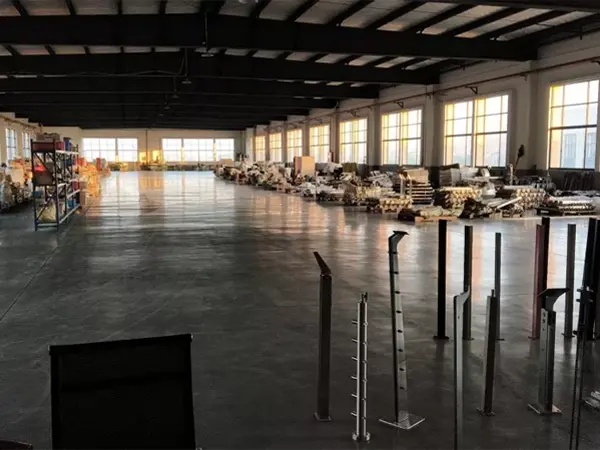
Specialist in frameless top systems. This is not a peripheral product for us — frameless top aluminum glass railing is a core part of Vionta's range, and our production processes, tooling, and quality checks are specifically set up for it. We have refined the edge polishing, post alignment, and base channel tolerances that determine whether a frameless top installation looks truly premium or merely adequate.
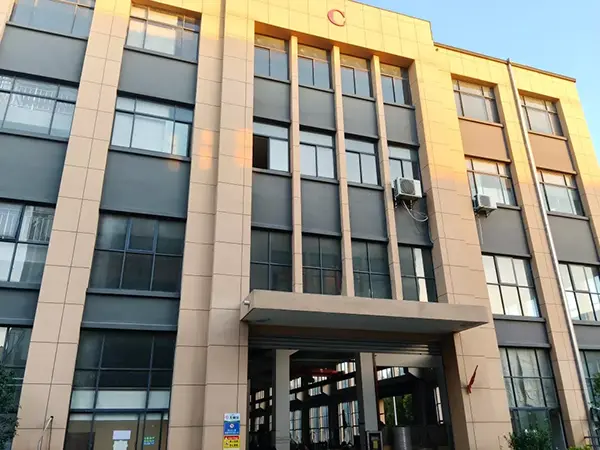
Factory-direct pricing. We manufacture every component at our own facility in Cixi, Ningbo — profiles, powder coating, glass processing, and assembly. No trading company intermediaries means our ex-works prices are typically 15–30% more competitive than equivalent quality sourced through distributors.
Technical support from specification to installation. Our team can review your drawings, confirm wind-load compliance, advise on glass thickness and post spacing, and provide shop drawings for the installer. For projects requiring structural documentation, we can supply load calculation sheets.
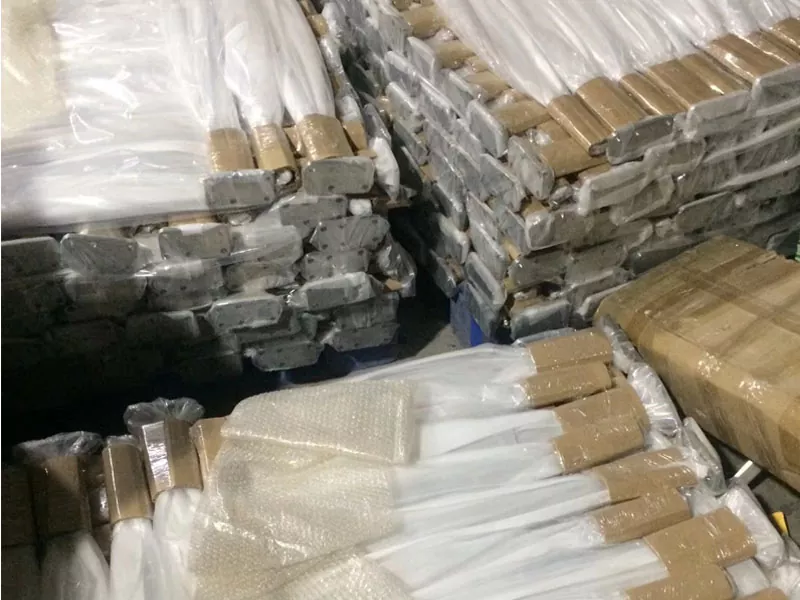
Reliable international delivery. Standard bulk orders ship within 20–30 working days. We provide production-stage photo updates, pre-shipment inspection reports, and detailed packing lists. Samples dispatch within 7–10 working days.
Send us your project drawings, site location, and applicable building code and we will respond with a detailed specification recommendation and quotation within 24 hours.
Hot Tags: Aluminum Glass Railing Supplier, Custom Glass Railing Manufacturer, Glass Balcony Railing Installation
Related Category
Send Inquiry
Contact Info
-
Address
No. 26, Lane 293, Cilong East Road, Longshan Town, Cixi City, Ningbo City, Zhejiang Province, China
-
Tel
-
E-mail
For inquiries about Metal Railing, Aluminium Pergola, Aluminium Awning or price list, please leave your email to us and we will be in touch within 24 hours.