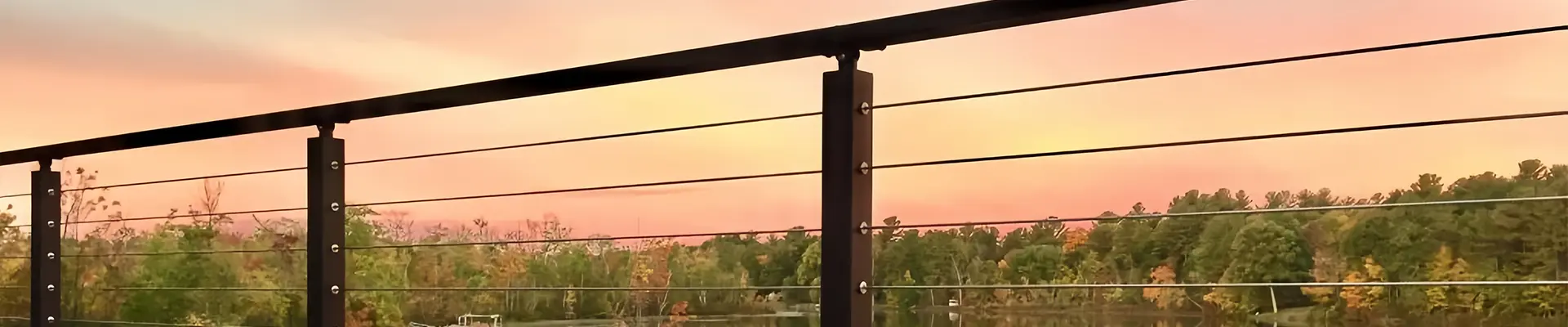
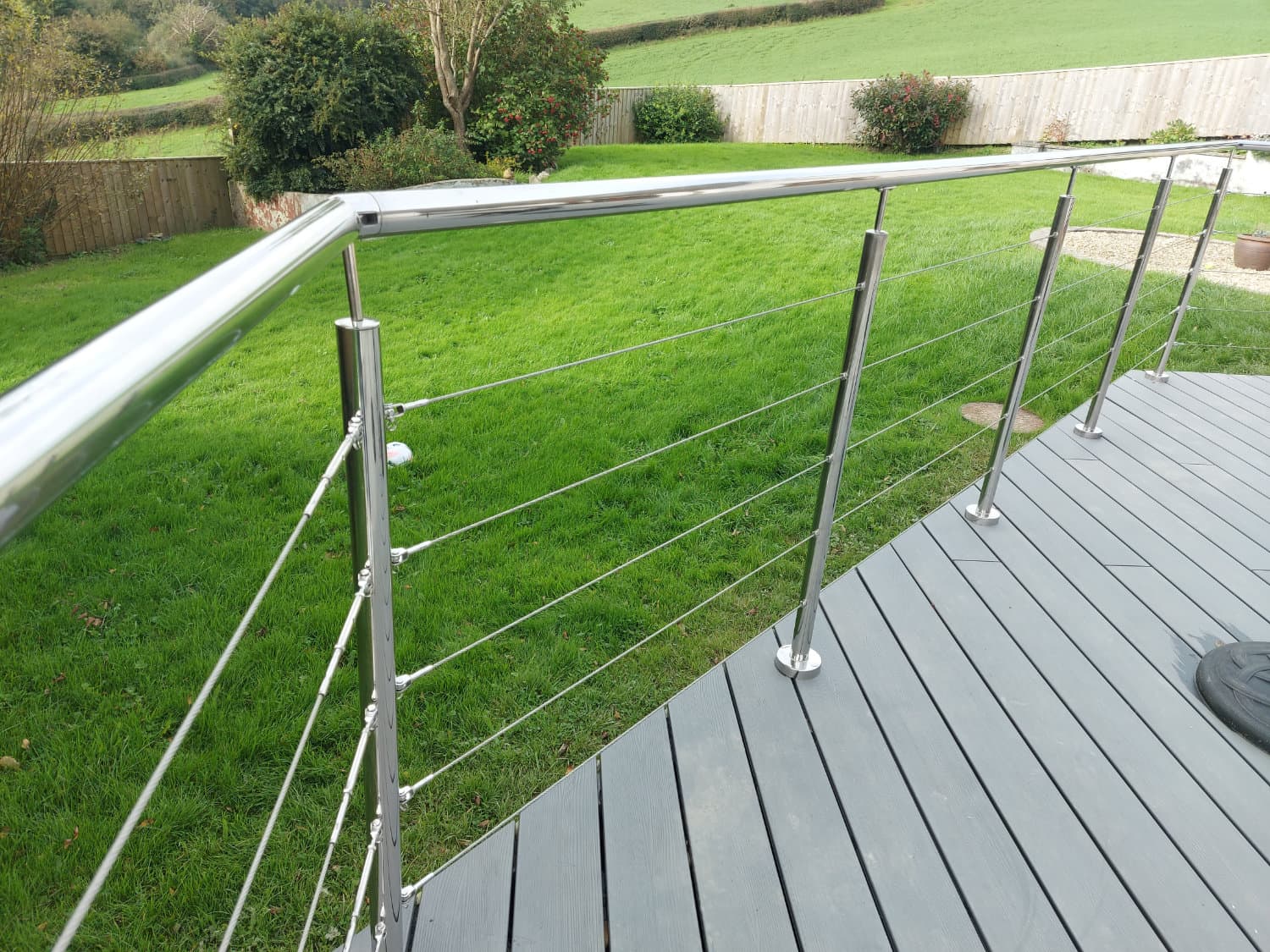
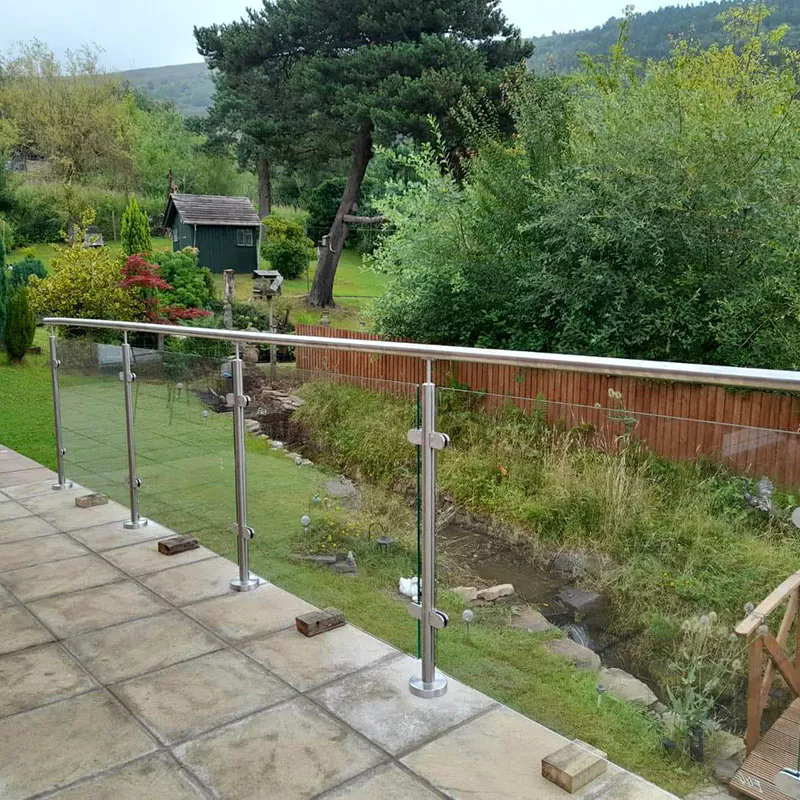
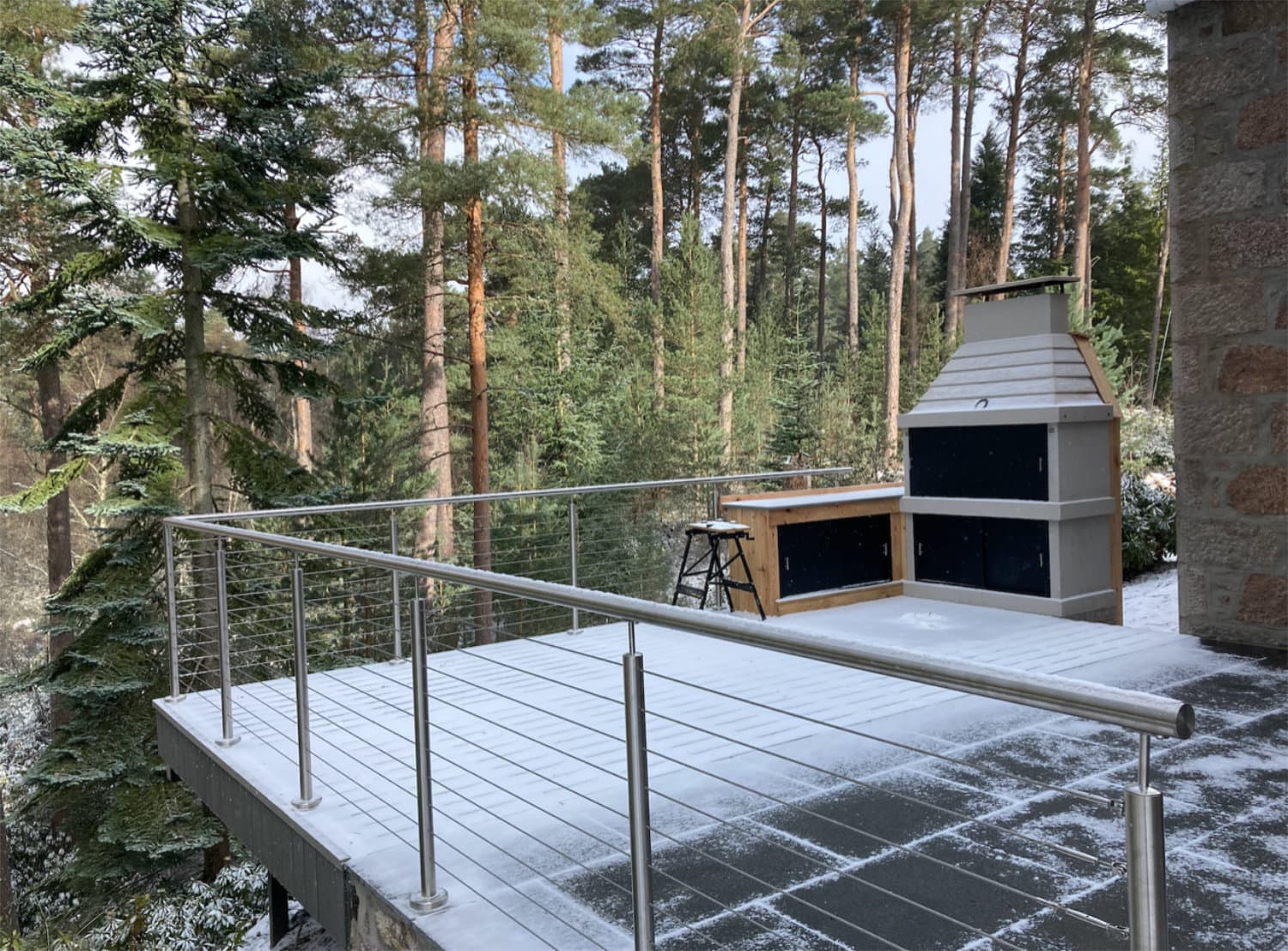
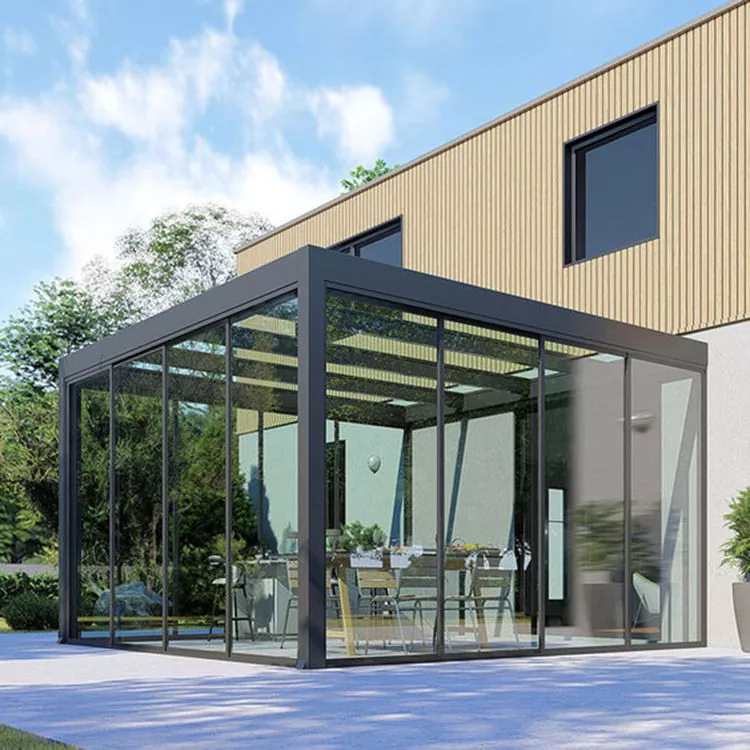
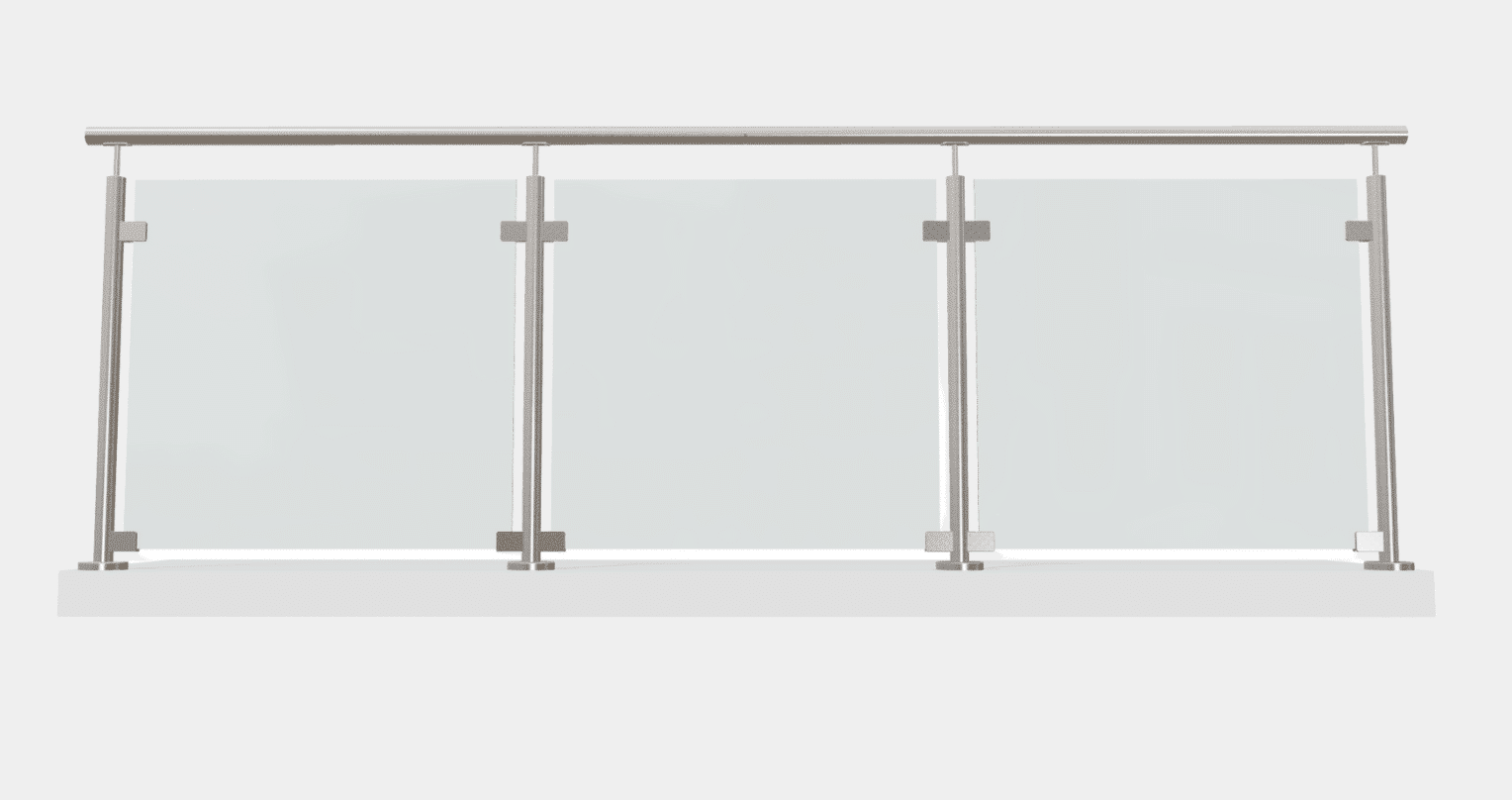
Stainless steel railings, with their characteristic of "combining rigidity and flexibility", have become multi-functional carriers in architectural Spaces
High-end residences: The top-floor duplex in Zhujiang New Town, Guangzhou, features 12mm ultra-clear glass paired with brushed stainless steel columns, achieving a seamless connection between the river view and the interior space. The luxury residences in Shenzhen Bay integrate LED light strips in the glass interlayer, transforming into a flowing light curtain wall at night and redefining the expression of the building's facade.
Commercial space: The luxury flagship store in Shanghai features arc-shaped stainless steel glass railings with a curved radius precise to R=1200mm. The mirror-polished support pieces reflect a futuristic shopping environment. The Beijing Commercial Center completed the installation of 5,000 square meters of railings in just 15 days through BIM modeling for prefabricated components, with an error of no more than 1.5mm.
Public buildings: The Xiongan New Area Smart Library adopts a combination of 3D-printed stainless steel nodes and gradient frosted glass, taking into account both privacy and visual continuity. The railings of the super high-rise office building in Lujiazui, Shanghai, have been tested to bear a uniformly distributed load of 500kg/m², meeting the usage requirements of high-density pedestrian flow.
Municipal engineering: SUS316 stainless steel guardrails are selected for both sides of Bridges and river protection, combined with EPDM rubber pads to distribute force and maintain structural stability in high-humidity environments. The sidewalk isolation fence adopts a modular design, which is convenient for quick disassembly, assembly and maintenance.
Iv. Installation and Maintenance: Quality Control throughout the entire life cycle
Professional installation and maintenance are the keys for stainless steel railings to achieve long-term value
Installation process: On-site investigation and laser positioning are required before construction. The position deviation of embedded parts should be less than 0.3mm. The verticality of the column installation is calibrated by a laser level. The crossbars and vertical bars are assembled through a non-destructive process to avoid micro-cracks caused by hard contact between glass and metal. After installation, the surface should be cleaned with neutral detergent to remove oil stains and fingerprints.
Quality acceptance: Upon the arrival of materials, quality certification documents such as chemical composition reports and mechanical property test results must be verified. For each batch of materials, 5% will be randomly selected for appearance and size inspection. Finished product acceptance includes surface defect inspection (no scratches or pits), structural stability test (no loosening when hand-pulled), and load test (no permanent deformation when 1.5 times the design load is applied).
Daily maintenance: Regularly clean the surface dust and avoid using strong acid or strong alkali cleaners. Sealant should be replaced every 5 to 8 years to prevent aging and failure. Corrosion resistance tests are conducted once a year in coastal areas. If local rust is found, it should be treated promptly with stainless steel brightening paste. The brand warranty system usually includes a 20-year warranty on the main structure and free replacement of glass in case of self-explosion, etc., to ensure safe use.
We use cookies to offer you a better browsing experience, analyze site traffic and personalize content. By using this site, you agree to our use of cookies.Privacy Policy