< img height="1" width="1" style="display:none" src="https://www.facebook.com/tr?id=1386639902885522&ev=PageView&noscript=1" />
News

How waterproof is an aluminum louvered pergola during heavy rain, and how should its drainage capacity be tested?

2026-09-01 0 Leave me a message

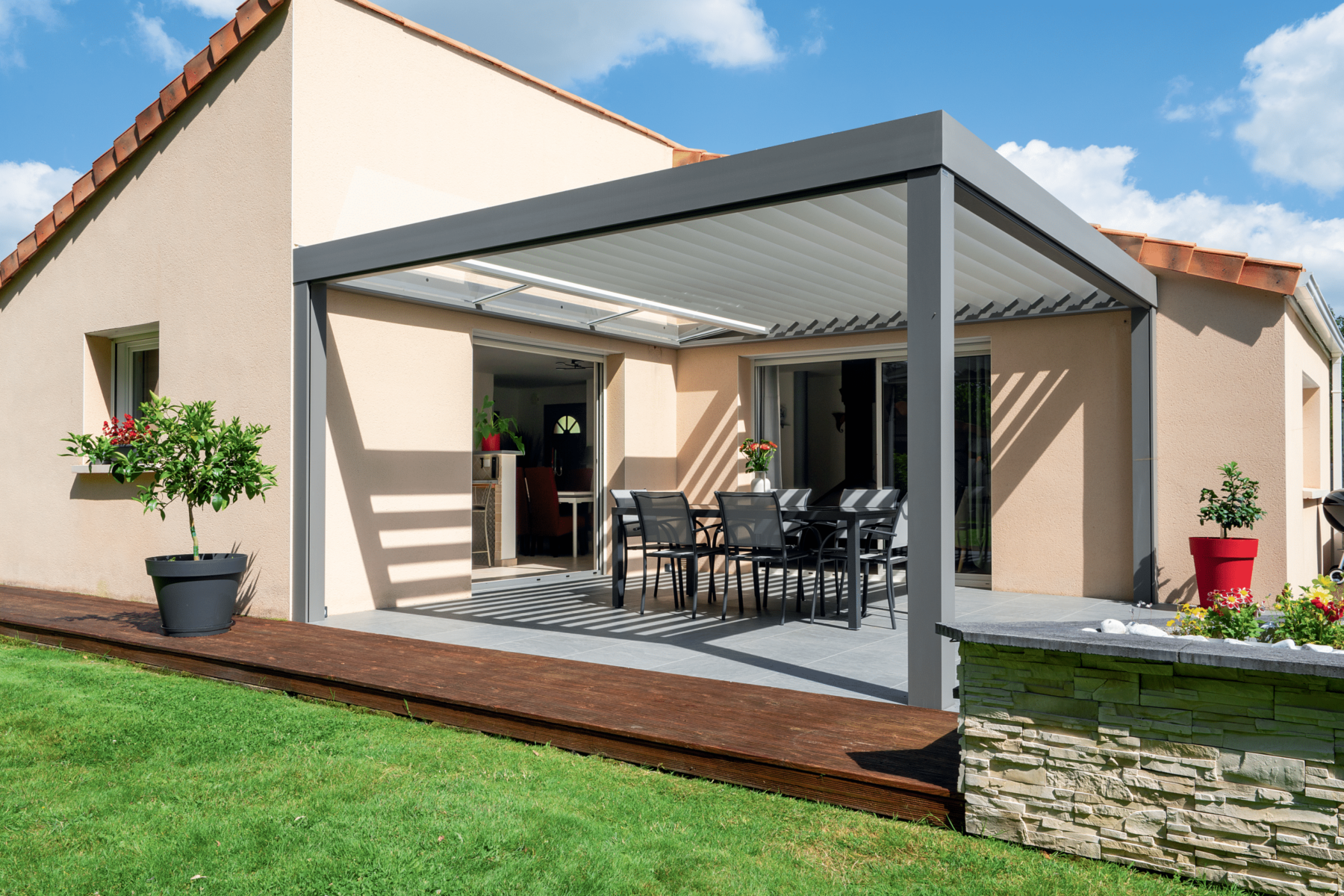
An outdoor pergola with rotating louvers can provide reliable rain protection when its roof geometry, seals, gutters, columns, installation tolerances, and drainage outlets work as one complete system. However, waterproof does not mean that every pergola will remain completely dry in every storm. Wind driven rain, blocked outlets, incorrect foundations, poor assembly, and rainfall beyond the tested conditions can all cause water intrusion.

For European distributors, contractors, and project buyers, the practical question is not simply whether an aluminum louvered pergola is waterproof. The more useful question is whether the selected model has been tested under clearly defined conditions that are relevant to the installation site.

At Vionta Metal, our factory treats rainwater management as an engineering and production issue. The roof blades may attract most of the attention, but gutters, drainage channels, corner joints, column outlets, fasteners, and installation accuracy usually determine how the structure performs during prolonged rain.


Table of Contents


What Is the Short Answer About Pergola Waterproofing?

A correctly designed and installed louvered roof should collect rainwater from the closed blades, transfer it into perimeter gutters, and discharge it through channels concealed inside the columns. Under the conditions for which the system was designed and tested, this arrangement can keep the covered area substantially protected from vertical rainfall.

That statement needs three qualifications.

  • The product must be installed according to the approved drawings and instructions.
  • The drainage system must remain open, clean, and properly connected.
  • The rainfall and wind conditions must remain within the declared test or design conditions.

No responsible manufacturer should describe a movable pergola roof as if it were identical to a sealed permanent building roof. Rotating blades require operating clearances. Water may also enter from open sides, particularly when strong wind pushes rain horizontally beneath the roof.

The useful purchasing standard is therefore controlled rain protection rather than an unlimited promise of absolute waterproofing. Vionta Metal recommends that every buyer define acceptable performance before production. The definition should cover the test specimen, water input, test duration, wind condition, permitted observations, and drainage configuration.


What Makes an Aluminum Louvered Pergola Manage Rain Effectively?

Rain performance depends on a continuous water path. Every component along that path must perform its job without creating a bottleneck.

How Do Closed Louvers Collect Water?

When the blades close, their overlapping edges form the first barrier against direct rain. The exact overlap, blade profile, end cap design, sealing arrangement, and closing angle influence how much water passes between adjacent blades.

The motor must also close the blades consistently. If the drive reaches its stop too early, one section may remain slightly open. If the linkage is misaligned, the blades may not close at the same angle across the full roof. A small difference can become noticeable during prolonged rain.

How Do Perimeter Gutters Receive the Water?

Water leaving the blades normally enters gutters integrated into the surrounding beams. These gutters must have enough useful cross section to receive runoff without overflowing into the occupied area.

The visible width of a beam does not reveal the true drainage capacity. Internal reinforcement, fasteners, brackets, motor components, and decorative covers may reduce the available water channel. Buyers should request a section drawing showing the actual flow area rather than relying on the outside dimensions of the beam.

How Does Water Leave Through the Columns?

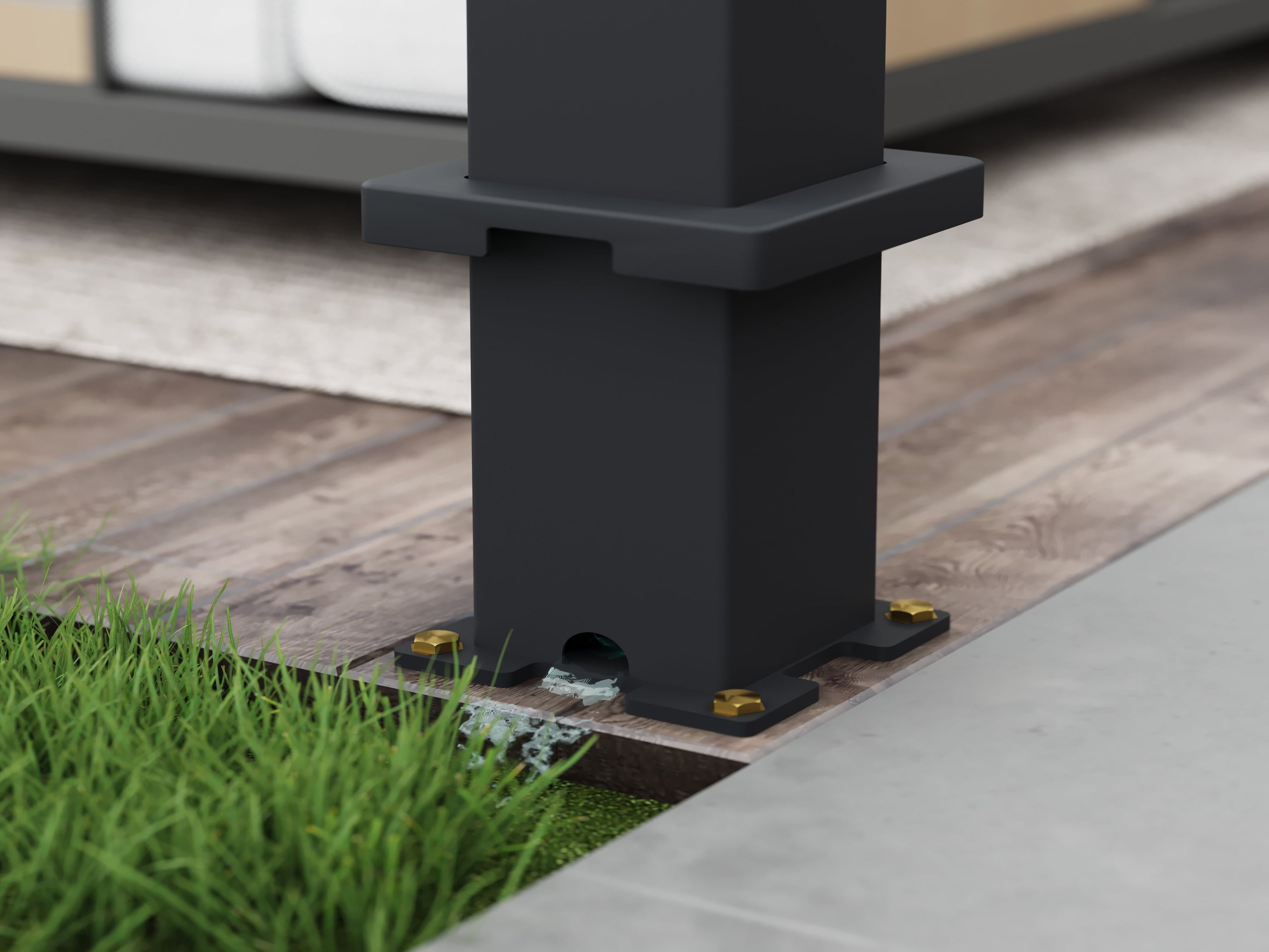
The gutters lead water toward outlets at selected corners. Water then travels through downpipes or internal column cavities before leaving near the base.

The number and position of these outlets matter. A large roof with only one active drain can place too much demand on a single channel. A multi module system may also collect water from several roof sections into one column. The supplier should show which columns drain water and where each outlet terminates.


What Happens During Heavy and Wind Driven Rain?

Heavy rain changes the problem from simple water collection to flow management. Water reaches the gutters faster, water depth rises, joints remain wet for longer, and small restrictions become more important.

Common failure patterns include:

  • Water overtopping the inside edge of a gutter because the outlet cannot discharge quickly enough.
  • Water collecting at a low corner caused by an uneven foundation or an incorrectly assembled frame.
  • Leakage around blade end caps, corner connectors, screws, or unsealed joints.
  • Backflow where several gutters discharge into one restricted outlet.
  • Water escaping through a column joint because the internal downpipe is misaligned.
  • Wind pushing rain beneath the roof from an open side.
  • Leaves, insects, packaging fragments, or sealant blocking a drainage opening.

Wind driven rain must be discussed separately from vertical rainfall. Side screens can reduce rain entering through the sides, but screens also change the wind action on the structure. A buyer should not add screens or glass panels without confirming that the frame, anchors, and foundations are suitable for the changed configuration.

Rain condition Main concern Evidence to request
Light vertical rain Blade overlap and local sealing Operational rain test and joint inspection
Prolonged rain Joint saturation and continuous discharge Timed test with recorded water input
Heavy rain Gutter and outlet capacity Drainage calculation or measured capacity test
Wind driven rain Water entering through sides and blade interfaces Combined wind and rain test with stated conditions
Rain with partial blockage Overflow route and maintenance sensitivity Inspection of outlets and accessible cleaning points

How Should an Aluminum Louvered Pergola Drainage Capacity Be Evaluated?

Drainage capacity should be evaluated from the roof area, design rainfall intensity, number of active outlets, internal channel dimensions, pipe restrictions, and expected maintenance condition. A video showing water from a garden hose proves that water can move through the system. It does not establish the maximum capacity of the roof.

What Information Is Needed Before the Calculation?

  • The exact roof length and width.
  • The number of modules connected to each drainage route.
  • The expected rainfall intensity specified for the project.
  • The gutter cross section after internal components are installed.
  • The diameter or internal area of every outlet and downpipe.
  • The number of functioning drainage columns.
  • The horizontal distance that water travels before reaching an outlet.
  • The discharge arrangement at the bottom of each column.
  • Any elbows, reducers, connectors, or narrow openings in the route.

How Can Buyers Understand the Required Flow?

The basic relationship is straightforward. The roof catchment area is multiplied by the selected rainfall intensity to estimate incoming water flow. The resulting value is then compared with the discharge capacity of the gutters and outlets.

This calculation must use compatible units and project specific rainfall information. It should also include an appropriate allowance for real conditions such as manufacturing tolerances, surface contamination, imperfect leveling, and partial flow restrictions. Our factory does not recommend choosing a universal rainfall number for every European country because local conditions can vary significantly within the same country.

Spain and Italy may involve intense rainfall and coastal exposure in some regions. Poland may require close attention to snow, freezing conditions, and meltwater. Denmark frequently requires careful wind and corrosion consideration. France contains several different climatic regions. These observations help identify questions, but they do not replace local project data.

Why Is the Smallest Opening Often the Critical Point?

A wide gutter can still drain poorly when water must pass through a narrow corner outlet. Likewise, a large column cavity does not guarantee capacity if an internal connector reduces the flow area.

Buyers should trace the complete route from the blade to the final discharge point. The narrowest section, sharpest change of direction, or lowest corner can control the performance of the entire system.


How Should Factory Rain and Drainage Testing Be Conducted?

A useful test must be repeatable. It should identify the specimen, test setup, water input, duration, operating position, observations, and result. Pouring water over an unidentified sample does not provide enough evidence for a commercial order.

How Should the Test Specimen Be Prepared?

  1. Use a complete production representative structure rather than a short isolated blade sample.
  2. Record the overall dimensions, column height, module count, blade direction, and drainage column positions.
  3. Install the product using the normal brackets, seals, fasteners, downpipes, and corner joints.
  4. Place the structure on a level foundation or document the intended installation slope.
  5. Operate the roof several times before testing to confirm that all blades close consistently.
  6. Inspect the outlets and confirm that they are free of packaging material and production debris.

How Should Water Be Applied?

Water should be distributed across the roof in a controlled and measurable manner. The setup should avoid concentrating all water in one convenient area unless a separate local joint test is being performed.

The test record should state:

  • The total water flow or equivalent rainfall intensity.
  • How the water input was measured.
  • The duration of continuous application.
  • The area that received water.
  • Whether the water was applied vertically or at an angle.
  • Whether wind was included.
  • The condition of the louvers, screens, gutters, and outlets.

For a combined wind and rain test, the air speed, direction, measurement position, and distance from the specimen should also be recorded. Without this information, the result cannot be compared with another test.

What Should Be Observed During the Test?

Inspectors should look beyond visible dripping beneath the blades. They should observe water depth in the gutters, flow through each column, discharge balance between outlets, leakage around corners, and any signs of backflow.

A practical inspection sequence includes:

  • Check the blade joints during the first minutes of rainfall.
  • Inspect all four beam corners while the gutters are filling.
  • Confirm that every designated drainage column is discharging.
  • Look for water collecting around fasteners and motor covers.
  • Check the underside after continuous exposure.
  • Stop the water and record how long the system takes to drain.
  • Open the louvers only after the agreed observation period.
  • Inspect internal channels for trapped water and loose seals.

How Should Pass and Fail Criteria Be Defined?

Pass criteria should be agreed before testing. They may distinguish between leakage through the roof, water blown through an open side, controlled discharge from a designed outlet, and residual droplets released when the louvers begin to open.

A buyer may reasonably require no gutter overflow into the covered area, no continuous leakage from sealed joints, no uncontrolled discharge from column connections, and normal operation after the test. The exact criteria should match the intended product use and contract documents.

At Vionta Metal, we recommend keeping the test setup available long enough to investigate failures. If overflow occurs, the factory should identify whether the cause is insufficient capacity, an assembly error, an uneven frame, or a blocked route. Repeating the same demonstration without correcting the cause adds little value.


What Should a Reliable Drainage Test Report Contain?

A useful report allows another person to understand what was tested without relying on sales language. It should connect the tested sample with the product offered in the quotation.

Report section Information required
Product identification Model, drawing revision, size, module count, blade type, and production date
Installation setup Column height, foundation condition, anchors, seals, slope, and drainage layout
Water input Measured flow, covered area, equivalent rainfall condition, and test duration
Environmental condition Wind condition, water direction, and relevant test limitations
Observations Leak locations, gutter behavior, outlet discharge, operating condition, and photographs
Result Pass or fail against criteria agreed before the test
Traceability Inspector, date, measuring equipment, calibration information where applicable, and signatures

If the purchased structure is larger than the tested specimen, the supplier should explain how the result is extended to the larger size. A small sample does not automatically represent a large multi bay installation with longer flow paths and more concentrated drainage.


What Should European Buyers Include in a Pergola Inquiry?

A clear inquiry produces a more accurate quotation and prevents disagreements after installation. Our experience is that many drainage problems begin because the factory receives only the overall dimensions and color.

For projects in Spain, Italy, Poland, Denmark, France, or other European markets, provide the following information:

  • Complete installation address or nearest city.
  • Residential, restaurant, hotel, commercial, or public project use.
  • Freestanding or wall mounted configuration.
  • Overall length, width, and finished height.
  • Single module or connected multi module layout.
  • Required drainage direction and permitted outlet locations.
  • Ground, balcony, rooftop, terrace, or garden installation.
  • Expected side screens, glass panels, heaters, lighting, or other accessories.
  • Local rainfall, wind, and snow design information supplied by the project engineer.
  • Required test evidence and acceptance criteria.
  • Maintenance access restrictions.
  • Local plumbing requirements for the final water discharge.

When Vionta Metal receives this information, our factory can review the water route before the order is finalized. This is more reliable than trying to solve an outlet conflict after the structure has arrived on site.


How Does Installation Affect the Waterproof Performance of an Aluminum Louvered Pergola?

Factory testing cannot compensate for incorrect site installation. A structure that performs correctly on a level test platform may leak when one foundation point is higher than the others or when a downpipe is crushed during assembly.

What Installation Errors Commonly Cause Leakage?

  • Columns are not vertical or their base levels are inconsistent.
  • Beam corners are pulled out of alignment during fastening.
  • Specified seals are omitted, cut too short, or installed in the wrong position.
  • Drainage pipes do not align with the beam outlets.
  • Excess sealant partially blocks a channel.
  • Electrical cables obstruct an internal downpipe.
  • The lower outlet is covered by paving, decking, or landscaping.
  • A wall connection is fixed without suitable building waterproofing.
  • Installers drill additional holes through gutters or concealed water channels.

How Should the Completed Installation Be Checked?

The installer should confirm frame dimensions, diagonals, column level, blade operation, seal position, outlet clearance, and final discharge. A controlled site water test should then be completed before internal covers make the drainage route difficult to inspect.

For wall mounted systems, the interface with the building requires particular attention. The pergola supplier can provide a connection profile, but the installer remains responsible for assessing the existing wall, façade system, insulation, flashing, and waterproof membrane.


How Should Owners Maintain the Drainage System?

Even a well designed system needs routine cleaning. Leaves and airborne debris collect in gutters, while insects may enter outlets during dry periods. Coastal deposits and urban pollution can also accumulate on blades and seals.

A sensible maintenance plan includes:

  • Remove leaves and debris from blades and accessible gutters.
  • Check every outlet for unrestricted flow.
  • Flush drainage channels with clean water.
  • Inspect seals for displacement, damage, or loss of flexibility.
  • Check corner joints and visible fasteners.
  • Keep the bottom outlets clear of soil, paving material, and plants.
  • Inspect the system after severe weather.
  • Follow the motor and coating maintenance instructions.

Cleaning frequency depends on the environment. A roof beneath trees may need more frequent attention than an open terrace. Maintenance records are useful for commercial properties because they show whether leakage resulted from a product defect or a blocked drainage route.

How Can European Buyers Compare Pergola Drainage Claims?

Ask every supplier the same questions and compare the evidence on equal terms. A claim such as heavy rain resistant has little meaning unless the supplier states the specimen size and test condition.

Question for the supplier Useful answer Weak answer
What size was tested? Exact dimensions, height, module layout, and drawing reference All sizes are waterproof
How much water was applied? Measured flow or stated rainfall condition and duration We used strong water
Was wind included? Yes or no, with the test condition explained Suitable for every storm
How many outlets were active? Outlet locations and drainage routing shown on a drawing Water drains through the columns
What counted as failure? Written acceptance criteria and recorded observations The test looked fine
Does the report match the quotation? Same model, blade, beam, drainage parts, and comparable size One general report for unrelated models

Vionta Metal advises buyers to approve drawings and drainage positions before paying for mass production. This is especially important for container orders containing several sizes, because each roof area and module arrangement may place a different demand on the outlets.


What Should Buyers Remember Before Ordering?

Rain protection depends on the complete water path, not on one blade seal or one promotional test. The roof must collect water, the gutters must carry it, the outlets must discharge it, and the installed frame must preserve the intended levels and alignment.

Before placing an order, confirm the project location, roof size, rainfall design condition, module layout, active outlets, test method, acceptance criteria, installation responsibility, and maintenance access. Request drawings and records that match the model being purchased.

Vionta Metal can review project dimensions, drainage direction, installation type, and requested testing requirements before quotation approval. Send our team the project location, layout, roof dimensions, accessory list, and local design conditions. Our factory will use that information to prepare a clearer technical proposal and identify questions that should be resolved before production.


Frequently Asked Questions

How waterproof is an aluminum louvered pergola in heavy rain?

When the blades are fully closed, the frame is correctly installed, and the drainage routes are clear, the roof should collect and discharge rain under its declared test conditions. Performance can change during wind driven rain, exceptional rainfall, outlet blockage, or incorrect installation. Buyers should request a test report stating the specimen size, water input, duration, drainage configuration, and acceptance criteria.

What drainage test should a pergola buyer in Spain or Italy request?

The test should use a complete production representative unit and a measured water input relevant to the project requirement. It should record continuous test duration, active outlets, gutter behavior, joint leakage, discharge through each column, and the condition after testing. Coastal projects should also consider corrosion protection, seal maintenance, and the effect of salt deposits on moving and drainage parts.

How should buyers in Poland evaluate rain, snow, and meltwater drainage?

Rainwater capacity and structural snow resistance should be assessed separately. The local engineer should define the applicable snow and weather conditions. Buyers should also ask how the roof is operated during snow, whether accumulated snow must be removed, how freezing may affect outlets, and whether meltwater can drain without becoming trapped inside beams or columns.

Why do pergola drainage requirements differ between Denmark and France?

Project exposure varies by location, terrain, building height, coastal influence, local rainfall, and installation configuration. National and local requirements may also differ. A test result from one standard size cannot automatically confirm suitability for every site. The buyer should provide project specific environmental information and have structural and building requirements checked by qualified local professionals.

What documents should European distributors request before a container order?

Request approved assembly drawings, roof and outlet layouts, relevant material records, coating information, motor documentation, packing details, installation instructions, maintenance guidance, and rain test records connected to the offered model. The purchase specification should also define inspection sampling, acceptable leakage, missing part claims, spare parts, warranty boundaries, and responsibility for site drainage connections.

Related News
Leave me a message
X
We use cookies to offer you a better browsing experience, analyze site traffic and personalize content. By using this site, you agree to our use of cookies.Privacy Policy
RejectAccept