What Are Common Problems with Wire Balustrades?
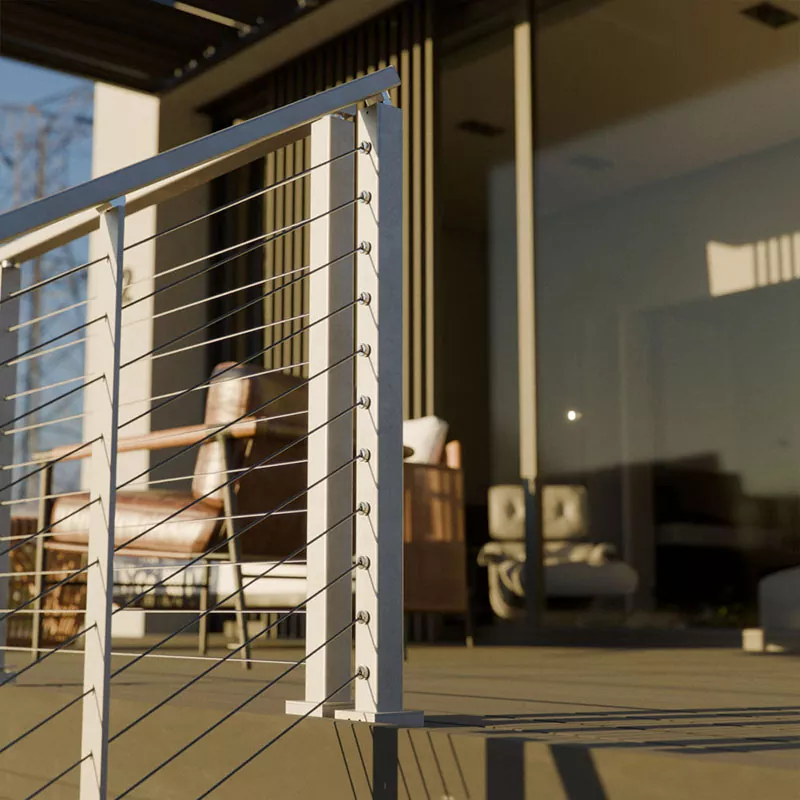
Wire balustrades have become a popular architectural choice in residential, commercial, and public projects across North America, Europe, and Australia. Their clean lines, modern appearance, and ability to preserve open views make them attractive for staircases, balconies, decks, and terraces. However, despite their popularity, many buyers and project managers encounter unexpected issues after installation.Understanding these problems before specifying or purchasing wire balustrades can save significant time, cost, and risk.
At Vionta Metal, our factory focuses on engineering-driven metal systems with strict material control. By combining real-world installation feedback and manufacturing data, this article explains the most common wire balustrade problems and how they can be avoided through proper design, material selection, and quality control.

Table of Contents
What structural issues commonly occur with wire balustrades?
Why do wire balustrades lose tension over time?
How do corrosion and material choice affect durability?
What installation mistakes lead to safety risks?
Why do wire balustrades fail building code inspections?
How do maintenance and cleaning problems impact appearance?
What Structural Issues Commonly Occur with Wire Balustrades?
Structural integrity is the foundation of any balustrade system. One of the most frequent problems with wire balustrades is insufficient load-bearing capacity, especially in long spans or high-traffic areas. Many low-cost systems underestimate horizontal load requirements, resulting in excessive deflection when force is applied.
Our engineering team treats wire balustrade frameworks with the same calculation discipline used railing, where micro-deviations can affect system stability. In wire systems, post spacing, cable diameter, and anchor strength must work together.
Common structural problems include:
- Post bending due to thin wall thickness
- Loose end fittings caused by weak internal threads
- Excessive cable sag under lateral load
- Improper base plate welding
At Vionta Metal, our factory typically recommends reducing post spacing rather than increasing cable tension alone. This approach improves stiffness without overstressing fittings or cables.
| Parameter | Standard Range | Recommended Value |
| Post spacing | 900 to 1200 mm | ≤1000 mm |
| Cable diameter | 3 mm to 6 mm | 4 mm to 5 mm |
| Post material | SS304 or SS316 | SS316 outdoor |
| Wall thickness | 1.2 to 2.0 mm | ≥1.5 mm |
Why Do Wire Balustrades Lose Tension Over Time?
Loss of cable tension is one of the most reported complaints from property owners. Initially, the balustrade may feel firm, but within months the cables begin to sag. This issue is rarely caused by the wire itself and more often linked to system design.
Our experience shows three primary reasons:
- Thermal expansion and contraction of stainless steel
- Settling of building structures
- Inferior tensioning hardware
At Vionta Metal, our factory uses precision-machined tensioners with deep thread engagement. Our systems allow micro-adjustments after installation, which significantly extends service life.
From an engineering standpoint, our approach emphasizes controlled pre-tension rather than over-tightening. Over-tensioning may feel solid initially but accelerates metal fatigue and fitting failure.
How Do Corrosion and Material Choice Affect Durability?
Corrosion is a silent but destructive problem in wire balustrades. Many buyers assume stainless steel is corrosion-proof, but this is a misconception. Environmental conditions play a decisive role.
Common corrosion-related issues include:
- Tea staining in coastal or industrial areas
- Pitting corrosion on low-grade stainless steel
- Galvanic corrosion between dissimilar metals
Our factory testing shows that SS304 performs adequately indoors, but outdoor installations benefit greatly from SS316.
Vionta Metal specifies surface finishing as a critical parameter. Brushed finishes hide minor surface marks better than mirror polish and reduce visible corrosion patterns over time.
| Environment | Recommended Material | Surface Finish |
| Indoor | SS304 | Brushed |
| Outdoor urban | SS316 | Brushed |
| Coastal | SS316 marine grade | Satin |
What Installation Mistakes Lead to Safety Risks?
Even a well-designed wire balustrade can fail if installed incorrectly. Installation errors are a major contributor to safety complaints and liability claims.
Typical mistakes include:
- Incorrect drilling angles causing uneven tension
- Insufficient edge distance on concrete substrates
- Skipping intermediate tensioning points
- Improper alignment of posts
Each component must work as part of a complete system.
Vionta Metal provides detailed installation drawings and torque recommendations. Our factory also offers pre-assembled components to reduce on-site errors and ensure consistency.
Why Do Wire Balustrades Fail Building Code Inspections?
Building code compliance is a frequent concern for architects and contractors. Wire balustrades often fail inspections due to spacing and load requirements rather than material quality.
Common compliance issues include:
- Cable spacing exceeding child safety limits
- Insufficient top rail height
- Inadequate resistance to horizontal loads
At Vionta Metal, our factory supports projects with load test data and compliance-ready specifications, reducing approval delays and rework costs.
How Do Maintenance and Cleaning Problems Impact Appearance?
While wire balustrades are often marketed as low-maintenance, neglect can quickly degrade their appearance. Improper cleaning methods can cause surface damage that attracts dirt and corrosion.
Best practices include:
- Using mild soap and clean water
- Avoiding abrasive pads
- Regular inspection of tensioners
Vionta Metal designs systems with accessible fittings, making inspection and adjustment straightforward for property managers.
Conclusion
Wire balustrades offer modern aesthetics and functional safety when engineered and installed correctly. Most common problems stem from shortcuts in design, materials, or installation rather than the concept itself.
By applying engineering discipline, high-quality materials, and proven manufacturing standards, these issues can be effectively avoided. At Vionta Metal, our factory integrates real-world feedback into every system, ensuring long-term performance and compliance.
If you are planning a project or experiencing issues with an existing system, our team is ready to help evaluate specifications and recommend reliable solutions that protect both safety and investment.
FAQ: What Are Common Problems with Wire Balustrades?
What causes wire balustrades to feel loose?
Loose feeling usually results from inadequate tensioning hardware or structural movement, not cable quality.
Why do cables sag after installation?
Thermal expansion, building settlement, and low-grade fittings contribute to gradual tension loss.
Are wire balustrades safe for children?
They are safe when cable spacing and load requirements meet local building codes.
Which stainless steel grade is best for outdoor use?
SS316 is preferred due to its higher resistance to corrosion.
How often should wire balustrades be maintained?
Visual inspection every six months and tension adjustment annually is recommended.
Can wire balustrades pass commercial building codes?
Yes, when engineered with correct spacing, load ratings, and certified materials.
Do wire balustrades require special installation tools?
Precision tensioning tools improve accuracy and long-term stability.
How can long-term durability be ensured?
Choosing engineered systems from experienced manufacturers ensures consistent quality.
Contact our team today to discuss your wire balustrade project. With proven engineering, consistent production, and export experience, we help turn specifications into reliable installations that generate long-term value and confident inquiries.
Related News
- Are Jalousie Windows Easy to Break Into?
- Is Stainless Steel Glass Railing Safe?
- How waterproof is an aluminum louvered pergola during heavy rain, and how should its drainage capacity be tested?
- How Strong Is Aluminum Railing Compared With Steel Railing?
- How to Choose Metal Railing for Residential and Commercial Projects
- How To Remove Hard Water Stains From Glass Railings?
Leave me a message