How To Remove Hard Water Stains From Glass Railings?
How To Remove Hard Water Stains From Glass Railings
Glass railings provide clear views, natural light, and a clean architectural appearance, but hard water stains can quickly make otherwise attractive glass look cloudy, dull, or poorly maintained. These white spots and mineral marks are especially common on outdoor railings exposed to rain, irrigation systems, pool water, sprinkler overspray, and mineral rich tap water.
The good news is that most hard water stains can be removed without replacing the glass. The key is to understand what causes the deposits, choose a cleaning method that matches the severity of the stain, and avoid abrasive techniques that can permanently scratch the glass or damage surrounding railing hardware.
At Vionta Metal, we understand that a high quality railing system should not only look good when it is first installed but should also remain practical to maintain throughout its service life. Proper cleaning is therefore an important part of maintaining the appearance and long term value of a glass railing system.
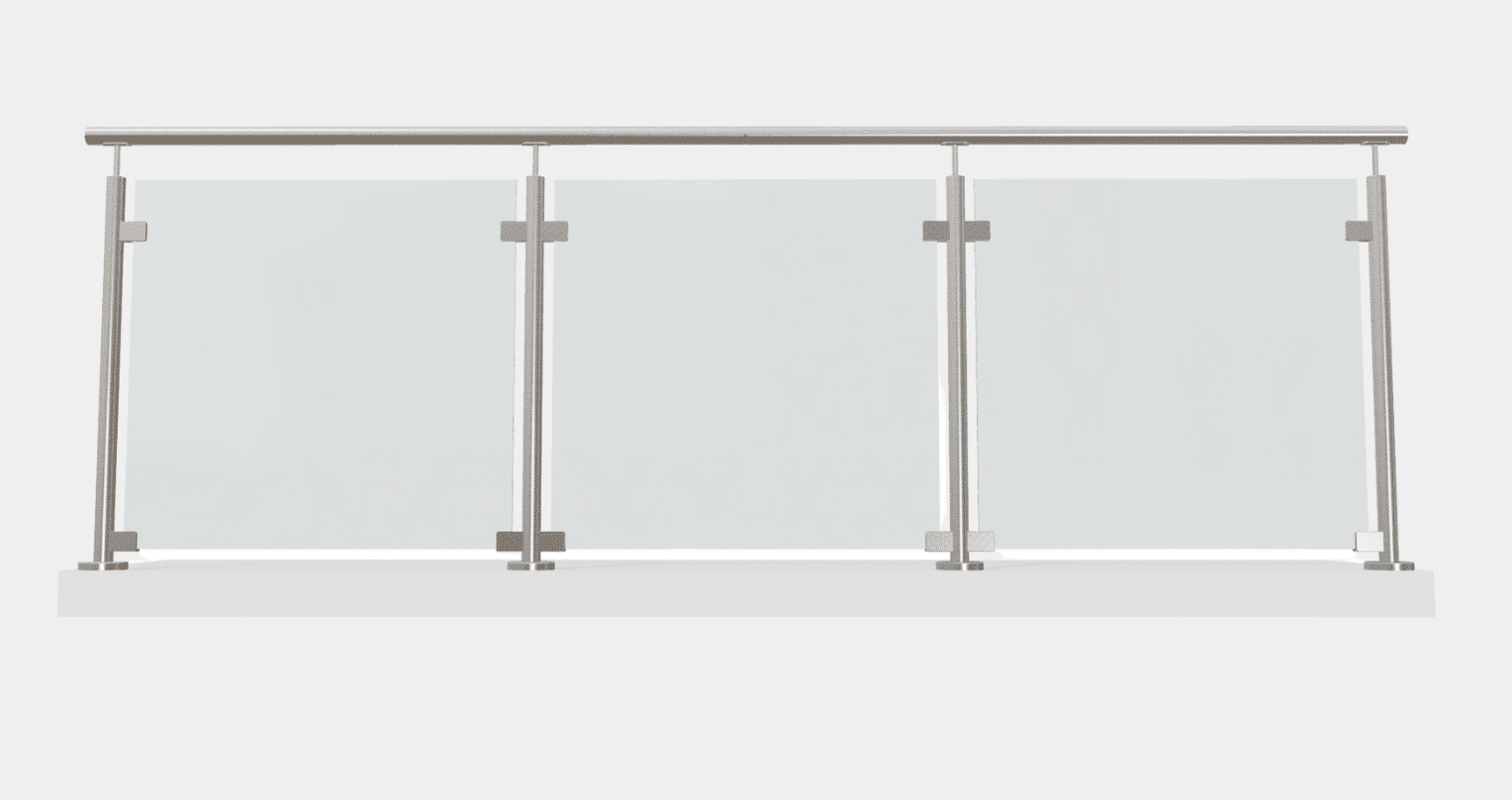
Table of Contents
What Causes Hard Water Stains on Glass Railings?
Why Are Hard Water Stains So Common on Outdoor Glass Railings?
How Can You Tell Whether a Glass Railing Has Hard Water Stains?
How To Remove Hard Water Stains From Glass Railings Step by Step?
What Tools and Cleaning Products Should You Use?
How Should You Deal With Light, Moderate, and Heavy Mineral Deposits?
Why Should You Avoid Abrasive Cleaning Methods?
How Should You Clean Glass Railing Hardware?
How Can You Prevent Hard Water Stains From Coming Back?
What Maintenance Routine Works Best for Glass Railings?
Why Is Glass Railing a Practical Choice for Outdoor Projects?
What Is the Best Way To Keep Glass Railings Clear?
What Are the Most Common Glass Railing Questions?
What Causes Hard Water Stains on Glass Railings?
Hard water stains are primarily mineral deposits left behind when water evaporates from the glass surface. Water can contain dissolved minerals such as calcium and magnesium. When droplets remain on a railing and gradually evaporate, those minerals are left behind as visible residue.
At first, the deposits may appear as small white dots or faint water spots. With repeated exposure, they can develop into cloudy patches, streaks, rings, or a dull mineral film. If deposits remain untreated for a long period, they can become increasingly difficult to remove and may eventually contribute to surface etching.
Common sources of mineral deposits include
- Hard tap water used for washing the railing
- Automatic irrigation systems and lawn sprinklers
- Swimming pool splash and spray
- Rainwater that picks up minerals from surrounding surfaces
- Water runoff from concrete, masonry, or stone
- Repeated washing without properly drying the glass
- Water droplets that remain on horizontal or partially sheltered surfaces
For this reason, cleaning the glass with water alone does not necessarily solve the problem. If the water is allowed to evaporate naturally, the dissolved minerals remain on the surface and gradually build up.
Why Are Hard Water Stains So Common on Outdoor Glass Railings?
Outdoor glass railings are exposed to significantly more water than many indoor glass surfaces. A railing installed beside a swimming pool, garden, balcony, terrace, or deck can receive water from several sources every day.
For example, an irrigation sprinkler may spray a fine mist toward the railing. The droplets may appear harmless, but repeated exposure can leave a noticeable mineral layer. Pool areas can experience a similar problem because water containing dissolved minerals and treatment chemicals repeatedly splashes onto the glass.
Outdoor conditions also make prevention more difficult. Sunlight can accelerate evaporation, leaving mineral deposits behind more quickly. Wind can carry dust onto wet glass, allowing dirt and mineral residue to combine into a more stubborn film.
This is one reason our maintenance recommendations at Vionta Metal focus not only on removing stains but also on controlling the sources of repeated water exposure.
How Can You Tell Whether a Glass Railing Has Hard Water Stains?
Before choosing a cleaning method, identify the type of contamination on the glass. Not every white mark is a hard water stain.
Typical signs of hard water stains
- White or gray circular water spots
- Cloudy areas that remain after normal glass cleaning
- Mineral rings around frequently wet areas
- Streaks following the direction of water runoff
- A rough or slightly chalky feeling when lightly touched after cleaning
Simple dirt, dust, fingerprints, and organic residue can usually be removed with mild soap and water. Mineral deposits require a different approach because the residue is chemically related to the dissolved minerals left behind by evaporated water.
If vinegar or an appropriate mineral deposit cleaner removes the cloudy appearance, the problem was likely surface contamination. If the glass remains permanently hazy even after appropriate cleaning, the surface may have become etched and professional glass restoration may be required.
How To Remove Hard Water Stains From Glass Railings Step by Step?
The safest approach is to start with the mildest effective method and increase the cleaning intensity only when necessary. This prevents unnecessary wear on the glass and helps protect nearby metal components.
Step 1: Remove loose dirt first
Rinse the glass with clean water to remove dust, sand, pollen, and other loose particles. This step is important because rubbing dry dirt across the glass can create fine scratches.
For large outdoor railing systems, use clean water and a soft microfiber cloth or soft sponge. Do not begin by aggressively scrubbing a dry glass panel.
Step 2: Prepare a mild vinegar solution
For light to moderate mineral deposits, mix approximately equal parts white vinegar and water. Vinegar contains mild acetic acid, which can help dissolve calcium based mineral deposits.
Apply the solution directly to the affected glass surface. Keep the glass wet for several minutes rather than allowing the solution to dry completely.
A short dwell time gives the acidic solution an opportunity to loosen the mineral residue before wiping. Different stains require different treatment times, so avoid assuming that stronger scrubbing is always better.
Step 3: Wipe gently with microfiber
Use a clean microfiber cloth to wipe the affected area. Work in overlapping sections and apply moderate pressure rather than aggressive force.
If the stain begins to disappear, continue working gradually across the panel. If it does not improve, apply another treatment rather than immediately switching to an abrasive pad.
Step 4: Rinse the glass thoroughly
After removing the mineral residue, rinse the glass with clean water. This removes loosened minerals and residual cleaning solution from the surface.
It is particularly important to rinse carefully around railing joints and hardware because acidic cleaning solutions should not be allowed to remain in contact with metal components.
Step 5: Dry the glass completely
Use a clean microfiber towel or squeegee to remove remaining water. Do not simply leave the glass wet and allow the water to evaporate.
Drying is one of the simplest ways to reduce the recurrence of water spots because it removes the water before its dissolved minerals can remain behind.
Step 6: Repeat when necessary
Old mineral deposits may not disappear after one cleaning cycle. For moderate deposits, repeating the mild treatment is often safer than immediately using a stronger chemical or abrasive product.
If several careful treatments produce little or no improvement, the stain may be more severe than ordinary surface mineral buildup.
What Tools and Cleaning Products Should You Use?
A simple cleaning kit is normally enough for routine glass railing maintenance.
| Cleaning Item | Primary Purpose | Recommended Use |
| Microfiber cloth | Cleaning and drying | Use for routine cleaning and mineral deposit removal |
| Soft sponge | Initial washing | Use to remove loose dirt and surface contamination |
| Squeegee | Water removal | Use after rinsing to reduce water spots |
| White vinegar | Mineral deposit treatment | Use diluted for light to moderate hard water stains |
| Mild dish soap | Routine cleaning | Use with warm water for ordinary dirt and fingerprints |
| Glass safe mineral deposit cleaner | Stubborn mineral buildup | Use only according to the product instructions |
Separate cleaning tools should be used for glass and metal components. This reduces the chance of transferring abrasive particles or unsuitable chemicals between surfaces.
Before applying any commercial stain remover, check whether the glass has a protective coating or treatment. Some coated glass products have specific care requirements, and manufacturers may prohibit certain chemicals or abrasive products.
How Should You Deal With Light, Moderate, and Heavy Mineral Deposits?
Light hard water stains
Light stains usually appear as small water spots or a thin white film. A diluted white vinegar solution, microfiber cloth, clean water, and proper drying are often sufficient.
- Rinse the glass
- Apply diluted white vinegar
- Allow a short dwell time
- Wipe gently with microfiber
- Rinse thoroughly
- Squeegee and dry the glass
Moderate mineral buildup
Moderate deposits may form cloudy areas that remain visible after ordinary glass cleaning. In this situation, repeat the vinegar treatment rather than immediately increasing mechanical force.
If repeated mild treatments are ineffective, consider a commercial cleaner specifically formulated for mineral deposits on glass. Test the product on a small inconspicuous section first and follow the manufacturer's instructions.
Heavy or long neglected deposits
Severe deposits may have remained on the glass for months or years. At this stage, ordinary household cleaning may not be sufficient. Some deposits can become chemically bonded to the glass surface and may eventually cause etching.
If the glass remains cloudy after appropriate mineral removal, professional glass restoration may be more appropriate than increasingly aggressive DIY cleaning. Professional restoration can involve specialized polishing techniques, but improper polishing can create optical distortion or other surface problems.
Why Should You Avoid Abrasive Cleaning Methods?
One of the most common mistakes when removing hard water stains is trying to scrub harder. Mineral deposits may be stubborn, but aggressive mechanical cleaning can create a second problem that is much harder to fix.
Steel wool, rough scouring pads, abrasive powders, and unsuitable polishing products can scratch the glass. Razor blades and other hard tools should also be used only when specifically appropriate for the glass and application, because improper use can damage the surface.
Protective glass coatings require additional caution. Some maintenance instructions specifically prohibit abrasive products and certain acids or alkalis because they can damage the treatment.
Methods to avoid unless specifically approved
- Steel wool
- Metal scouring pads
- Harsh abrasive powders
- Unapproved polishing compounds
- Unknown industrial acids
- Strong chemicals left sitting on the glass
- Aggressive pressure washing directed at railing joints and hardware
The goal is not simply to make the stain disappear. The goal is to restore clarity while preserving the original glass surface and the surrounding railing system.
How Should You Clean Glass Railing Hardware?
Glass is only one part of a railing system. Depending on the design, the system may also include stainless steel posts, clamps, spigots, base shoes, brackets, handrails, fasteners, or aluminum components.
These materials should not automatically be treated with the same chemical used on the glass.
For example, acidic mineral deposit removers can affect certain metal surfaces if they are allowed to remain in contact with the hardware. Maintenance guidance for glass balustrades also recommends avoiding prolonged contact between acid based cleaners and stainless steel fittings.
A safer hardware cleaning routine
- Wash metal components with mild soap and clean water
- Use a soft microfiber cloth rather than abrasive material
- Rinse away soap and mineral residue
- Dry the hardware thoroughly
- Inspect joints, fasteners, and drainage areas for trapped dirt
- Do not allow acidic glass cleaners to sit on metal components
For commercial projects, coastal properties, and high traffic installations, regular inspection of both glass and hardware can help identify small maintenance problems before they become expensive repairs.
How Can You Prevent Hard Water Stains From Coming Back?
Prevention is usually easier than removing established mineral deposits. The most effective strategy is to reduce the amount of water that remains on the glass and remove mineral laden water before it evaporates.
Keep sprinklers away from the glass
If irrigation water repeatedly reaches the railing, adjust sprinkler heads so that the spray pattern does not directly hit the glass panels.
This is especially important for gardens, landscaped terraces, pool decks, and commercial properties where irrigation systems operate automatically.
Dry the glass after cleaning
After washing, use a squeegee or microfiber towel to remove standing water. Drying prevents water droplets from remaining on the surface long enough to evaporate and leave mineral residue.
Clean after heavy exposure
If the railing receives significant pool splash, irrigation spray, or rainwater runoff, clean it soon afterward instead of waiting until a visible mineral layer develops.
Use a consistent maintenance schedule
Routine cleaning is easier than restoration. Many glass railing maintenance guides recommend cleaning residential systems every few weeks, with more frequent cleaning for coastal, poolside, or high exposure locations.
Our factory also recommends considering the environment when specifying a railing system. A coastal property, pool enclosure, hotel terrace, and residential balcony may require different maintenance intervals even when the glass specification is similar.
What Maintenance Routine Works Best for Glass Railings?
A practical maintenance program does not need to be complicated. The important thing is consistency.
| Maintenance Frequency | Recommended Task | Purpose |
| Weekly | Inspect for water spots and sprinkler exposure | Identify problems early |
| Every 2 to 4 weeks | Clean glass with mild soap and water | Remove dirt and surface contamination |
| As needed | Treat visible mineral deposits | Prevent buildup from becoming difficult to remove |
| After heavy rain or pool exposure | Rinse and dry exposed areas | Reduce mineral residue |
| Monthly | Inspect hardware and connections | Identify dirt, corrosion, or loose components |
| Seasonally | Perform a more detailed glass and hardware inspection | Maintain long term appearance and performance |
The exact frequency should be adjusted according to local water quality, weather, location, and usage. A poolside glass railing generally needs more frequent attention than an indoor stair railing.
Why Is Glass Railing a Practical Choice for Outdoor Projects?
What is glass railing? A glass railing is a safety barrier system that uses glass panels together with structural posts, channels, clamps, spigots, or other supporting components. The design can provide a transparent barrier while maintaining visual openness across decks, balconies, terraces, staircases, and pool areas.
Why choose glass railing for a modern outdoor project? The primary advantage is visual openness. Unlike solid barriers, transparent glass allows views and daylight to pass through while still providing a defined protective boundary.
How does glass railing compare with traditional railing systems? The answer depends on the application, but glass can provide a combination of visibility, contemporary appearance, and relatively straightforward surface cleaning. The glass itself does not require painting or staining, although regular cleaning and hardware maintenance remain important.
What makes glass railing suitable for architectural projects? Its clean appearance allows architects, contractors, and property owners to integrate safety barriers into contemporary residential and commercial designs without creating a visually heavy structure.
Why does glass railing maintenance matter even when the system is designed for outdoor use? Because environmental exposure affects appearance over time. Mineral deposits, salt, dust, and water spots can reduce transparency and make a high quality installation look neglected.
How can glass railing provide long term value? A well specified system combines appropriate glass, reliable hardware, suitable installation methods, and a practical maintenance routine. At Vionta Metal, we consider these factors when developing railing solutions for residential, commercial, and architectural projects.
What Is the Best Way To Keep Glass Railings Clear?
The most effective approach to hard water stains is a combination of early treatment and regular prevention. For light and moderate mineral deposits, a diluted white vinegar solution and a microfiber cloth can often loosen the buildup without aggressive scrubbing. After treatment, the glass should be thoroughly rinsed and dried.
For stubborn deposits, use a glass safe mineral deposit cleaner according to its instructions and test it before treating the entire panel. If the glass remains permanently cloudy after mineral deposits have been removed, the surface may be etched and professional restoration should be considered instead of increasingly aggressive cleaning.
Most importantly, do not wait until hard water stains become severe. Keep irrigation spray away from the railing, remove standing water when practical, clean the glass regularly, and dry the surface after washing.
At Vionta Metal, we work with project owners, contractors, architects, distributors, and other professional buyers who need practical railing solutions for different applications. If you are planning a residential, commercial, hotel, balcony, terrace, staircase, or poolside project, our team can help you evaluate glass railing configurations, glass specifications, hardware options, finishes, and customized requirements.
Contact Vionta Metal to discuss your project requirements and request a suitable glass railing solution for your application.
What Are the Most Common Glass Railing Questions?
What is glass railing and where is it commonly used?
Glass railing is a safety barrier system that combines glass panels with structural supporting components such as posts, clamps, spigots, channels, or handrails. It is commonly used for balconies, decks, terraces, staircases, pool areas, rooftop spaces, hotels, restaurants, commercial buildings, and modern residential projects. Its transparent appearance helps preserve views while providing a defined safety barrier.
Why do glass railings develop hard water stains?
Glass railings develop hard water stains when water containing dissolved minerals such as calcium and magnesium evaporates from the glass surface. The water disappears, but the minerals remain as white spots, cloudy patches, streaks, or mineral film. Outdoor irrigation, pool splash, rainwater, and repeated washing can accelerate this process. Regular rinsing and drying can significantly reduce recurring deposits.
How do you clean glass railing without scratching it?
Start by rinsing away loose dirt, then use warm water with a small amount of mild dish soap for routine cleaning. For mineral deposits, a suitable diluted white vinegar solution can help loosen calcium based residue. Use a clean microfiber cloth or soft sponge and avoid steel wool, rough scouring pads, abrasive powders, and other materials that can scratch the surface. Always rinse thoroughly and dry the glass after cleaning.
What is the best way to remove stubborn hard water stains from glass railing?
Begin with the mildest effective method, such as a suitable vinegar solution, and allow sufficient dwell time before gently wiping the surface. If the deposits remain, use a commercial mineral deposit remover specifically approved for the type of glass and follow the manufacturer's instructions. Test the product on a small area first and protect nearby metal hardware. If repeated cleaning does not remove the cloudiness, the glass may be etched rather than simply stained, in which case professional restoration may be necessary.
How often should glass railing be cleaned?
Cleaning frequency depends on the environment. A typical residential system may need cleaning every few weeks, while poolside, coastal, commercial, and heavily exposed installations may require more frequent cleaning. The best approach is to inspect the glass regularly and clean it before mineral deposits become thick. Removing sprinkler spray, rinsing after heavy exposure, and drying the glass can also reduce the frequency of intensive stain removal.
Related News
- Why Stainless Cable Railing Shines in Winter?
- How Can a Snow Load Aluminum Pergola Deliver Reliable Year-Round Outdoor Protection
- What Awning Fabric and Frame Options Are Available?
- Is Glass Railing Safe for Balconies and Terraces?
- What Makes Stainless Steel the Ideal Material for Outdoor Railings?
- Are Jalousie Windows Easy to Break Into?
Leave me a message