How do louvered pergolas work?
Introduction: The Evolution of Modern Outdoor Living Space
As homeowners and commercial property developers look to maximize the utility of their outdoor areas, the demand for versatile, durable, and aesthetically superior architectural solutions has skyrocketed. Traditional open-roof trellises offer zero protection against sudden downpours, while solid fixed pavilions permanently block out precious natural sunlight. This common design dilemma is precisely where the innovative engineering of modern louvered pergolas steps in to bridge the gap between absolute exposure and total enclosure. Outdoor spaces are no longer viewed as separate, seasonal add-ons but rather as seamless extensions of the primary indoor living area. Achieving this continuity requires a structural system capable of adapting dynamically to shifting weather patterns in real time.
At Vionta Metal, we have spent years refining the manufacturing processes required to produce premium architectural outdoor structures that effortlessly balance heavy-duty durability with refined modern aesthetics. Our engineering team recognizes that a backyard patio, restaurant terrace, or hotel poolside is a substantial financial investment. Therefore, the mechanisms driving these systems must perform flawlessly over decades of continuous exposure to harsh elements. By integrating high-grade aluminum alloys with precision-engineered motorized components, our factory delivers customizable weather protection systems designed to withstand extreme wind, intense UV exposure, and heavy snow loads while remaining remarkably simple to operate for the end-user.
Understanding the internal mechanisms, materials, and structural engineering behind these systems is essential before making an investment. In this comprehensive guide, we will break down exactly how these advanced systems operate, explore the critical technical parameters you need to look for, and explain how our team manufactures these systems to commercial standards. Whether you are looking to shade a residential deck or specify an industrial-scale outdoor dining enclosure, this deep dive will provide you with all the engineering insights and practical performance data required to make an informed, professional decision for your next project.
Table of Contents
- What Are Louvered Pergolas and How Do They Transform Outdoor Living?
- How Do Louvered Pergolas Work Mechanically and Electronically?
- Why Is Aluminum Pergola Construction Superior to Traditional Wood or Vinyl?
- What Technical Parameters Define a Heavy-Duty Commercial Aluminum Pergola?
- How Do Integrated Drainage Systems Handle Heavy Rainfall and Snow Loads?
- Why Choose Vionta Metal as Your Trusted B2B Aluminum Pergola Manufacturer?
- Frequently Asked Questions About Louvered Pergolas
What Are Louvered Pergolas and How Do They Transform Outdoor Living?
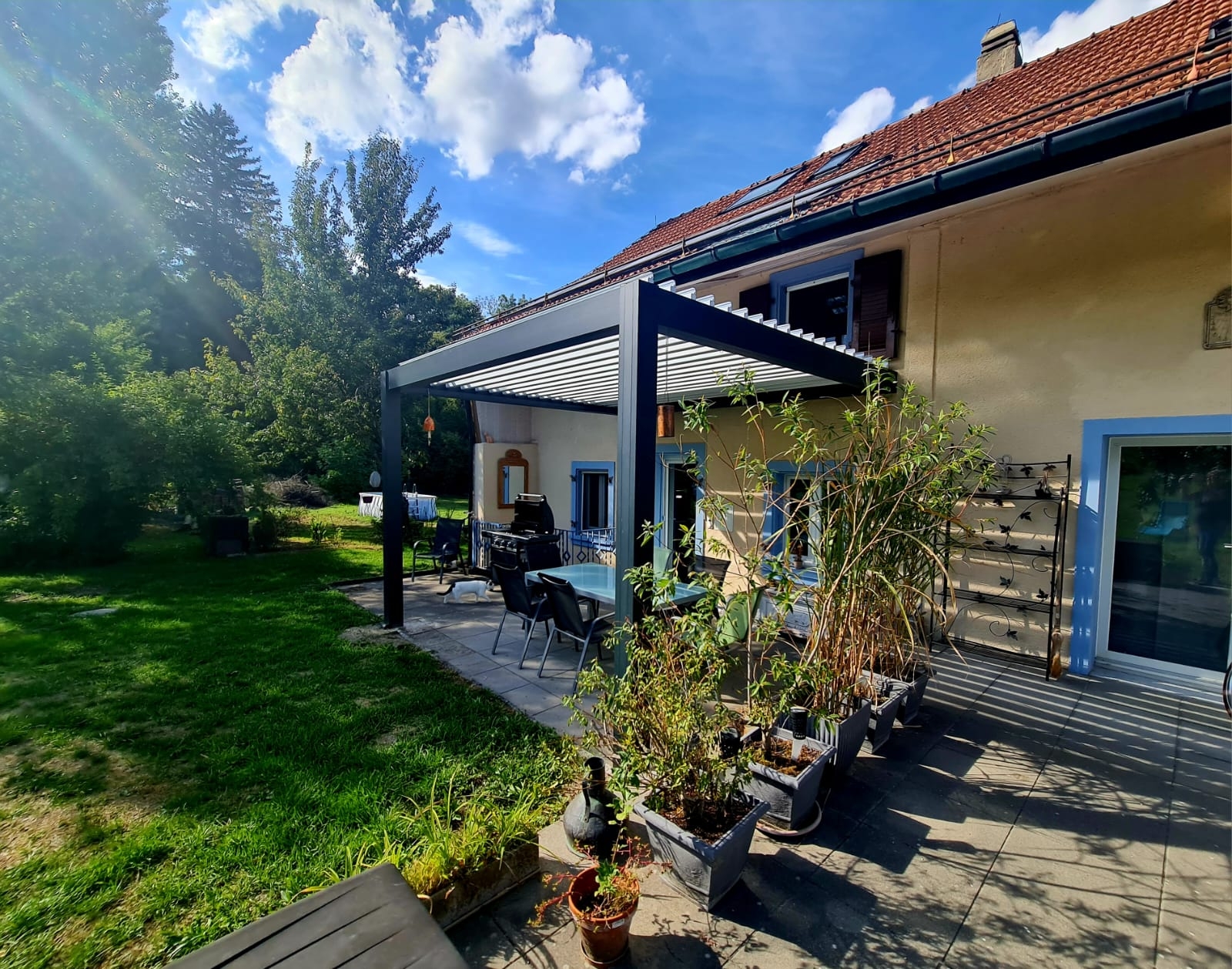
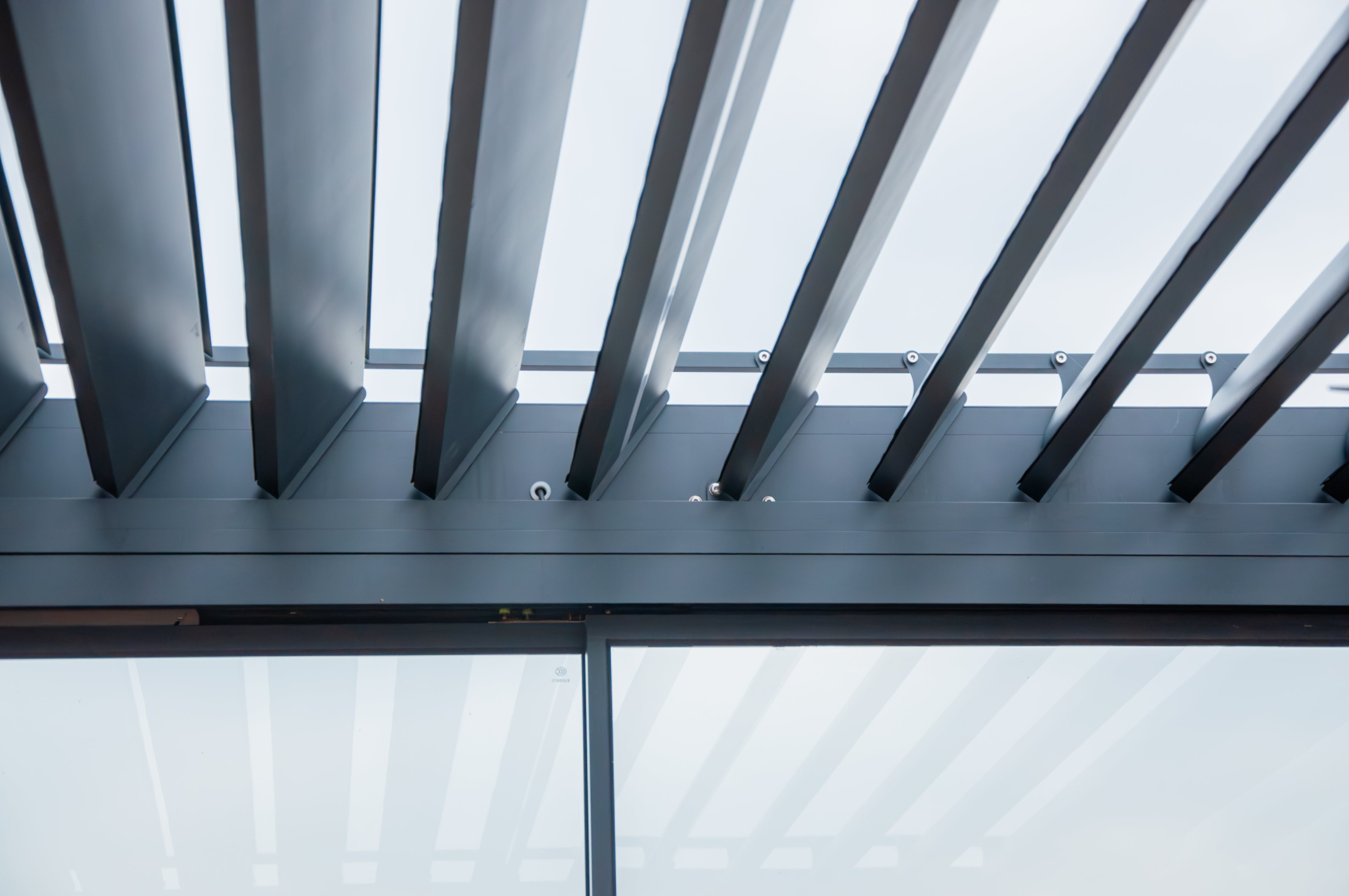
A louvered pergola is a dynamic, high-performance architectural structure featuring an adjustable roof system composed of parallel, rotating blades or slats. Unlike static, old-fashioned outdoor gazebos, this advanced engineering configuration allows users to control the exact amount of sunlight, ventilation, and rain protection over their patios or decks. At Vionta Metal, we design these sophisticated structures to serve as a bridge between indoor luxury and outdoor freedom, giving property owners total environmental control over their external spaces at the touch of a button or via automated smart sensors.
The core concept behind this design is adaptability, as a fixed solid roof creates a dark, stagnant environment underneath during cooler months, while a completely open trellis leaves furniture and occupants vulnerable to unpredictable rainfall or intense, blistering summer heat waves. By utilizing a system of interlocking, specialized aluminum louvers, our factory provides a dual-purpose solution that can transition from a completely open sky view to a fully sealed, watertight barrier in less than sixty seconds. This flexibility drastically extends the usability of outdoor areas from a few weeks in summer to a year-round functional living space.
Core Design Characteristics and Visual Flexibility
When analyzing how these structures integrate into contemporary architecture, several essential design characteristics set them apart from standard, off-the-shelf retail kits:
- Adjustable Overhead Louvers: The parallel overhead aluminum slats can rotate through a wide arc, typically from a fully closed 0-degree position up to a wide-open 120-degree angle, allowing precise alignment with the angle of the sun.
- Concealed Structural Framing: High-end industrial units feature hidden internal fastening systems, integrated wiring pathways, and internal downspouts within the posts, creating a clean, seamless visual appearance free of messy clutter.
- Modular Expansion Capabilities: Multiple structural bays can be linked together side-by-side or end-to-end to cover massive commercial spaces without requiring bulky, disruptive center supports or blocking premium views.
- Aesthetic Adaptability: The clean lines of heavy-duty extruded aluminum profiles complement both ultra-modern minimalist concrete structures and classic, traditional brick facades with equal sophistication.
The practical application of these systems across residential patios, commercial luxury resorts, and high-traffic restaurant dining decks highlights their functional versatility. In residential settings, a single-bay motorized unit creates an upscale, private outdoor lounge, outdoor kitchen center, or premium poolside cabana that remains fully protected from harsh UV rays during peak daylight hours. In a commercial landscape, maximizing seating capacity regardless of weather fluctuations directly impacts revenue generation, making these adjustable roofs a highly lucrative investment for hospitality businesses looking to secure reliable outdoor dining options throughout the year.
Furthermore, our factory engineers focus heavily on the micro-climate optimization beneath the louvers. When the blades are opened slightly, they create a natural convection current known as the chimney effect, where hot air naturally rises and escapes through the open ceiling, drawing cooler ambient air in from the open sides. This active thermodynamic process can reduce the perceived temperature underneath the structure by up to 15 degrees Fahrenheit compared to a solid-roof gazebo or fabric awning, which traps hot, humid air underneath. This subtle but critical ventilation feature ensures maximum comfort during stifling mid-day heat cycles.
How Do Louvered Pergolas Work Mechanically and Electronically?
The operational mechanics of modern louvered pergolas depend entirely on precision engineering, robust linkages, and industrial-grade motorized drive assemblies. To truly understand how these systems function day after day in variable outdoor conditions, one must examine both the physical mechanical connections and the electronic control architecture that directs the movement of the heavy aluminum components. At Vionta Metal, we design our structural components to reduce friction, minimize mechanical wear, and provide whisper-quiet operation during every rotation cycle.
The physical movement begins with a heavy-duty, internal drive shaft running parallel to the support beams, which is connected to each individual louver via a series of precision-machined stainless steel pivot pins and dual-layer connection brackets. When the motor rotates the primary drive shaft, this linear force is distributed uniformly across all connection points simultaneously, ensuring that every blade tilts at the exact same angle without twisting or misalignment. This balanced distribution of force is critical because even a fraction of a millimeter of misalignment over a long span could prevent the louvers from achieving a perfect, tight seal when closed.
The Core Mechanical and Motorized Components
To give you a clear, comprehensive breakdown of the internal layout of these systems, our factory builds every unit using a specific array of high-grade mechanical and electronic components:
- Industrial Inline Linear Actuators: We utilize high-torque, 24V DC low-voltage motors hidden completely within the overhead frame profiles, capable of pushing and pulling heavy structural loads quietly and efficiently.
- Stainless Steel Connecting Rods: All physical link bars are stamped from Marine-Grade 304 or 316 stainless steel to eliminate the risk of rust, binding, or structural fatigue caused by constant outdoor moisture exposure.
- Self-Lubricating Pivot Bushings: Every single louver rotation point features customized, high-density polymer bushings that ensure ultra-smooth rotation while completely removing the need for manual oiling or maintenance.
- Smart Radio Frequency Receivers: Internal control boxes handle incoming wireless commands from handheld remotes, wall-mounted touch panels, smartphone applications, or centralized building automation networks.
Beyond simple manual controls via a basic remote control, advanced configurations incorporate automated climate sensing systems to provide hands-free property protection. Rain sensors are mounted on the upper framework of the structure; the moment a single drop of water bridges the gold-plated capacitive trace grid on the sensor, an electronic signal is instantly sent to the primary control box, triggering the internal linear actuator to rotate the roof closed immediately. This autonomous operation ensures that outdoor cushions, expensive electronics, and outdoor kitchen setups remain safe and dry even if the property owner is away from home during a sudden storm.
Wind and temperature automation loops are equally vital for structural longevity in volatile climates. High-performance anemometers constantly monitor wind velocity surrounding the patio area; if sustained wind gusts exceed a pre-set safety threshold (typically around 50 to 60 miles per hour depending on structural sizing), the smart controller automatically tilts the louvers to a half-open, 45-degree angle. This crucial adjustment neutralizes the aerodynamic lift and drag forces acting on the roof, allowing heavy winds to pass through the structure cleanly rather than treating the closed roof like a massive sail. Similarly, freeze sensors can automatically open the louvers during freezing rain events to prevent ice buildup from locking the individual blades together.
Why Is Aluminum Pergola Construction Superior to Traditional Wood or Vinyl?
When selecting the foundational material for a permanent outdoor architectural installation, structural longevity, structural integrity, and long-term maintenance costs must be thoroughly evaluated. For decades, natural wood like cedar or pressure-treated pine was the default choice for backyard construction, while cheap vinyl or thin steel kits eventually entered the consumer market. However, from our professional perspective at Vionta Metal, heavy-gauge extruded aluminum represents the absolute pinnacle of engineering excellence for modern outdoor living structures, offering a performance profile that alternative materials simply cannot match.
Wood is an inherently organic, porous material that absorbs environmental moisture, leading to severe twisting, warping, cracking, and eventual structural rotting as the seasons change. To prevent this degradation, wood requires intensive manual maintenance every single year, including sanding, sealing, painting, or staining, which demands significant time and financial investment. Vinyl, while waterproof, lacks the tensile strength required to span long distances without sagging under its own weight, and it quickly becomes brittle and faded when exposed to intense ultraviolet radiation from the sun over a few seasons.
Comparative Performance Analysis of Structural Materials
To demonstrate why our factory focuses exclusively on advanced aluminum extrusion technologies, consider this comprehensive comparison of performance metrics across common construction materials:
- Tensile and Yield Strength: Extruded aluminum alloys possess incredibly high strength-to-weight ratios, allowing engineers to design massive clear spans without requiring intermediate vertical posts that ruin views.
- Natural Corrosion Resistance: Aluminum naturally forms a protective, microscopic oxide layer upon exposure to oxygen, making it completely immune to rust, rot, insect damage, and moisture degradation over time.
- Dimensional Structural Stability: Unlike natural timber, aluminum does not expand, contract, warp, or twist when subjected to extreme temperature fluctuations from freezing winter conditions to scorching summer heat.
- Coating Durability and Finish: Utilizing advanced electrostatic powder coating techniques ensures an architectural-grade finish that resists scratching, chalking, fading, and peeling for decades without manual recoating.
The manufacturing technology behind our systems relies on precise control of metallurgical properties. We utilize specialized 6000-series aluminum alloys (typically 6063-T6), which are specifically engineered for architectural structural framing and precision extrusion. The "T6" designation indicates that the metal has undergone a meticulous solution heat-treating and artificial aging process, which maximizes its yield strength and structural hardness. This ensures that the structural framework, support beams, posts, and louvers maintain their precise linear tolerances over decades of continuous load bearing.
Environmental sustainability is another critical area where aluminum far outshines alternative materials. Aluminum is infinitely recyclable without losing any of its inherent physical or structural properties, making it an eco-friendly option for green building certifications like LEED. Furthermore, because an aluminum pergola does not require chemical treatments, toxic stains, or heavy oil-based paints throughout its service life, it eliminates the risk of harmful chemical runoff leaching into surrounding soils and groundwater systems, providing a clean, safe, and truly sustainable outdoor space for families and commercial patrons alike.
What Technical Parameters Define a Heavy-Duty Commercial Aluminum Pergola?
In the premium architectural manufacturing sector, a structure is only as reliable as the exact technical specifications used during its engineering and extrusion phases. For commercial buyers, architects, and discerning homeowners, understanding these exact engineering metrics is crucial to ensuring that the specified system can withstand localized building code requirements, wind zones, and structural loads. At Vionta Metal, we maintain absolute transparency regarding our product metrics, ensuring every system delivered from our factory floors meets rigid international testing standards.
The thickness of the aluminum walls is the primary indicator of overall structural integrity. While cheap, mass-produced residential kits found in retail stores utilize thin aluminum sheets ranging from 1.0mm to 1.5mm, our professional systems are manufactured using heavy-gauge extrusions with profile thicknesses up to 4.0mm on critical load-bearing support components. This substantial increase in material density prevents structural flexing under load, guarantees absolute stability under extreme wind pressures, and ensures that internal fastening threads remain perfectly secure without stripping or shearing over decades of use.
Comprehensive Structural Parameter Specifications
To provide clear technical data for architectural layout planning and engineering evaluation, we have compiled our complete standard product specifications below:
| Structural Component | Material Specification | Profile Wall Thickness | Performance Metric / Standard |
| Primary Support Columns (Posts) | 6063-T6 Extruded Aluminum | 3.0mm to 4.0mm (Reinforced) | 150mm x 150mm Heavy-Duty Profile Size |
| Main Load-Bearing Frame Beams | 6063-T6 Extruded Aluminum | 3.0mm to 3.5mm Double-Channel | Integrated Outer Gutter and Internal Raceway |
| Rotating Roof Louver Blades | 6063-T6 Aerodynamic Double-Wall | 2.0mm to 2.5mm Internal Ribs | Symmetrical S-Shape with EPDM Seals |
| Internal Drive Shaft & Linkages | 304/316 Marine Stainless Steel | 5.0mm Solid Plate Connections | High-Torque Anti-Corrosion Configuration |
| Surface Coating Technology | Electrostatic Qualicoat Powder | 60 to 80 Microns Dry Film | AAMA 2604/2605 UV Fade Resistance Certified |
| Motorized Drive Assembly | 24V DC Sealed Linear Actuator | IP67 Waterproof Enclosure | Whisper-Quiet Operation (Under 45 Decibels) |
| Maximum Certified Wind Load | Engineered Frame Configuration | N/A | Up to 180 km/h (Closed Roof Configuration) |
| Maximum Certified Snow Load | Reinforced Internal Core | N/A | Up to 120 kg/m² Static Roof Weight Capacity |
A key design breakthrough within these parameters is our proprietary double-wall hollow louver blade geometry. Unlike single-layer flat aluminum slats that bend easily under stress and transfer intense heat directly to the area below, our double-walled profile features an internal structural web matrix. This multi-layered design increases the bending resistance of the blade by over 300% across long spans, while the dead-air gap inside acts as a natural thermal barrier, preventing solar radiation from radiating downward through the closed ceiling during hot midday cycles.
Surface treatment excellence is equally vital for long-term survival in corrosive maritime coastal zones or high-pollution urban centers. Our factory employs a rigorous 7-stage chemical pre-treatment wash process, including acid etching and deionization, before applying premium architectural-grade powder coatings. This meticulous surface preparation ensures absolute cross-hatch adhesion of the outer finish, preventing subterranean oxidation or bubbling if the outer layer is scratched during installation, ensuring your structure retains its flawless look for years to come.
How Do Integrated Drainage Systems Handle Heavy Rainfall and Snow Loads?
A critical engineering feature that separates a true multi-season shelter from a simple open sunshade is how effectively the structure manages severe precipitation. A premium outdoor living space must remain completely dry and comfortable inside even during intense, driving downpours. To achieve this reliability, our engineering teams have designed a highly efficient, multi-tiered integrated water management system that collects, channels, and expels heavy rainfall safely away from your structure without requiring visible external pipe networks.
The process of water diversion begins at the precise moment rain strikes the rotating roof. Each individual louver blade is manufactured with an engineered outer profile that includes an integrated collection groove running along its entire lateral edge. When the roof is fully closed, these overlapping louvers form a tightly interlocked, continuous surface where the secondary edge of one blade rests directly over the collector channel of the adjacent blade, ensuring that any water falling on the roof is instantly caught by these integrated micro-gutters rather than leaking through the seams.
The Complete Water Management and Load Path Sequence
To fully visualize how water and physical weight flow safely through our advanced architectural structures, review this detailed mechanical pathway:
- Louver Collection Channels: Water is caught by the integrated channels built directly into each individual rotating aluminum blade profile.
- Lateral Perimeter Gutters: Pitch tolerances force water to flow horizontally along the blade channels into massive perimeter gutters built directly inside the main frame beams.
- Internal Post Downspouts: Once water reaches the corners of the main frame, it passes through specialized anti-clog filter screens and drops straight down inside the hollow support columns.
- Concealed Ground Escape Ports: The water is cleanly discharged out through hidden weep holes located at the very base of the columns, or channeled directly into subsurface site drainage lines.
- EPDM Compression Interlocking Gaskets: Specialized, UV-stable continuous rubber seals line every louver interface zone, compressing tightly upon closure to block wind-driven rain from entering horizontally.
Managing static winter snow loads requires an entirely different engineering approach than handling fluid rain runoff. Snow accumulation applies immense downward force on the roof surface, which can cause severe structural deformation if not correctly managed. Our heavy-duty systems are calculated to support up to 120 kilograms per square meter of static load when fully closed. This is achieved through the use of internal reinforcing columns within our posts and extra-thick internal structural ribs within each individual louver blade, ensuring total peace of mind during heavy winter blizzards.
However, during extreme winter storms where expected snow accumulation threatens to exceed local design limits, the smart motorized system offers a simple, proactive safety solution. By using the remote control or automated home systems to tilt the louvers to a vertical, 90-degree open position, snow is allowed to fall straight through the structure to the ground below. This eliminates any structural accumulation on the roof overhead, protecting the internal drive links and precision motor assemblies from experiencing excessive weight stress or mechanical strain during severe winter conditions.
Why Choose Vionta Metal as Your Trusted B2B Aluminum Pergola Manufacturer?
Selecting the right production partner for large-scale commercial developments, high-volume international distribution, or premium custom architectural projects requires a manufacturer with deep technical expertise, massive production capacity, and rigid quality control standards. At Vionta Metal, located in the heart of Zhejiang Province, China, we operate a highly specialized production facility dedicated exclusively to the engineering, extrusion, and surface treatment of premium aluminum outdoor structures for international export markets.
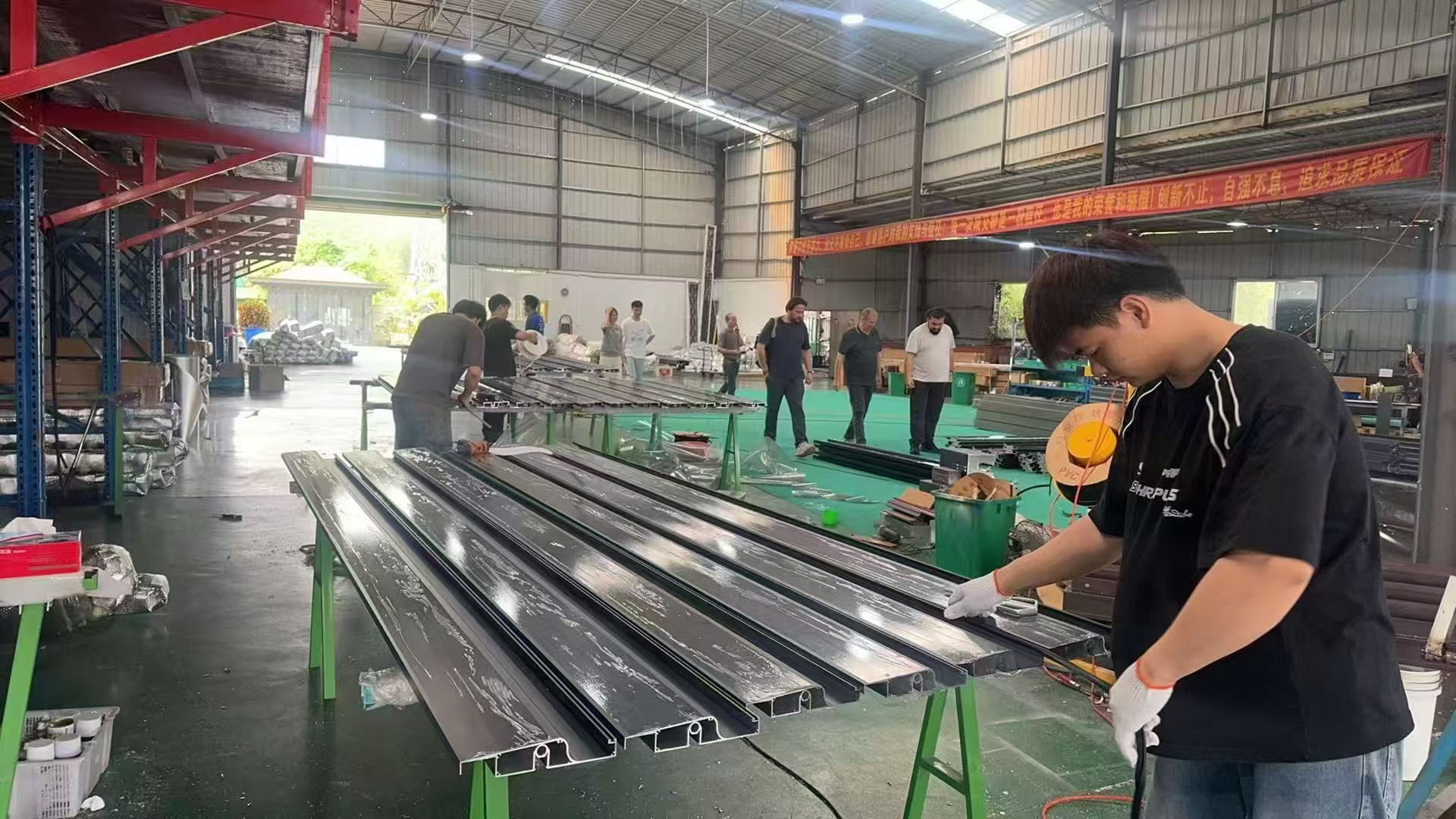
Our expansive industrial complex features state-of-the-art automated equipment, including high-precision multi-axis CNC machining centers, automated laser cutting systems, and a fully computerized electrostatic powder coating line that guarantees absolute color consistency across every single batch. By managing every stage of production completely in-house—from raw aluminum alloy billet selection to final component packaging—our factory eliminates intermediate trading markups, maintains total control over product quality tolerances, and delivers exceptional value directly to our B2B partners worldwide.
Our Structural Quality Assurances and B2B Partnership Advantages
When you partner with our manufacturing team, your business gains access to a comprehensive suite of industrial capabilities and professional commercial benefits:
- Full OEM and ODM Customization: Our in-house engineering department can modify profiles, post dimensions, connection brackets, and color configurations to match any architectural blueprint or local building code requirement.
- Rigid Quality Inspection Protocols: Every single production run undergoes rigorous cross-hatch adhesion testing, salt-spray corrosion testing, and full motorized mechanical pre-assembly checks before being packed for shipment.
- Advanced Industrial Packaging: All structural profiles are wrapped in multi-layered protective foam sheets and secured inside heavy-duty, reinforced wooden crates to guarantee zero transit damage during ocean freight shipping.
- Comprehensive Technical Support Documentation: We provide detailed, step-by-step 3D mechanical installation manuals, precise CAD architectural layouts, and full electrical wiring schematics for seamless on-site assembly.
Our strategic industrial location provides major logistical advantages that directly benefit our international client base. Being positioned near premier deepwater global shipping ports allows us to secure highly competitive freight rates, streamline customs clearance procedures, and maintain reliable, predictable delivery timelines for critical commercial construction projects. We understand that field delays cost money, which is why our production scheduling is managed through advanced ERP software to guarantee that every order is completed, packed, and dispatched exactly on schedule.
Ultimately, our business philosophy centers on building long-term, mutually prosperous relationships with international distributors, commercial contractors, design-build firms, and upscale brand owners. We do not simply supply standard products; we collaborate closely with your engineering and project management teams to deliver fully optimized, integrated outdoor living solutions that enhance your market reputation, drive high-margin revenue growth, and provide end-users with unparalleled structural reliability and outdoor luxury for decades to come.
Frequently Asked Questions About Louvered Pergolas
Are louvered pergolas completely waterproof when closed?
Yes, our louvered pergolas are designed to create a completely waterproof overhead shelter when the aluminum blades are rotated to the full 0-degree closed position. The system achieves this total seal through a combination of overlapping aerodynamic blade edges and continuous, commercial-grade EPDM rubber gaskets that compress tightly together to block wind-driven rain. All water collected on the roof is automatically channeled into deep perimeter frame gutters and directed down inside the hollow support columns, ensuring that the living space underneath remains perfectly dry even during severe, torrential downpours.
Can these motorized aluminum structures withstand high-velocity wind zones and coastal hurricanes?
Our heavy-duty aluminum pergola systems are engineered and tested to withstand extreme sustained wind loads up to 180 kilometers per hour when the louvers are fully closed. For regions prone to severe coastal hurricanes or high-altitude mountain wind gusts, the structures provide advanced safety through automated smart environmental integration. By using integrated wind sensors or manual remote commands to open the louvers to a 45-degree or 90-degree angle, wind is able to pass cleanly through the roof grid rather than lifting the structure, completely neutralizing aerodynamic drag and protecting the system from structural damage.
What regular maintenance is required to keep the motorized mechanical system operating smoothly?
Unlike traditional wooden structures that demand annual sanding, sealing, and painting, our architectural-grade aluminum structures require virtually zero manual maintenance throughout their service life. The entire structural frame and louvers are finished with a durable, UV-resistant electrostatic powder coating that can be cleaned easily using standard water from a garden hose and a mild soap solution once or twice a year. Furthermore, all internal rotation points and drive linkages feature specialized self-lubricating polymer bushings, which completely eliminates the need for manual greasing, oiling, or internal mechanical servicing.
Can customizable accessories and side screens be integrated into the framework after installation?
Yes, our advanced modular frame profiles are specifically engineered with integrated internal tracks and dedicated internal wiring raceways to accept a wide array of premium functional accessories. Property owners can seamlessly integrate motorized vertical zip privacy screens, clear wind-blocking PVC curtains, dimmable LED strip lighting built directly into the louver blades, perimeter ambient lighting, and high-efficiency infrared outdoor heaters. Because these systems are planned for during the initial engineering phase, all electrical wiring remains completely hidden inside the aluminum posts for a flawless visual appearance.
How long does it typically take to complete the on-site structural installation of a standard unit?
A standard single-bay motorized unit can be completely assembled, anchored, and wired within 1 to 2 days by a professional crew of two to three skilled installers. Our factory simplifies the field installation process by pre-cutting all structural profiles, pre-drilling necessary fastening holes, and pre-wiring internal motor assemblies before crating and shipping. Every system is delivered as a precision-engineered modular kit, accompanied by detailed 3D step-by-step structural instruction manuals and clear wiring schematics, which minimizes on-site labor requirements and eliminates costly installation errors.
Conclusion: Elevate Your Outdoor Project with Professional Engineering
Investing in a high-performance adjustable roof structure is a powerful way to add lasting value, functionality, and architectural elegance to any residential patio or commercial hospitality landscape. By selecting an advanced, heavy-gauge aluminum system featuring precision motorized controls, intelligent automation, and a fully integrated internal drainage system, you ensure that your outdoor investment will continue to perform flawlessly across all seasons while requiring absolutely zero manual maintenance. Do not settle for thin, mass-produced retail kits that bend under snow or rust after a single season of rain exposure; choose a commercial-grade structural solution engineered to last a lifetime.
Are you ready to elevate your product catalog, secure a competitive edge in your regional market, or source the absolute highest-quality outdoor shelters for an upcoming commercial development? Contact the engineering team at Vionta Metal today to receive complete technical CAD drawings, detailed material pricing lists, and custom B2B manufacturing quotes tailored specifically to your unique business requirements. Let our professional factory team transform your outdoor design concepts into high-margin, precision-manufactured reality. Reach out to our international export department right now to initiate your custom consultation and secure a sample kit for your team.
Related News
- Why Stainless Cable Railing Shines in Winter?
- How Can a Snow Load Aluminum Pergola Deliver Reliable Year-Round Outdoor Protection
- What Awning Fabric and Frame Options Are Available?
- Is Glass Railing Safe for Balconies and Terraces?
- What Makes Stainless Steel the Ideal Material for Outdoor Railings?
- Are Jalousie Windows Easy to Break Into?
Leave me a message