Are Aluminum Pergolas Safe in Strong Winds?
Introduction
When homeowners, architects, and commercial developers invest in outdoor structures, one of the most important concerns is wind safety. Outdoor environments are unpredictable. Strong gusts, seasonal storms, and sudden weather changes can all affect the stability of any structure installed in open spaces. This is especially true for pergolas, which are often installed in gardens, patios, rooftops, hotels, restaurants, and public leisure areas.
Among all available materials, Aluminum Pergolas have become one of the most widely used solutions due to their balance of strength, lightweight structure, and corrosion resistance. However, safety in strong winds is not determined by material alone. It depends on engineering design, installation quality, structural profile thickness, anchoring system, and overall product configuration.
At Vionta Metal, we have worked with global distributors, contractors, and project developers for many years, and one consistent requirement appears in every region: outdoor structures must remain stable in real environmental conditions, not only under ideal laboratory assumptions. That is why our engineering process focuses on wind load resistance, structural reinforcement, and installation adaptability from the very beginning of product development.
In many modern outdoor projects, pergolas are also designed together with railing systems such as cable deck railing and metal cable railing to create a unified architectural style. These systems not only improve visual continuity but also ensure that outdoor areas maintain safety performance under different environmental conditions, including wind exposure in elevated terraces and coastal zones.
This article explains in detail how Aluminum Pergolas behave in strong wind conditions, what factors influence their safety, and what buyers should evaluate before making a purchasing decision. The goal is to provide practical, engineering-based understanding rather than generic marketing descriptions.
Table of Contents
- What Makes Aluminum Pergolas Stable in Strong Winds
- How Do Structural Design and Engineering Affect Wind Resistance
- Why Does Installation Quality Determine Wind Safety Performance
- What Product Features Improve Aluminum Pergolas Wind Resistance
- How Do Environmental Conditions Affect Pergola Stability
What Makes Aluminum Pergolas Stable in Strong Winds?
The stability of Aluminum Pergolas in strong wind conditions is primarily determined by structural engineering rather than material appearance. Aluminum itself provides a strong foundation because it combines low weight with high tensile strength, but the real performance depends on how the entire system is designed and assembled.
One of the main advantages of aluminum is its ability to resist corrosion over long periods, especially in coastal or humid environments. This ensures that structural joints, connectors, and load-bearing profiles maintain their integrity without weakening over time due to rust or material degradation. At Vionta Metal, our engineering team evaluates long-term environmental exposure as part of every design stage to ensure consistent performance.
Wind pressure acts on pergolas in multiple directions. The roof surface experiences uplift forces, while vertical columns must resist lateral pressure. A well-designed structure distributes these forces evenly across the frame instead of concentrating stress on a single point. This is where profile design and internal reinforcement become essential.
To better understand how stability is achieved, consider the following structural elements:
- Column thickness and internal reinforcement structure
- Beam connection strength and joint locking systems
- Base anchoring depth and fixing method
- Roof blade interlocking mechanism
- Wind load distribution across the entire frame
Each of these components contributes to overall wind resistance. If one element is weak, the entire system may be affected under high wind conditions. This is why professional manufacturers like Vionta Metal design Aluminum Pergolas as integrated systems rather than separate parts.
How Do Structural Design and Engineering Affect Wind Resistance?
The structural design of Aluminum Pergolas plays a critical role in determining how well the system performs under wind load conditions. Even high-quality aluminum material cannot compensate for poor engineering design. That is why engineering precision is one of the most important factors in outdoor product manufacturing.
At the structural level, wind resistance is influenced by geometry, load distribution, and connection stability. A properly engineered pergola reduces wind pressure impact by allowing controlled airflow and minimizing flat surface resistance.
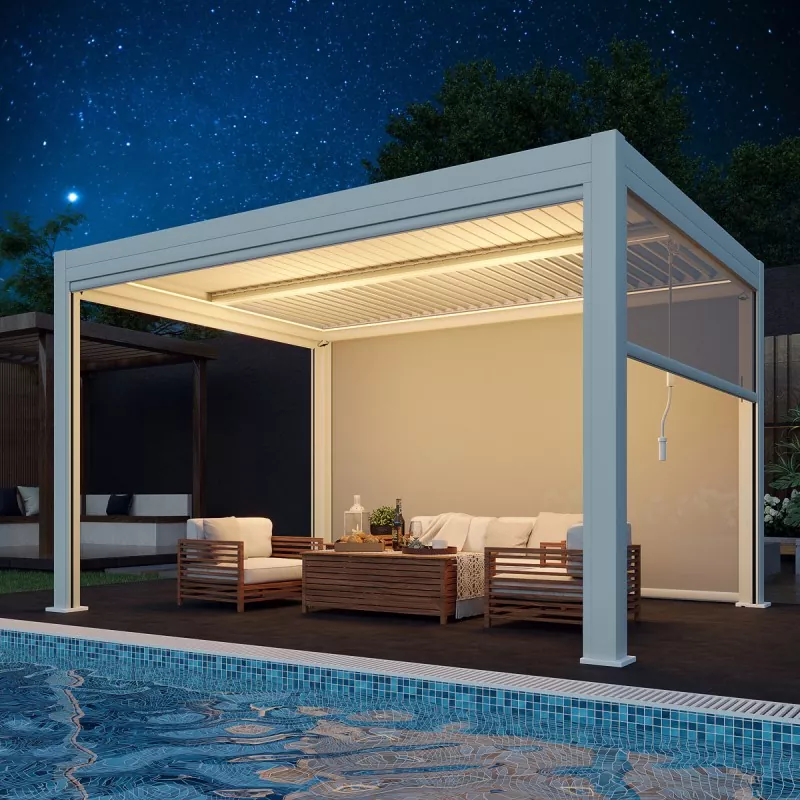
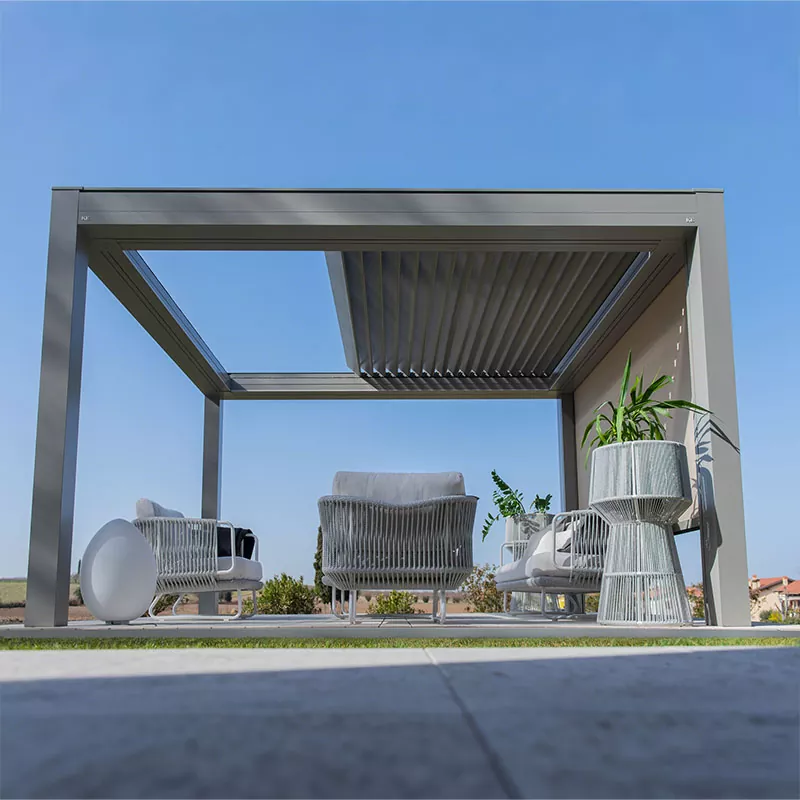
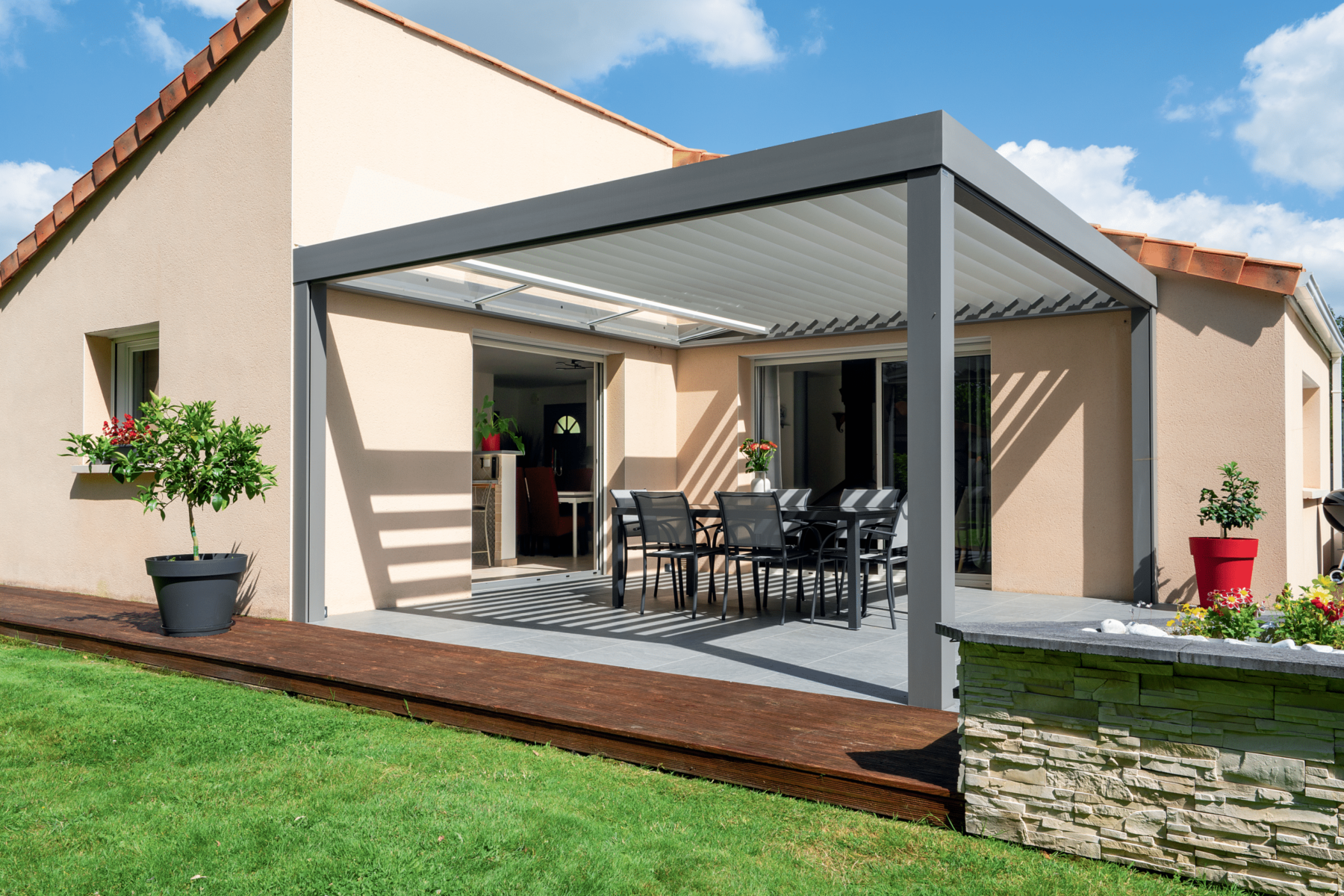
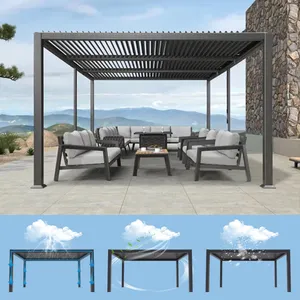
For example, louvered roof systems can be adjusted to reduce wind resistance by changing blade angles. When louvers are partially open, wind passes through the structure rather than creating full surface pressure. This significantly reduces uplift force during strong gusts.
Key engineering principles used in Aluminum Pergolas include:
- Wind load simulation during design stage
- Reinforced aluminum extrusion profiles
- Hidden internal support beams
- Multi-point anchoring systems
- Balanced load transfer between columns
In real installation environments, especially in rooftop or coastal applications, wind pressure can vary significantly. Our factory conducts structural testing based on different environmental scenarios to ensure stability across diverse conditions. This includes evaluating both static and dynamic wind loads.
Many commercial projects also integrate Aluminum Pergolas with cable deck railing systems to improve safety in elevated outdoor spaces. These combined systems require careful engineering coordination because both structures may experience similar wind exposure. Likewise, metal cable railing is often used to maintain visibility while ensuring wind-permeable safety boundaries around terraces and platforms.
At Vionta Metal, we focus on ensuring that all components work together as a unified structural system, especially in commercial environments where safety requirements are more demanding.
Why Does Installation Quality Determine Wind Safety Performance?
Even the most advanced Aluminum Pergolas system can underperform if installation quality is not properly executed. In real-world applications, wind resistance is not only a product feature but also a construction outcome. This is why professional installation standards are just as important as material selection and engineering design.
At Vionta Metal, our factory engineering team often emphasizes that over 50 percent of wind-related stability issues come from incorrect installation practices rather than structural defects. This includes improper anchoring depth, uneven foundation surfaces, insufficient fastening torque, or incorrect alignment of support columns.
When Aluminum Pergolas are exposed to strong winds, the entire load is transferred to the base connection points. If the anchoring system is weak, the structure may shift or vibrate under pressure. Over time, repeated movement can lead to joint loosening or structural fatigue. This is why proper installation is not optional but essential for long-term performance.
In commercial projects where safety requirements are more strict, such as rooftop lounges, hotels, and restaurant terraces, installation precision becomes even more critical. Many developers choose to combine Aluminum Pergolas with cable deck railing systems to create a unified structural environment. This integration requires accurate alignment because both systems may share wind exposure zones and load distribution conditions. In the same way, metal cable railing installations must be coordinated with pergola columns to ensure consistent structural behavior under pressure.
To achieve reliable wind resistance performance, professional installation typically follows these principles:
- Concrete foundation with verified load-bearing capacity
- Expansion bolt or embedded plate anchoring system
- Precision leveling of all vertical columns
- Torque-controlled fastening for all joints
- Post-installation structural stability testing
Each of these steps directly affects how Aluminum Pergolas behave under wind load. At Vionta Metal, our factory provides installation guidance for all major projects, ensuring that structural integrity is maintained from production to final assembly.
What Product Features Improve Aluminum Pergolas Wind Resistance?
The wind resistance performance of Aluminum Pergolas is not determined by a single feature. Instead, it is the combination of multiple engineering elements working together. Each design detail contributes to how the structure responds to airflow, pressure, and environmental stress.
One of the most important features is the aluminum extrusion profile thickness. Thicker profiles provide greater resistance against bending and deformation. However, thickness alone is not enough. Internal reinforcement design is equally important, especially in large-span pergola systems used in commercial environments.
Another key feature is the louver system design. Adjustable louvers allow users to control airflow direction, which reduces direct wind impact. When louvers are positioned at optimized angles, wind can pass through the structure instead of applying full pressure on a flat surface. This significantly improves stability during storm conditions.
Vionta Metal applies a multi-layer engineering approach to enhance wind resistance in all Aluminum Pergolas systems. This includes structural optimization, material reinforcement, and drainage integration to prevent water accumulation during heavy weather conditions.
The following table outlines important technical parameters commonly used in our factory production:
| Component | Specification |
| Main Frame Material | 6063-T5 high strength aluminum alloy |
| Column Size | 120x120mm or customized heavy duty profile |
| Beam Thickness | 2.5mm to 3.5mm depending on project load requirement |
| Louver Blade | Reinforced aluminum with anti deformation structure |
| Wind Resistance Design | Engineered for moderate to high wind zones with structural reinforcement |
| Surface Treatment | Outdoor powder coating with UV and corrosion resistance |
| Drainage System | Integrated hidden water drainage channels inside columns |
| Fastening System | Stainless steel high strength connectors |
These specifications are not only technical details but also practical factors that determine how Aluminum Pergolas perform in real environments. In coastal or high-altitude regions, wind conditions can change rapidly, making structural consistency even more important.
At Vionta Metal, our factory continuously improves these specifications based on real project feedback from global installations. This allows us to refine structural stability while maintaining a balance between aesthetics and durability.
In outdoor architectural design, Aluminum Pergolas are often paired with cable deck railing systems to enhance visual openness while maintaining safety. These systems must be designed with similar attention to wind behavior, especially in elevated platforms where airflow is stronger. Similarly, metal cable railing systems are widely used to reduce wind resistance while preserving structural protection.
How Do Environmental Conditions Affect Pergola Stability?
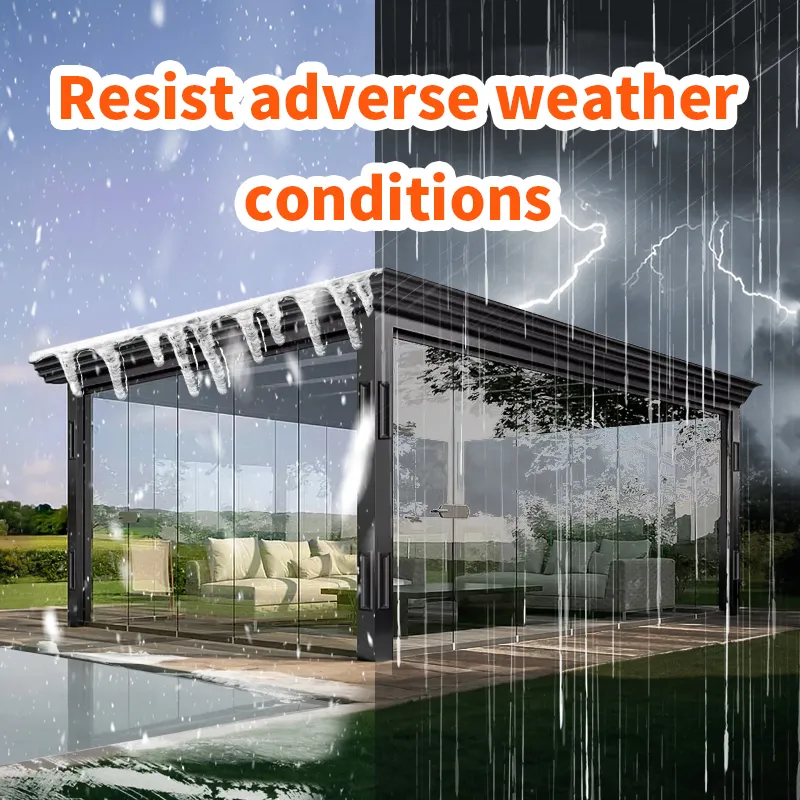
Environmental conditions play a significant role in determining how Aluminum Pergolas perform under wind exposure. Even a well-engineered structure will experience different levels of stress depending on its installation location, surrounding buildings, terrain, and climate patterns.
Open coastal areas are typically exposed to stronger and more consistent wind forces compared to urban environments. In such locations, wind speed can increase suddenly due to lack of natural barriers. This places additional pressure on pergola structures, requiring stronger anchoring systems and reinforced profiles.
Rooftop installations also present unique challenges. Wind speeds at higher elevations are generally stronger and less obstructed. As a result, Aluminum Pergolas installed on rooftops must be engineered with enhanced stability considerations. At Vionta Metal, our factory often recommends additional reinforcement for such projects, including deeper anchoring systems and heavier structural profiles.
Temperature changes can also affect material performance over time. Although aluminum does not warp like wood, thermal expansion and contraction must still be considered in design. Proper engineering ensures that joints and connectors can accommodate these changes without affecting structural stability.
The surrounding environment also influences airflow patterns. Buildings, trees, and landscape structures can either reduce or redirect wind forces. In some cases, wind tunnels may form between buildings, increasing localized pressure on pergolas.
Understanding these environmental factors is essential for selecting the right Aluminum Pergolas system. It is not enough to choose a product based on appearance alone. Structural design must match the installation environment to ensure long-term safety and performance.
In many commercial projects, Aluminum Pergolas are integrated with cable deck railing and metal cable railing systems to create consistent outdoor environments. These systems must also account for environmental wind behavior to ensure safety and visual harmony across the entire space.
At Vionta Metal, our factory evaluates environmental conditions during the early design stage of each project. This ensures that every Aluminum Pergolas system is matched with the correct structural configuration for its specific location.
What Should Buyers Check Before Choosing Aluminum Pergolas for Windy Areas?
When selecting Aluminum Pergolas for regions exposed to strong winds, buyers should focus on structural engineering details rather than appearance alone. Many products on the market may look similar from the outside, but their internal design, load capacity, and installation requirements can be very different.
At Vionta Metal, our factory has seen many cases where customers initially chose pergolas based on visual design, only to later discover that wind resistance performance did not meet local environmental conditions. This is why understanding technical specifications before purchasing is essential for long-term safety and project success.
The first factor to evaluate is the structural frame system. High-quality Aluminum Pergolas should use reinforced aluminum extrusion profiles designed for load distribution. These profiles are responsible for transferring wind pressure from the roof to the ground. If the frame is too thin or poorly designed, deformation may occur under continuous wind stress.
Another important factor is anchoring strength. Strong wind resistance is impossible without a reliable foundation connection. Whether installed on concrete, steel, or composite decking, the anchoring system must ensure that the entire structure remains fixed under lateral and uplift forces.
In commercial environments, Aluminum Pergolas are often installed alongside architectural safety systems such as cable deck railing and metal cable railing. These elements must be considered together during planning because they share exposure to the same wind environment, especially in rooftop terraces, hotel balconies, and public outdoor platforms.
Key factors buyers should evaluate include:
- Aluminum profile thickness and extrusion grade
- Column size and internal reinforcement structure
- Wind load rating based on engineering calculation
- Anchoring system type and foundation compatibility
- Louver design and airflow management capability
- Drainage system integration for heavy weather conditions
- Surface coating durability against corrosion and UV exposure
At Vionta Metal, our factory provides customized engineering solutions for different project environments. This means Aluminum Pergolas can be adjusted according to wind zone classification, building height, and installation surface conditions.
For example, coastal regions require stronger corrosion resistance and heavier structural profiles, while inland residential gardens may prioritize aesthetic flexibility with moderate reinforcement. This adaptability ensures that each installation meets both safety and design expectations.
Another important consideration is system integration. Many modern outdoor projects combine Aluminum Pergolas with railing systems such as cable deck railing and metal cable railing. This integration improves both safety and visual continuity, but also requires consistent structural planning to ensure wind forces are evenly distributed across the entire outdoor space.
How Do Engineering Standards Influence Aluminum Pergolas Performance?
Engineering standards play a critical role in determining how Aluminum Pergolas perform under strong wind conditions. Without proper engineering calculation, even high-quality materials can fail to provide sufficient stability in real-world environments.
Structural engineering begins with wind load analysis. This process evaluates how much force wind will apply to different parts of the pergola based on size, shape, and installation height. Larger structures naturally experience greater wind pressure, especially when installed in open or elevated locations.
At Vionta Metal, our factory uses standardized engineering principles to design Aluminum Pergolas that can maintain structural integrity under varying wind conditions. This includes reinforcement of critical stress points and optimization of load distribution paths.
Another key engineering factor is joint connection design. The stability of Aluminum Pergolas depends heavily on how different components are connected. High-strength stainless steel connectors are commonly used to ensure that beams, columns, and louvers remain securely fixed even under dynamic wind loads.
The following table shows typical engineering parameters used in professional Aluminum Pergolas systems:
| Engineering Element | Typical Specification |
| Wind Load Design Range | Up to moderate and high wind zones depending on reinforcement level |
| Frame Structure | Reinforced aluminum extrusion with internal support ribs |
| Connection System | Stainless steel hidden fasteners with anti-loosening design |
| Load Transfer Method | Multi-point distribution from roof to columns and base |
| Structural Stability Test | Simulated wind pressure and dynamic load testing |
| Safety Factor Design | Built-in margin for extreme weather conditions |
These engineering principles ensure that Aluminum Pergolas are not only visually appealing but also structurally reliable under real environmental stress.
In many architectural projects, pergolas are combined with outdoor railing systems to create complete functional spaces. Systems like cable deck railing and metal cable railing are often installed on the same terrace or balcony where pergolas are used. This requires coordinated engineering planning so that wind forces do not create imbalance between different structural elements.
At Vionta Metal, we treat every project as a complete structural system rather than individual products. This allows us to ensure consistent performance across all outdoor components.
Why Do Aluminum Pergolas Remain a Reliable Choice for Outdoor Projects?
Despite exposure to strong winds and changing environmental conditions, Aluminum Pergolas remain one of the most reliable solutions for modern outdoor construction. Their popularity is not based on appearance alone but on a combination of engineering performance, material advantages, and long-term durability.
Aluminum offers a natural advantage due to its strength-to-weight ratio. It is strong enough to support large structural spans while remaining lightweight enough to reduce foundation stress. This balance improves overall stability and simplifies installation compared to heavier materials.
At Vionta Metal, our factory focuses on optimizing this balance to ensure that Aluminum Pergolas perform consistently across different climates and project types. Over the years, feedback from global installations has helped refine design standards and improve structural reliability.
Another reason Aluminum Pergolas remain widely used is their resistance to corrosion. Unlike steel or wood, aluminum does not rust or rot when exposed to moisture or coastal air. This makes it suitable for long-term outdoor use with minimal maintenance requirements.
Additionally, modern Aluminum Pergolas are designed with adjustable louver systems that improve wind performance. By allowing airflow control, these systems reduce wind pressure during storms and improve comfort during normal conditions.
In commercial environments, Aluminum Pergolas are frequently paired with cable deck railing and metal cable railing systems to create safe and visually open outdoor spaces. These combinations are especially popular in hospitality and rooftop applications where both aesthetics and safety are equally important.
Ultimately, the reliability of Aluminum Pergolas depends on a combination of engineering quality, installation accuracy, and environmental suitability. When these factors are properly addressed, they provide a long-lasting and stable solution for a wide range of outdoor applications.
At Vionta Metal, our factory continues to refine structural design and manufacturing processes to ensure that every Aluminum Pergolas system meets real-world performance expectations in different wind conditions and project environments.
Related News
- Why Stainless Cable Railing Shines in Winter?
- How Can a Snow Load Aluminum Pergola Deliver Reliable Year-Round Outdoor Protection
- What Awning Fabric and Frame Options Are Available?
- Is Glass Railing Safe for Balconies and Terraces?
- What Makes Stainless Steel the Ideal Material for Outdoor Railings?
- Are Jalousie Windows Easy to Break Into?
Leave me a message