How to Keep Your Retractable Awning Safe from Wind Damage?
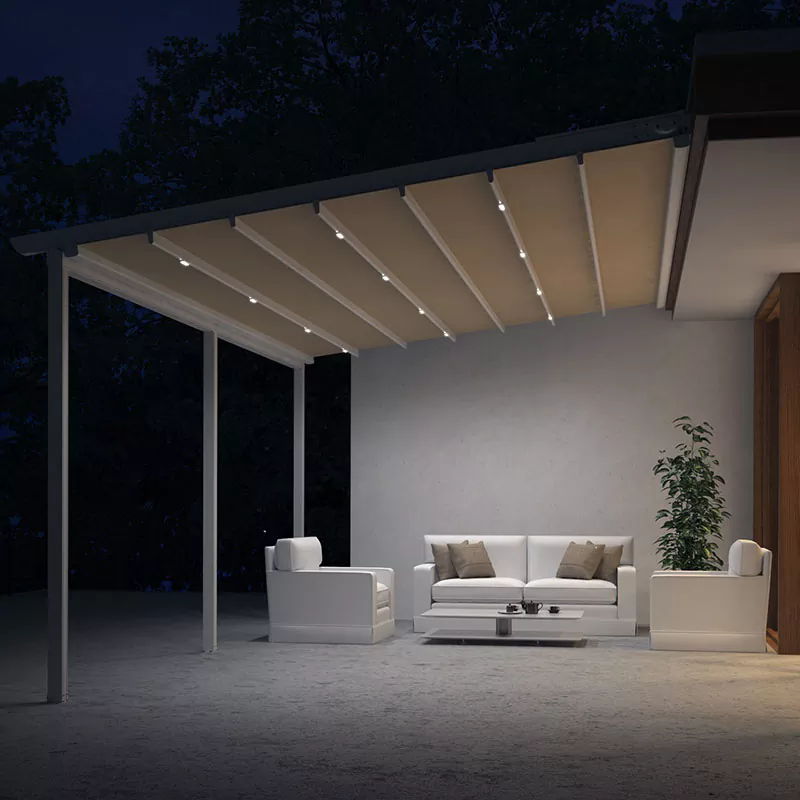
An aluminum retractable awning makes a patio, balcony, or outdoor seating area more comfortable by providing adjustable shade. However, wind can place unexpected stress on the awning fabric, folding arms, mounting brackets, and supporting structure. Even a well-built awning can suffer damage if it remains extended during strong winds.
The most effective way to prevent wind damage is to retract your awning before conditions become unsafe, use a suitable mounting system, and inspect its moving components regularly. For motorized systems, a compatible wind sensor can provide additional protection, but it should never replace proper operation and maintenance.
At Vionta Metal, we manufacture retractable awning systems for residential and commercial applications. Our factory supports customized sizes, aluminum structures, fabric options, and manual or motorized operation to meet different project requirements.
Planning an outdoor shading project? Tell us your installation dimensions, preferred operation method, and project location. Our team can help you select a suitable awning configuration.
Table of Contents
- 1. Why Can Wind Damage a Retractable Awning?
- 2. How Much Wind Can a Retractable Awning Withstand?
- 3. When Should You Retract Your Awning?
- 4. How Can You Protect a Retractable Awning from Wind Damage?
- 5. How Does a Motorized Retractable Awning Respond to Wind?
- 6. What Makes an Aluminum Retractable Awning More Wind-Resistant?
- 7. How Do Installation and Mounting Affect Wind Safety?
- 8. How Should You Inspect and Maintain Your Awning?
- 9. What Should You Do After Strong Winds?
- 10. How Can Buyers Choose a Suitable Retractable Patio Awning?
- 11. Conclusion
- 12. Frequently Asked Questions
1. Why Can Wind Damage a Retractable Awning?
A retractable awning is designed to provide shade while allowing the fabric canopy to extend and retract. Unlike a permanent roof, its extended fabric creates a relatively large surface that reacts to moving air.
When wind passes over or underneath the canopy, it creates pressure differences that can push, lift, or pull the fabric. These forces travel through the front bar and folding arms into the mounting brackets and building structure.
Wind does not always blow steadily in one direction. Sudden gusts, turbulence around buildings, and upward airflow beneath the canopy can place uneven loads on different parts of the system.
Which Awning Components Are Most Vulnerable?
- Awning fabric: Repeated flapping can stretch the material, damage seams, or weaken the fabric around its attachment points.
- Folding arms: Unexpected upward or sideways movement can place excessive loads on the arm joints and internal tension mechanisms.
- Front bar: Uneven wind pressure may cause twisting, vibration, or misalignment.
- Mounting brackets: Wind loads are transferred to the brackets and anchors, making proper installation essential.
- Roller tube: Excessive movement can affect fabric alignment and create problems during retraction.
- Motor and controls: A motorized awning may struggle to retract if the frame has already become distorted or obstructed.
Damage can develop gradually rather than during a single storm. Repeated exposure to moderate wind may loosen connections, accelerate fabric wear, and increase movement in the folding arms.
This is why wind protection should be considered when selecting, installing, and operating an awning—not only after damage occurs.
2. How Much Wind Can a Retractable Awning Withstand?
There is no single wind speed that is safe for every retractable awning. Wind resistance depends on the product's tested classification, projection, width, installation method, frame design, and mounting surface.
Some awnings are tested under EN 13561, the European standard covering performance requirements for external blinds and awnings. Applicable wind-resistance classifications help buyers compare products under defined test conditions.
However, a wind classification does not mean an awning can remain extended during every storm or tolerate unlimited gusts. Buyers should confirm the applicable test standard, classification, and manufacturer's operating instructions for the exact model.
How Do Different Wind Conditions Affect an Awning?
| Wind Condition | Possible Effect on the Awning | Recommended Action |
| Light breeze | Minor fabric movement may occur, depending on the awning design. | Monitor conditions and follow the manufacturer's operating limits. |
| Moderate wind | Fabric movement and additional loading on the folding arms may increase. | Retract the awning before the specified operating limit is reached. |
| Strong or gusty wind | Sudden lifting forces and vibration can overload the frame and mounting system. | Keep the awning fully retracted. |
| Thunderstorm or severe weather | Rapidly changing wind direction and powerful gusts can cause structural damage. | Retract the awning in advance and avoid operating it during dangerous conditions. |
The descriptions above are general operating guidance rather than certified wind-speed limits. Actual safe operating conditions must be determined from the awning manufacturer's documentation.
Why Does Awning Size Matter?
A larger canopy exposes more fabric to wind. Greater projection also increases the distance between the building attachment and the front bar, which can increase the forces acting on the folding arms and brackets.
Two awnings made from similar materials may therefore have different wind-resistance classifications if their dimensions or structural configurations differ.
For custom projects, buyers should provide the required width and projection so the manufacturer can confirm whether the proposed configuration is suitable.
3. When Should You Retract Your Awning?
The safest time to retract an awning is before strong or unpredictable wind reaches the installation area.
Waiting until the canopy begins shaking heavily is risky. At that point, wind loads may already be affecting the arms, front bar, and mounting connections.
What Warning Signs Should You Watch For?
- The fabric begins flapping noticeably or repeatedly.
- The front bar moves up and down or from side to side.
- The folding arms vibrate or make unusual noises.
- Wind direction changes suddenly.
- Outdoor furniture, umbrellas, or nearby trees begin moving strongly.
- A weather forecast predicts thunderstorms or powerful gusts.
These signs do not establish a precise wind-speed threshold. If conditions are approaching the product's operating limit, retract the awning rather than waiting for visible movement.
Should You Leave an Awning Extended Overnight?
Leaving a retractable patio awning extended overnight is generally not recommended when weather conditions are uncertain.
Wind can strengthen while the building is unoccupied or while everyone is asleep. A sudden overnight storm may damage an awning before anyone notices the change.
For restaurants, hotels, and commercial patios, staff should include awning retraction in their closing procedures unless the specific system is designed and approved for the intended unattended operation.
4. How Can You Protect a Retractable Awning from Wind Damage?
Protecting an awning involves more than choosing strong aluminum components. Correct operation, suitable installation, and preventive maintenance all contribute to reliable performance.
Retract the Awning Before Strong Winds Arrive
Retracting the canopy removes most of the exposed fabric area and significantly reduces the wind loads associated with an extended awning.
Check local weather forecasts before leaving the awning unattended. If thunderstorms or strong gusts are expected, retract it early.
Use the Correct Awning Size
Selecting a suitable width and projection is important for both shading performance and structural stability.
An excessively large projection may increase loading on the folding arms and wall connections. The awning dimensions should be selected within the manufacturer's approved configuration range.
For commercial projects, dimensions should also account for door clearance, pedestrian movement, installation height, and surrounding building features.
Keep the Fabric Properly Tensioned
Fabric tension helps maintain a consistent canopy shape and reduces unnecessary movement during normal operation.
Loose or incorrectly aligned fabric can flutter more easily and may roll unevenly around the roller tube.
Folding-arm awnings rely on their arm mechanisms to maintain fabric tension. Owners should not attempt to adjust spring-loaded components without appropriate technical instructions.
Inspect the Mounting Connections
The brackets and anchors must transfer awning loads safely into the supporting structure.
Loose fasteners, damaged masonry, deteriorated timber, or unsuitable anchors can compromise the installation even when the awning frame itself remains in good condition.
Have questionable connections inspected by a qualified installer. Avoid simply tightening damaged or incorrectly installed anchors without first identifying the problem.
Keep the Awning Fully Retracted During Storms
A partially extended awning should not be treated as a safe storm position unless the manufacturer specifically approves that configuration.
For most conventional retractable patio awnings, fully retracting the canopy before severe weather is the appropriate precaution.
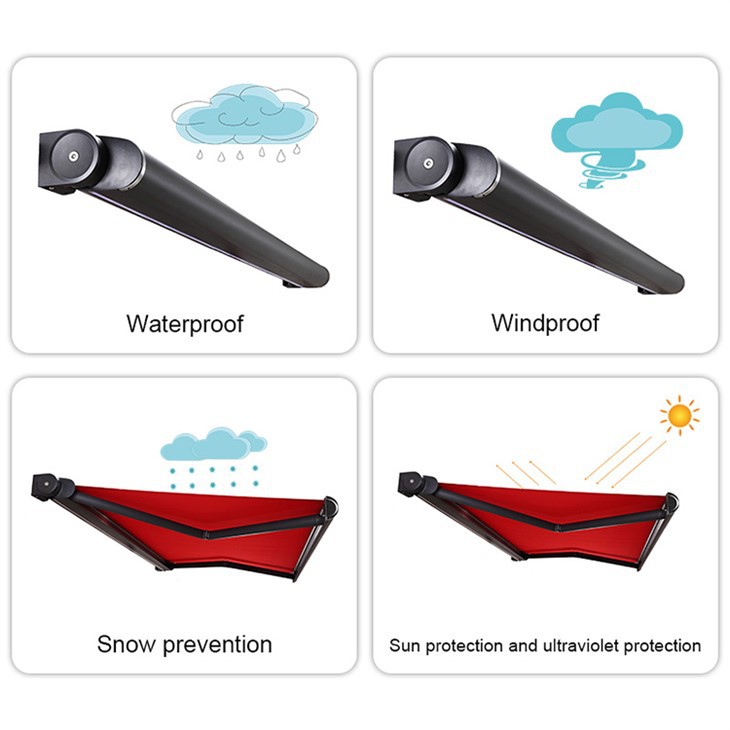
5. How Does a Motorized Retractable Awning Respond to Wind?
A motorized retractable awning uses an electric motor to extend and retract the fabric canopy. Depending on the system, operation may be controlled by a wall switch, remote control, or compatible automation equipment.
Motorization makes everyday operation more convenient, particularly for large patio awnings and commercial installations where manual retraction may be less practical.
However, a motor does not automatically make an awning more resistant to wind. The structural wind resistance still depends on the awning design, dimensions, and installation.
How Does a Wind Sensor Work?
A compatible wind sensor can monitor wind-related movement or local wind conditions and send a retraction command when a configured threshold is reached.
Common sensor approaches include:
- Vibration sensors: Detect movement or vibration associated with wind acting on the awning.
- Anemometer-based sensors: Measure wind speed and trigger a response when the configured threshold is reached.
- Integrated weather controls: Combine compatible sensors and control equipment to automate selected awning functions.
The sensor type, mounting position, controller compatibility, and threshold settings should be confirmed with the equipment supplier.
Sensor-based retraction is a useful additional safeguard, but it cannot guarantee protection against sudden gusts, power failures, mechanical faults, or conditions that develop faster than the awning can retract.
What Are the Benefits of Motorized Operation?
- Convenient operation without manually turning a crank.
- Practical control for large or frequently operated awnings.
- Potential compatibility with wind and sun sensors.
- Remote operation when supported by the selected control system.
- More consistent day-to-day use in residential and commercial settings.
At Vionta Metal, our motorized awning options can be discussed alongside project dimensions, fabric choices, and control requirements. Buyers should confirm the exact motor and sensor specifications before ordering.
6. What Makes an Aluminum Retractable Awning More Wind-Resistant?
Aluminum is widely used in retractable awning frames because it offers a useful combination of relatively low weight, corrosion resistance, and manufacturing flexibility.
Nevertheless, aluminum alone does not determine an awning's wind performance. The design of the profiles, folding arms, joints, brackets, and connections is equally important.
Which Structural Features Should Buyers Compare?
| Component | Function | What Buyers Should Check |
| Aluminum support structure | Supports the awning assembly and transfers operating loads. | Profile design, material specification, dimensions, and approved configuration. |
| Folding arms | Extend the canopy and maintain fabric tension. | Arm construction, joint design, operating mechanism, and replacement parts. |
| Front bar | Supports the leading edge of the fabric. | Alignment, profile stiffness, and connection to the arms. |
| Mounting brackets | Connect the awning assembly to the building. | Bracket configuration, anchor requirements, and substrate compatibility. |
| Roller tube | Rolls and stores the fabric during retraction. | Dimensional compatibility, alignment, and smooth operation. |
| Awning fabric | Provides shade and forms the exposed canopy surface. | Fabric type, tension, seam quality, and maintenance requirements. |
| Protective cassette | Encloses selected awning components when retracted. | Full-cassette or semi-cassette design and the extent of component coverage. |
Does a Full-Cassette Awning Offer Better Protection?
A full-cassette retractable awning encloses the fabric and selected operating components inside a protective housing when fully retracted.
This can help reduce exposure to dirt, rain, sunlight, and windblown debris while the awning is stored.
A semi-cassette awning provides partial coverage, while an open-style awning leaves more of the roller and fabric assembly exposed.
Importantly, a full cassette does not automatically mean that the awning has a higher wind-resistance classification when extended. Buyers should compare verified product performance rather than relying on the housing style alone.
Our factory at Vionta Metal manufactures aluminum awning systems with different housing and operating configurations. We can discuss structural details, finishing requirements, and project-specific dimensions before production.
7. How Do Installation and Mounting Affect Wind Safety?
Even a correctly manufactured retractable awning can become unsafe if the mounting system is unsuitable for the building.
The installation must account for the loads transferred from the extended canopy through the arms and brackets into the supporting structure.
Which Mounting Surfaces Require Special Attention?
- Concrete: Anchors must be suitable for the concrete condition, edge distances, and expected loads.
- Solid masonry: The strength and condition of the masonry units and joints must be evaluated.
- Hollow masonry: Specialized anchoring or structural reinforcement may be required.
- Timber framing: Fasteners must connect to suitable structural members rather than decorative cladding alone.
- Steel structures: Connections must be designed for the supporting member and applicable loads.
Exterior insulation, cladding panels, and nonstructural finishes should not be assumed to provide adequate support for a retractable awning.
Why Is Bracket Position Important?
Mounting brackets must be positioned according to the manufacturer's installation instructions. Their number, spacing, and relationship to the folding arms can affect how forces are transferred into the building.
Incorrect bracket placement may introduce uneven loads, frame distortion, or excessive stress around the attachment points.
Installers should also verify that the awning is level, the arms move without interference, and the fabric rolls correctly.
Can an Awning Be Installed on a Balcony?
Yes, some retractable awnings can be installed on balconies when the supporting structure, available clearance, building regulations, and product configuration allow it.
Balconies on upper floors may experience more exposed or turbulent wind conditions than sheltered ground-level patios.
For these applications, a site-specific assessment is especially important. The awning supplier should confirm the available mounting options, while the installer or project engineer evaluates the building attachment.
8. How Should You Inspect and Maintain Your Awning?
Regular inspection helps identify small problems before they affect operation or create safety concerns.
Maintenance frequency depends on usage, weather exposure, and the manufacturer's recommendations. Commercial installations and awnings in exposed locations may require more frequent checks.
What Should Be Included in a Maintenance Inspection?
- Fabric: Look for tears, loose seams, excessive stretching, mildew, and uneven rolling.
- Folding arms: Check for unusual movement, visible deformation, and damaged joints.
- Mounting brackets: Inspect accessible connections for looseness, corrosion, or movement.
- Front bar: Confirm that it remains aligned during extension and retraction.
- Roller assembly: Listen for unusual noises and observe whether the fabric rolls evenly.
- Motorized controls: Test normal extension and retraction according to the manufacturer's instructions.
- Wind sensors: Inspect sensor condition and verify functionality using the approved testing procedure.
How Should You Clean the Awning Fabric?
Remove loose leaves, dust, and debris using a soft brush or another cleaning method approved for the fabric.
For general cleaning, use the fabric manufacturer's recommended cleaning solution and avoid harsh chemicals that could damage protective treatments.
Allow the canopy to dry thoroughly before storing it for an extended period. If an awning must be retracted while wet because of dangerous weather, extend it again to dry only when conditions are safe.
Should You Lubricate the Folding Arms?
Not every folding-arm mechanism requires owner-applied lubrication. Some joints and internal components are designed with specific maintenance requirements.
Follow the product instructions and avoid applying oil or grease to springs, fabric, motors, or other components unless the manufacturer recommends it.
Spring-loaded arms contain stored mechanical energy. Disassembly or adjustment should be performed only by qualified personnel.
9. What Should You Do After Strong Winds?
If an awning has been exposed to unexpected strong winds, inspect it before extending or retracting it again.
Do not operate a visibly damaged awning merely to check whether it still works. Bent arms, loose brackets, or damaged anchors can make further movement hazardous.
How Can You Check for Possible Wind Damage?
- Check the surrounding area. Make sure conditions are safe and there are no fallen objects or overhead hazards.
- Inspect the visible frame. Look for bent profiles, damaged arm joints, or a front bar that is no longer aligned.
- Examine the mounting area. Check for visible movement, cracks, or separation around brackets and anchors.
- Look at the fabric. Identify tears, stretched seams, and unusual folds.
- Check the controls. Look for obvious damage to accessible switches, sensors, or wiring without opening electrical components.
- Arrange professional inspection. If there is any indication of structural damage, keep the awning out of service until a qualified technician has evaluated it.
Can a Wind-Damaged Awning Be Repaired?
Repairability depends on the type and extent of damage.
Fabric damage may sometimes be addressed through fabric replacement. Damaged brackets, folding arms, or roller components may require compatible replacement parts.
If the building attachment or supporting structure has been affected, the installation must be evaluated before the awning is returned to service.
Do not attempt to straighten damaged folding arms or modify load-bearing connections without the manufacturer's approval.
10. How Can Buyers Choose a Suitable Retractable Patio Awning?
For homeowners, contractors, distributors, and commercial project buyers, selecting a retractable awning involves balancing shading coverage, structural requirements, appearance, and operating convenience.
Wind exposure should be discussed during product selection rather than treated as a minor detail after installation.
What Information Should You Provide to an Awning Manufacturer?
Before requesting a quotation, prepare the following information:
- Required awning width and projection.
- Installation location and intended application.
- Wall, ceiling, or other proposed mounting arrangement.
- Supporting structure and mounting surface details.
- Preferred manual or motorized operation.
- Full-cassette, semi-cassette, or open-style housing preference.
- Fabric color and functional requirements.
- Local wind exposure and applicable building requirements.
- Whether compatible wind sensors or other control accessories are needed.
- Project quantity, delivery destination, and installation schedule.
How Do Different Awning Types Compare?
| Awning Type | Main Characteristics | Typical Applications | Wind Protection Considerations |
| Manual retractable awning | Hand-crank operation without an electric motor. | Residential patios, balconies, and smaller shading areas. | Requires someone to retract the awning manually before unsafe conditions. |
| Motorized retractable awning | Electric extension and retraction with compatible controls. | Residential terraces, restaurants, and commercial patios. | Can support compatible automatic wind protection equipment. |
| Full-cassette retractable awning | Protective housing encloses the fabric and selected components when stored. | Projects requiring a compact appearance and additional stored-component protection. | Housing protection applies primarily when retracted; extended wind resistance must be verified separately. |
| Semi-cassette retractable awning | Partial housing coverage for the fabric and roller assembly. | Residential and commercial shading installations. | Requires the same attention to operating limits and retraction during strong winds. |
| Open-style folding-arm awning | Exposed roller assembly with a relatively simple housing configuration. | Patios, storefronts, and installations with suitable overhead protection. | Fabric and components remain more exposed when stored. |
Why Should Wholesale Buyers Ask About Replacement Parts?
For distributors and contractors, long-term serviceability can be as important as the initial purchase price.
Before placing a bulk order, ask whether the supplier can provide compatible replacement fabric, folding arms, brackets, control equipment, and other service components.
Also request installation instructions, product drawings, operating limitations, and available test documentation for the selected awning configuration.
Vionta Metal works with overseas buyers on aluminum retractable awning projects, including customized dimensions and OEM/ODM requirements. Our team can review drawings and product specifications to discuss manufacturing feasibility and suitable supply options.
11. Conclusion: How Can You Reduce Wind Damage to Your Awning?
Wind damage is one of the main risks associated with leaving a retractable awning extended in unsuitable weather. The most practical prevention measures are simple: retract the canopy early, follow the manufacturer's operating limits, maintain the frame and fabric, and ensure that the mounting system is appropriate for the building.
For a motorized retractable awning, compatible wind sensors can add convenience and help reduce the risk of an awning being left extended. However, automatic controls cannot eliminate the need for proper installation, inspection, and responsible operation.
If you are sourcing an aluminum retractable awning for a residential development, hospitality project, or wholesale distribution, Vionta Metal can discuss custom dimensions, awning structures, fabric selections, and operating options based on your requirements.
Looking for a retractable awning manufacturer in China? Share your drawings, required quantities, and installation details with our team to discuss a suitable solution.
12. Frequently Asked Questions About Retractable Awning Wind Protection
1. Can a retractable awning withstand strong winds?
Most conventional retractable awnings should be retracted before strong winds arrive. Their wind resistance varies according to the frame design, dimensions, mounting system, and tested product classification. An aluminum frame does not automatically make an awning suitable for storm conditions. Always check the manufacturer's operating limits for the exact model. If the weather forecast predicts strong gusts or thunderstorms, fully retract the awning in advance rather than waiting for visible movement or fabric flapping.
2. At what wind speed should I retract my awning?
There is no universal retraction speed for every awning. The correct threshold depends on the manufacturer's tested wind-resistance classification and operating instructions. Local gusts can also be significantly stronger than average wind speeds, especially around building corners and exposed balconies. For motorized systems with wind sensors, the trigger threshold should be configured according to the approved equipment instructions. Retract the awning before the specified operating limit is reached, and do not use a generic wind-speed recommendation in place of the product documentation.
3. Are motorized retractable awnings safer in windy weather?
A motorized retractable awning can provide additional convenience because it can retract without manual cranking. When equipped with a compatible wind sensor and controller, the system may automatically retract after detecting a configured wind condition. However, motorization does not increase the structural strength of the awning. Sudden gusts, electrical failures, sensor faults, and mechanical obstructions can still cause damage. Motorized operation should be viewed as an additional protective feature rather than a guarantee against wind damage.
4. Does a full-cassette retractable awning protect against wind damage?
A full-cassette awning helps protect the fabric and selected mechanical components when the canopy is fully retracted inside its housing. This can reduce exposure to windblown debris, dirt, and other environmental conditions during storage. However, the cassette itself does not establish the awning's wind resistance while extended. Two full-cassette models may have different operating limits because of their dimensions, arm designs, and mounting systems. Buyers should check the verified performance and installation requirements of each model.
5. What should I do if my retractable awning is damaged by wind?
Stop using the awning if you notice bent folding arms, loose mounting brackets, torn fabric, unusual noises, or difficulty retracting the canopy. Do not force the motor or crank, as additional movement could worsen the damage. Inspect the visible components only when it is safe to do so, and arrange a qualified service inspection if structural damage is suspected. Depending on the condition of the system, damaged fabric or compatible mechanical components may be replaceable. The mounting structure must also be checked before the awning returns to service.
Related News
- Why Is a Galvanized Steel Spiral Staircase the Ideal Solution for Durable, Space-Saving Access
- How Can a Snow Load Aluminum Pergola Provide Reliable Protection in Harsh Winter Climates
- Rotating vs. Retractable Louvered Pergolas: What Should Buyers Know?
- Why Is a Corten Steel Privacy Screen the Perfect Choice for Modern Outdoor Spaces
- How to Mount a Metal Privacy Screen on Concrete?
- How to Prepare Metal Balcony Railings for Winter: Maintenance Tips for Different Materials
Leave me a message




News Recommendations