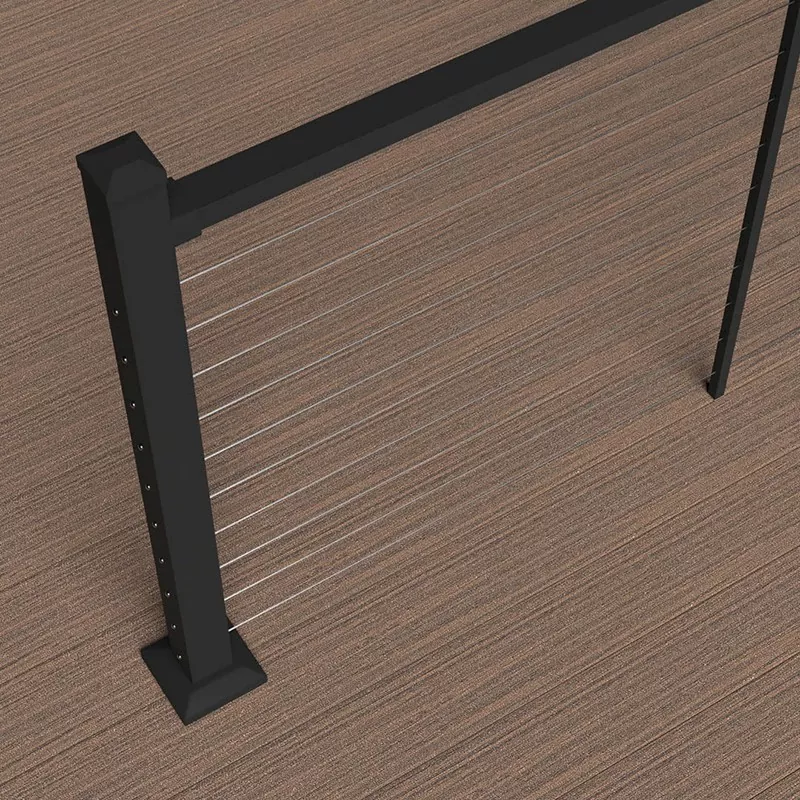
Cable Handrail
Vionta Cable Handrail is a premium railing solution designed for modern residential and commercial applications. Manufactured with durable, corrosion-resistant materials, it offers a sleek appearance, dependable safety performance, and long service life. Suitable for decks, stairs, balconies, patios, and architectural projects, we provide customizable specifications, factory-direct supply, and OEM/ODM support to meet diverse project and wholesale requirements.
Cable Handrail vs Cable Balustrade: Understanding the Difference
The two terms are related but describe different products with different functions and code requirements.
| Feature | Cable Handrail | Cable Balustrade |
| Primary function | Graspable handrail for stair and ramp users | Guard system for deck, balcony, or mezzanine perimeter |
| Top rail | Essential — must be graspable per code | May be structural only (not always graspable) |
| Key code reference | IRC R311.7.8, IBC 1014, AS 1657 handrail provisions | IRC R312, IBC 1015, AS 1657 guard provisions |
| Typical applications | Stairs (interior and exterior), ramps, escalator balustrades | Deck edges, balcony perimeters, roof terraces, mezzanines |
| Top rail profile | Round tube Ø 32–51 mm (graspable range) or timber capping | Flat bar, square tube, or round tube — structural form only |
When specifying cable handrail for a staircase, the top rail graspability requirement is non-negotiable under most residential and commercial codes. Vionta Metal designs handrail assemblies with this compliance requirement as the starting point.
What Is a Cable Handrail?
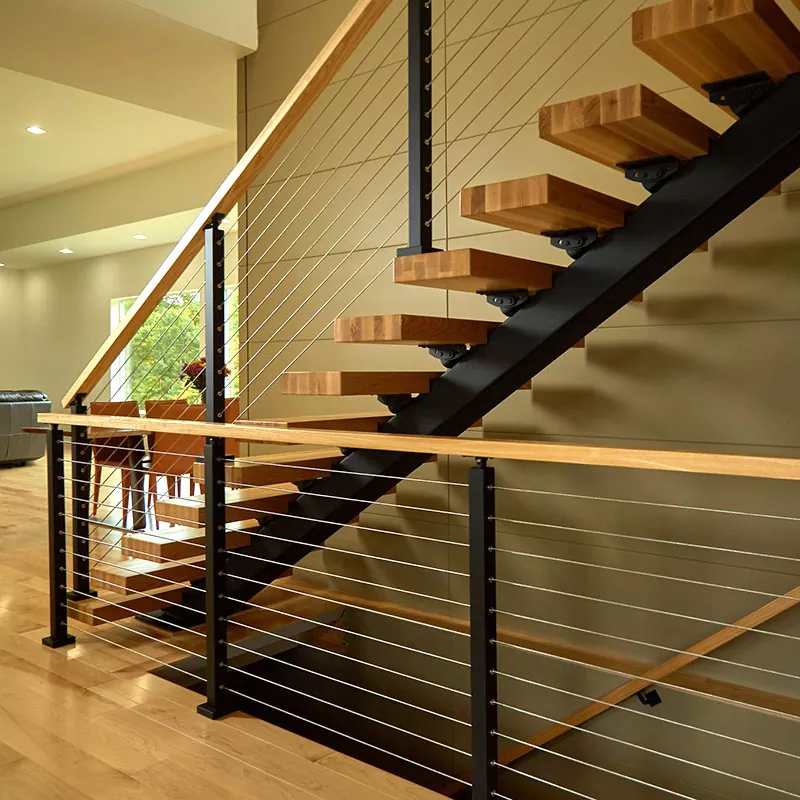
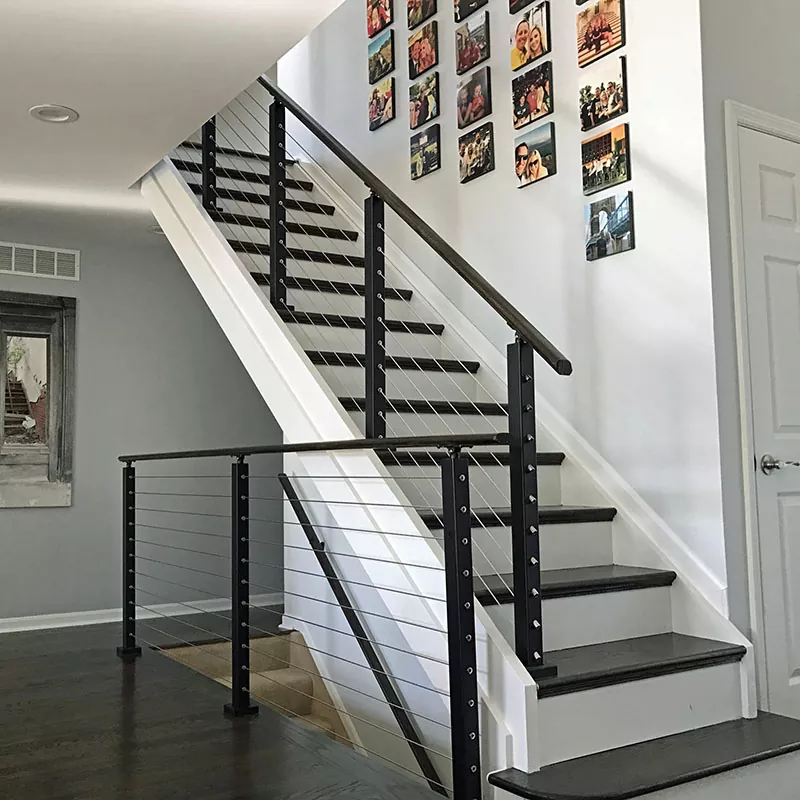
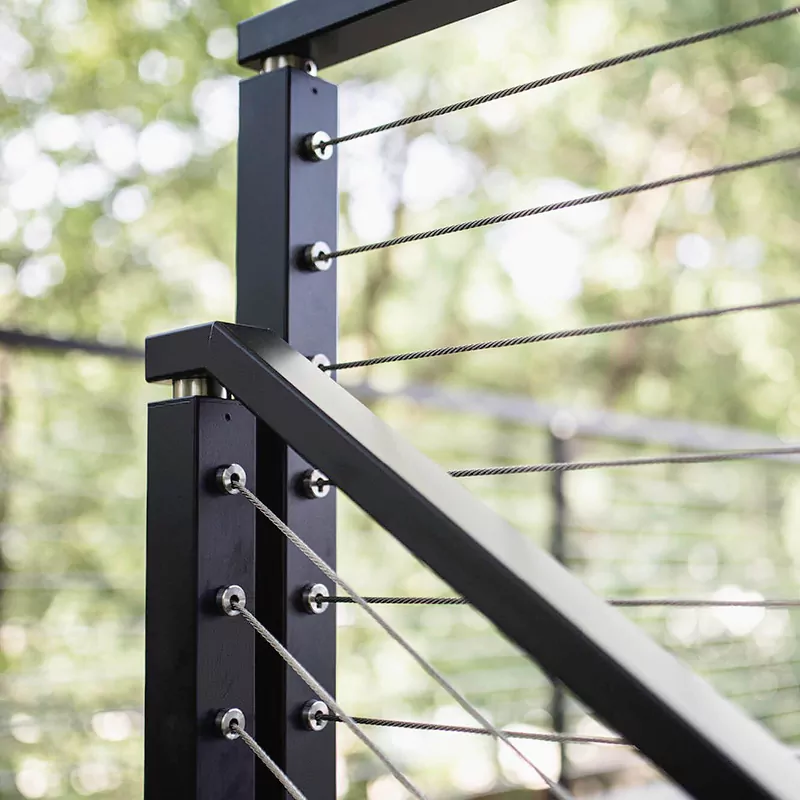
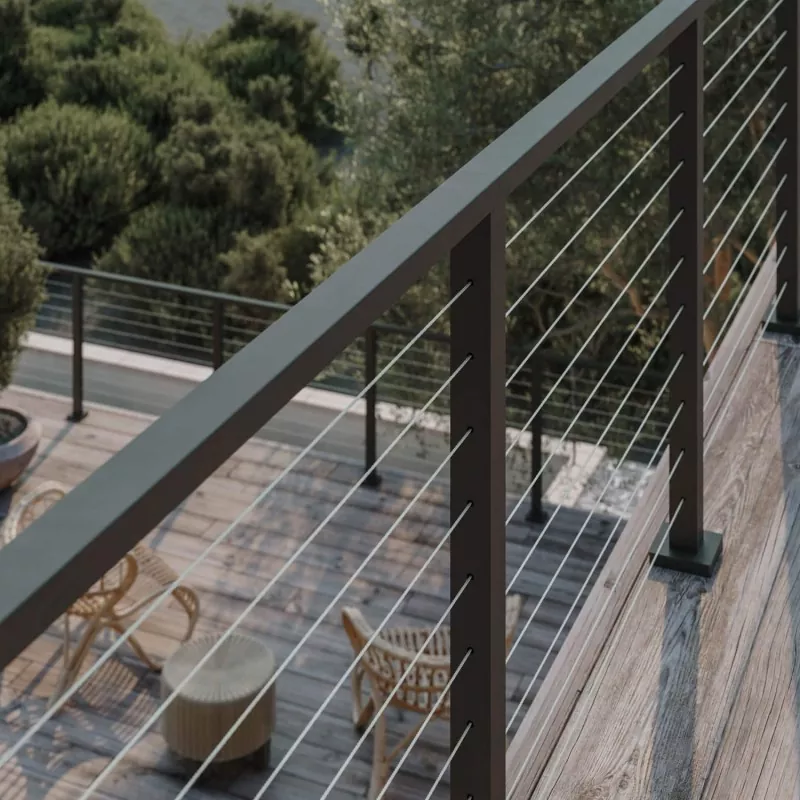
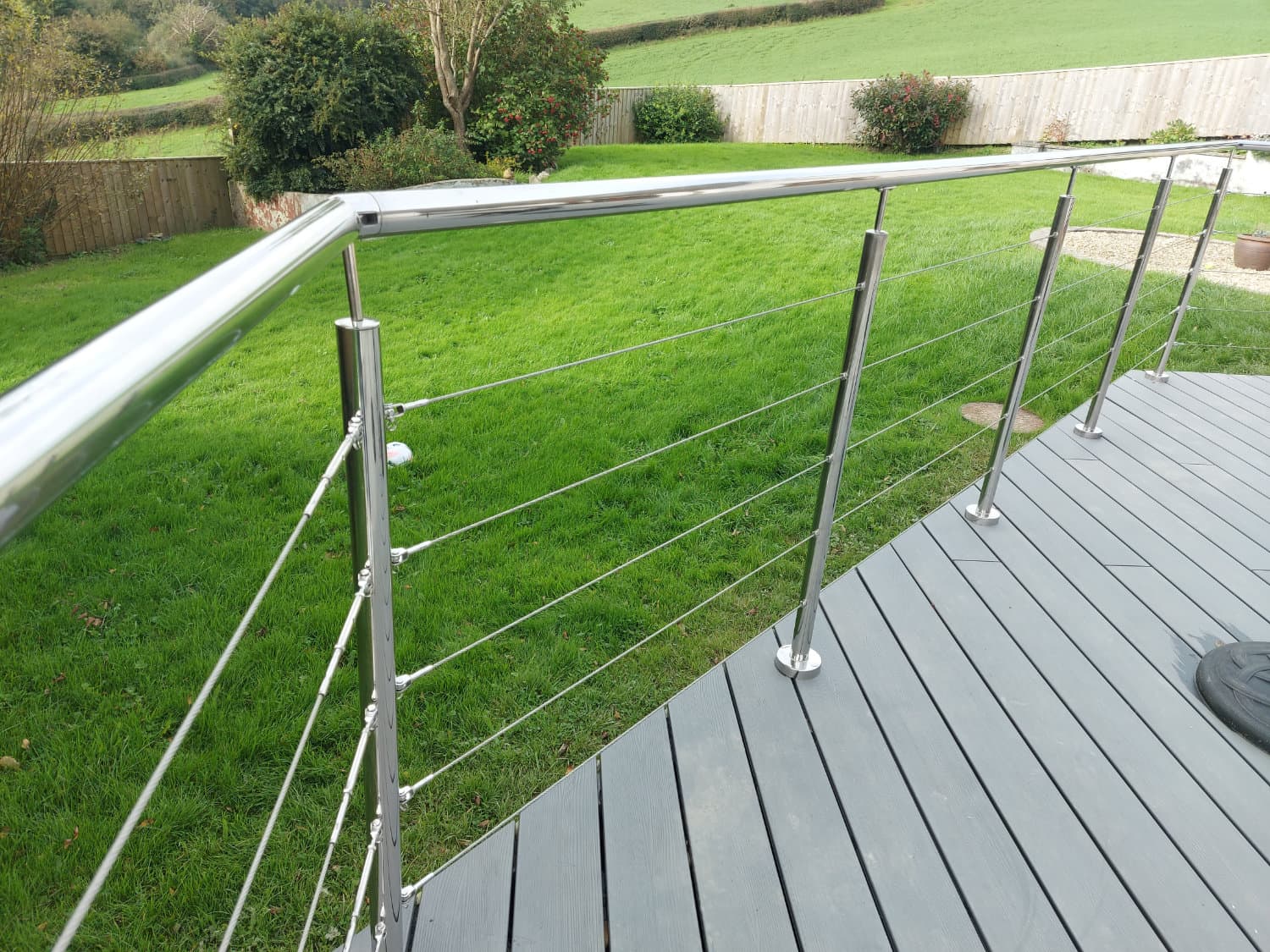
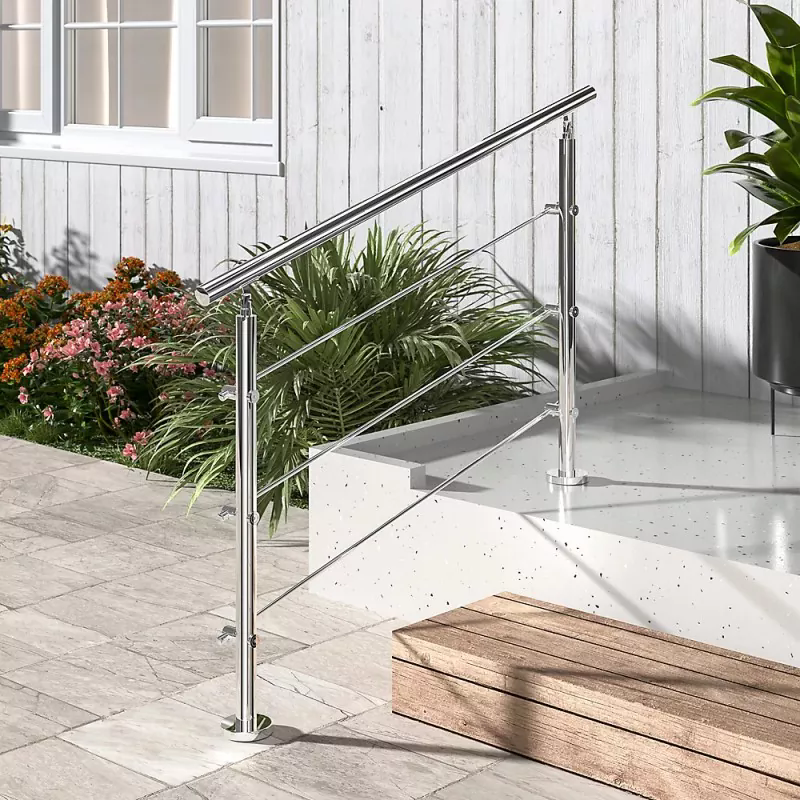
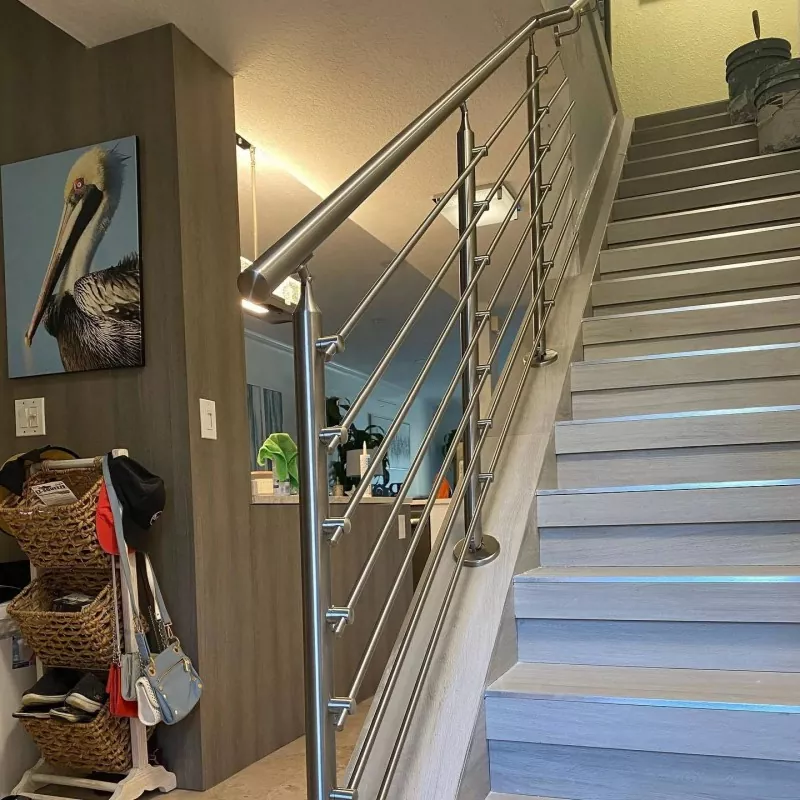
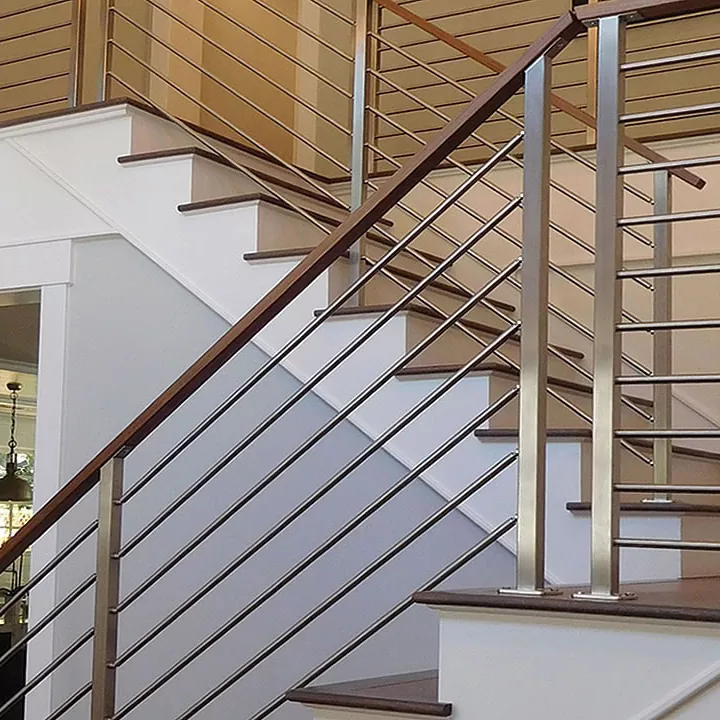
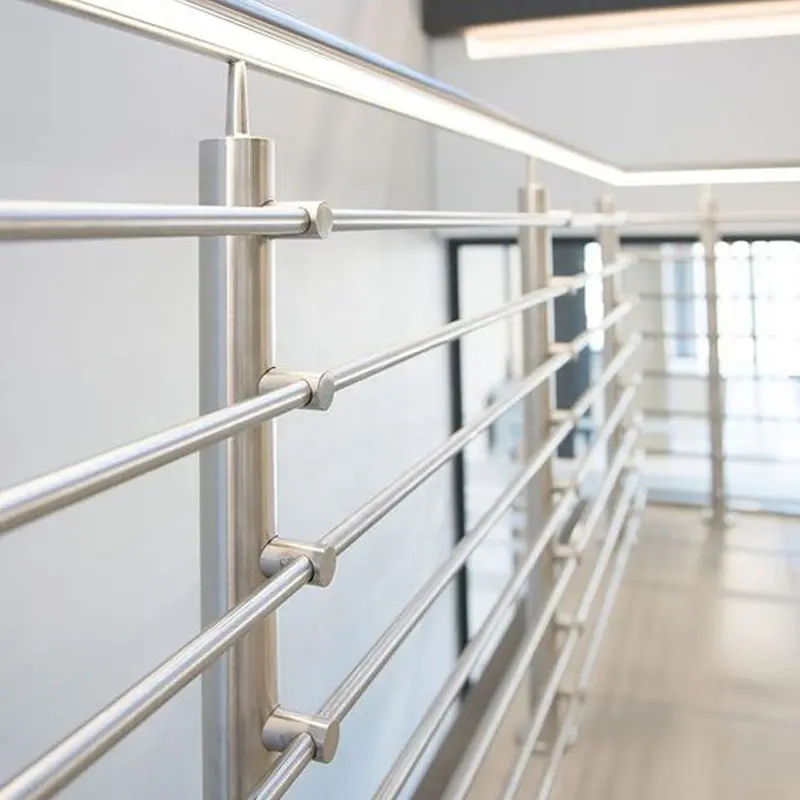
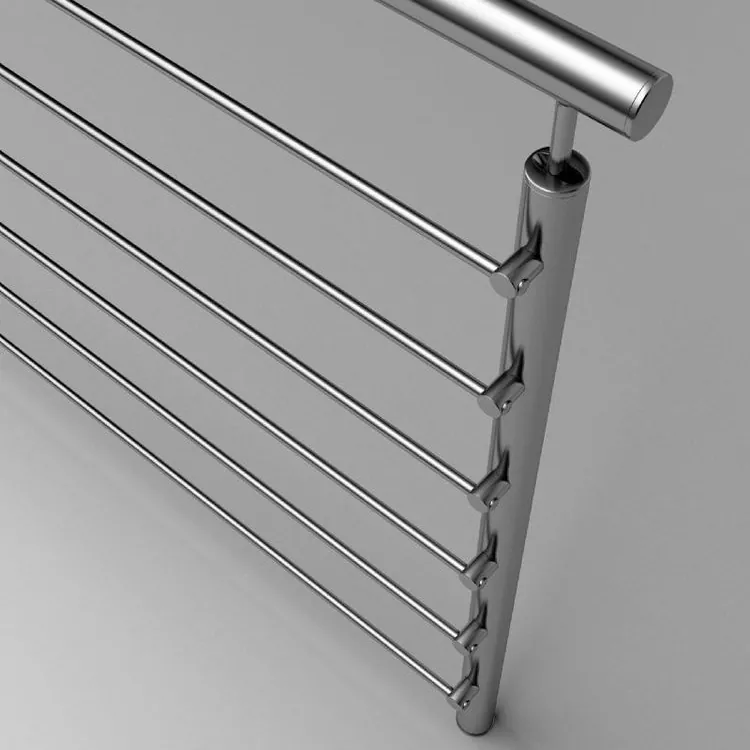
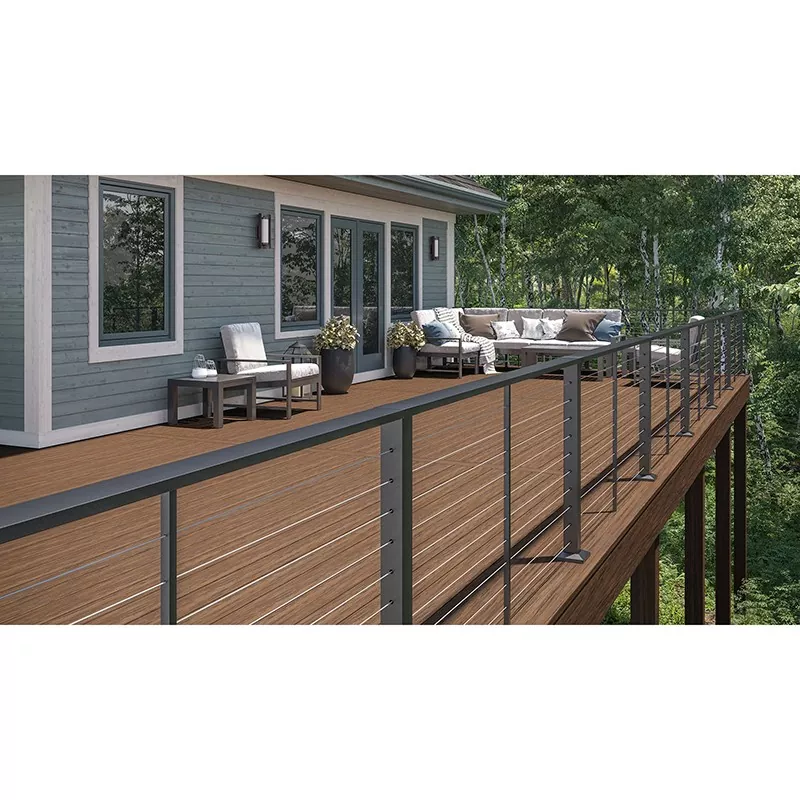
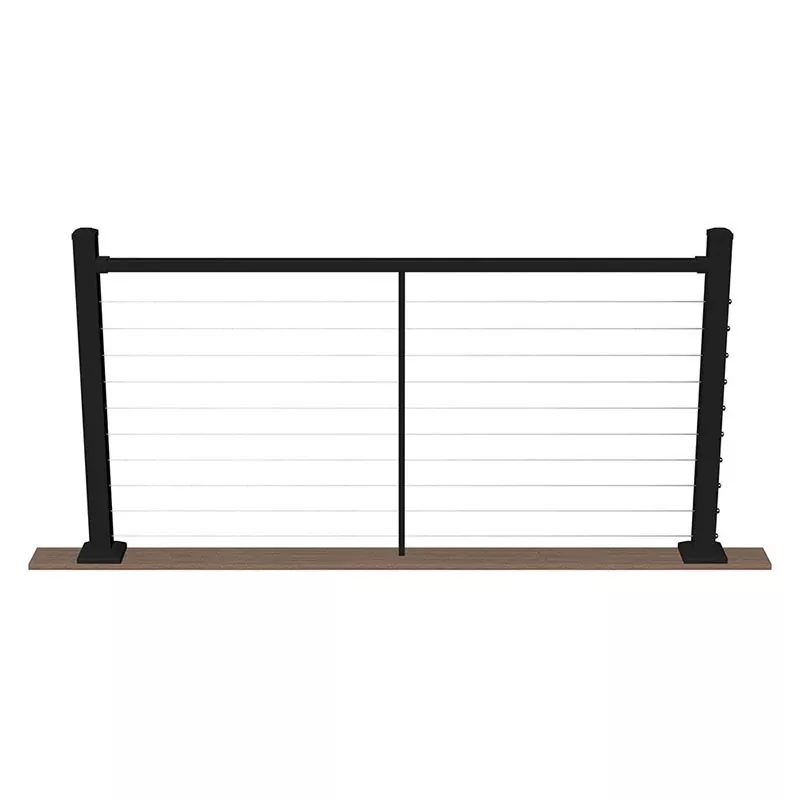
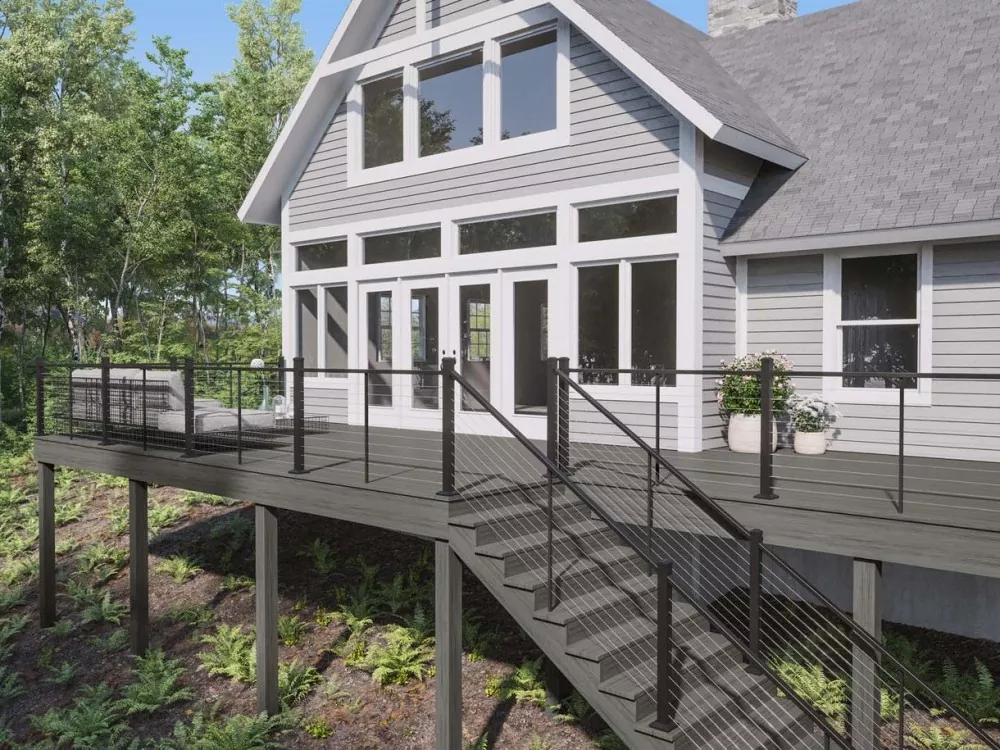
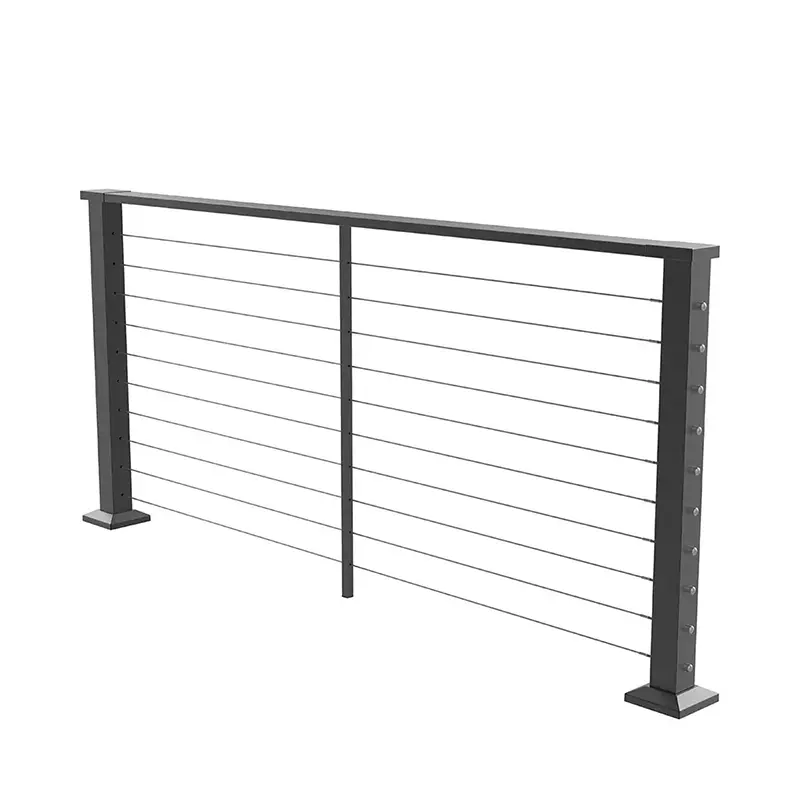
A cable handrail is a railing assembly in which horizontal stainless steel cable runs provide the infill between structural posts, with a continuous graspable top rail running above them. The cable infill replaces traditional solid balusters or panels, preserving sightlines while meeting the structural safety requirements of a code-compliant guard or handrail system.
The top rail is the defining element. It must be continuous, at the correct height, and provide a graspable cross-section that allows users to maintain contact when traversing stairs or ramps. Vionta Metal supplies top rails in round stainless steel tube (the most common specification) and timber-capped channel (for applications where a warmer grip surface is required).
Material Options
All cable, posts, and fittings are supplied in 304 or 316 stainless steel. The appropriate grade depends on the installation environment:
| Property | 304 Stainless Steel | 316 Stainless Steel |
| Molybdenum content | None | 2–3% (key for chloride resistance) |
| Corrosion resistance | Good – inland and sheltered environments | Excellent – coastal, marine, pool-adjacent |
| Recommended use | Interior staircases, sheltered exterior stairs, urban commercial | Coastal stairs, waterfront decks, pool surrounds |
| Relative cost | Lower | Higher (approx. 20–30% premium) |
Specify the same grade for cable, posts, fittings, and top rail tube throughout to avoid galvanic corrosion between dissimilar metals.
Technical Specifications
| Parameter | Detail |
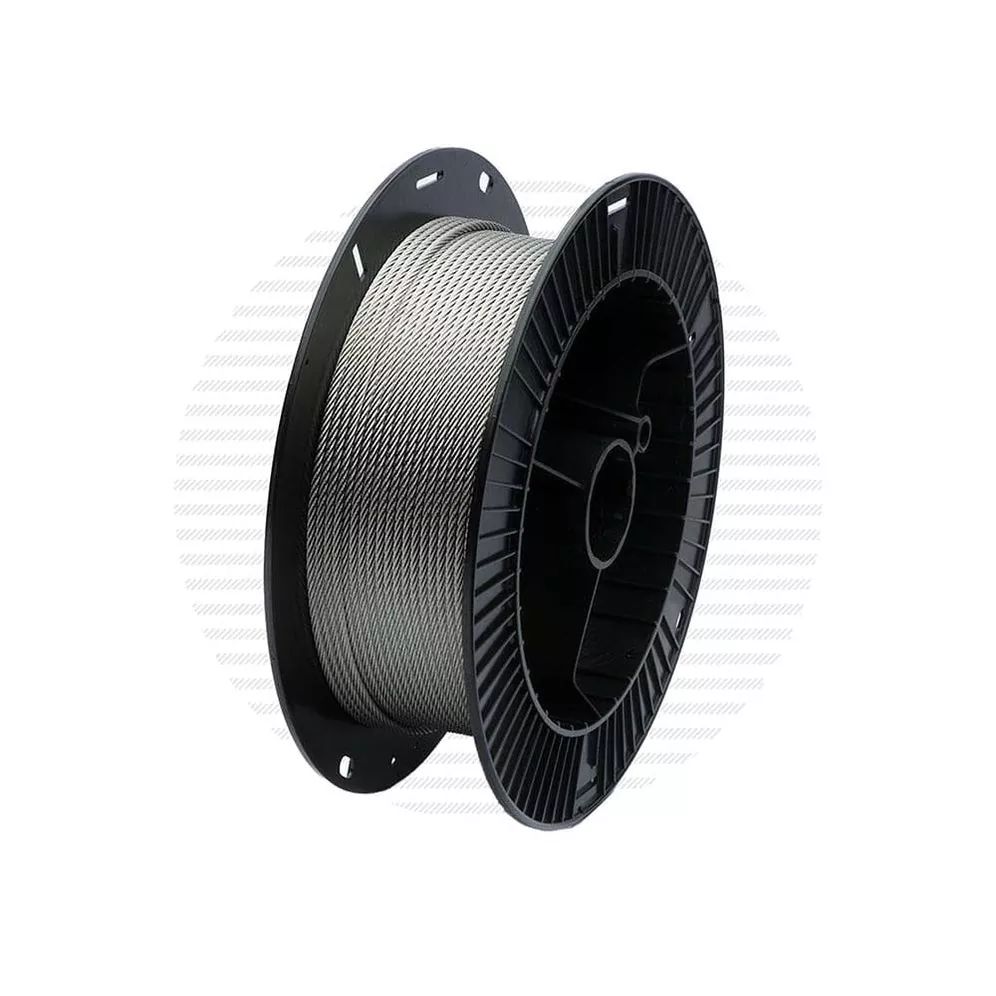
| Cable material | 304 or 316 stainless steel (specified at order) |
| Cable diameter | 3 mm / 4 mm / 5 mm |
| Cable construction | 1×19 strand or 7×7 strand |
| Top rail — stainless steel | Round tube Ø 42.4 mm or Ø 48.3 mm, wall thickness 1.5–2.0 mm |
| Top rail — timber option | Hardwood capping over stainless steel channel; section approx. 45×65 mm |
| Post material | 304 or 316 stainless steel tube |
| Post profile | Square (40×40 mm, 50×50 mm) or round (Ø 42.4 mm, Ø 48.3 mm) |
| Post wall thickness | 1.5 mm – 2.0 mm |
| Standard post heights | 900 mm / 1,000 mm / 1,100 mm (stair-rake versions available) |
| Cable spacing (vertical) | Typically 100 mm centres (adjustable to meet local code) |
| End fittings | Swaged terminals or threaded adjustable tensioners |
| Surface finish | Brushed No. 4, mirror polished No. 8, or satin |
| Maximum post span | 1,500 mm (longer spans require intermediate tensioners) |
Code Compliance Reference
Cable handrail systems are used in projects across multiple regulatory frameworks. The following applies specifically to handrail requirements (not guard/balustrade provisions):
| Market | Standard | Handrail Requirement |
| USA (residential) | IRC R311.7.8 | Graspable profile; circular cross-section Ø 1.25–2 in (32–51 mm) |
| USA (commercial) | IBC 1014 | Continuous rail; graspable profile within 1.25–2 in diameter |
| Australia | NCC / AS 1428.1 | Circular rail Ø 30–50 mm; continuous from top to bottom of stair |
| UK / EU | BS 8300 / BS EN 1991 | Graspable handrail at 900–1,000 mm height; circular or oval section |
| Canada | NBC Part 9 / Part 3 | Graspable profile Ø 30–43 mm; continuous on open side of stair |
Vionta Metal's standard round tube top rail (Ø 42.4 mm) falls within the graspable range for IRC, IBC, AS 1428.1, and NBC requirements. Product dimensional data and material certificates are available on request to support compliance submissions.
System Components
| Component | Material | Function |
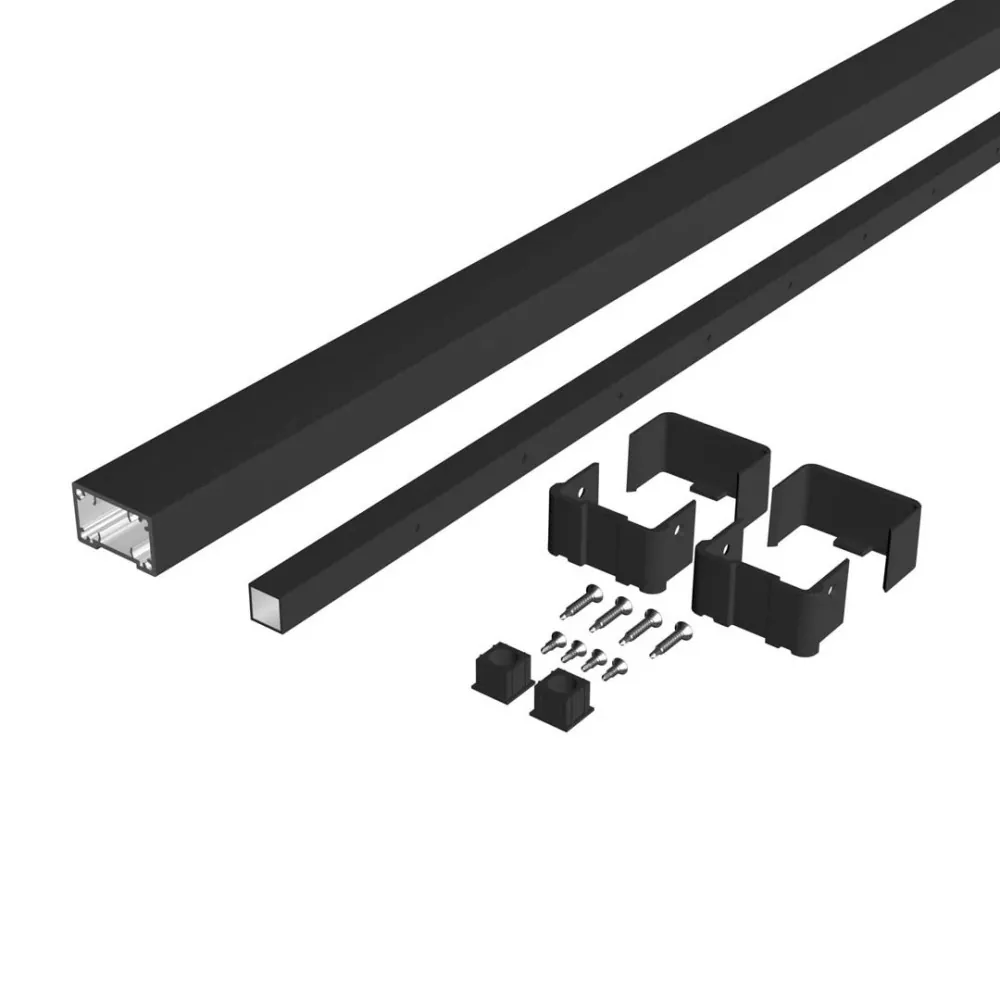
| Top rail | 304/316 round tube or timber-capped channel | Primary gripping surface — must be continuous and graspable per code |
| Cable runs | 304 or 316 stainless steel | Infill below top rail — structural safety barrier |
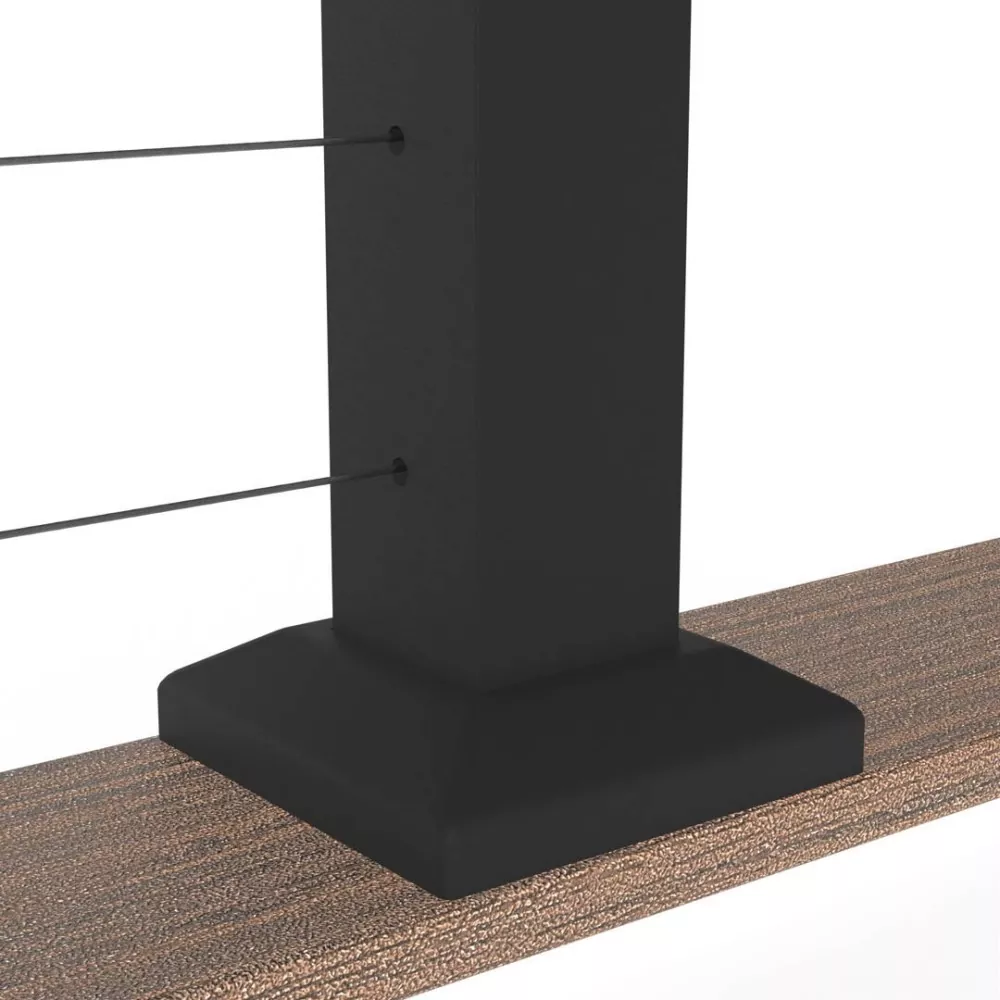
| Posts | 304 or 316 stainless steel tube | Structural uprights — transfer loads to stair stringer or substrate |
| Swaged terminals / tensioners | 316 stainless steel | Anchor and tension cable runs through posts |
| Corner / angle fittings | 316 stainless steel | Allow cable runs to change direction at stair landings |
| Post base plates | 304 or 316 stainless steel | Surface or fascia mount — bolt or weld fix to stringer or substrate |
| End caps / rail brackets | Stainless steel | Seal post tops; connect top rail to wall or newel post |
Application Scenarios
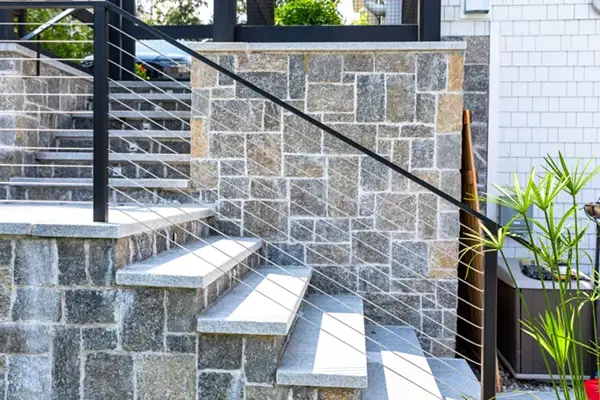
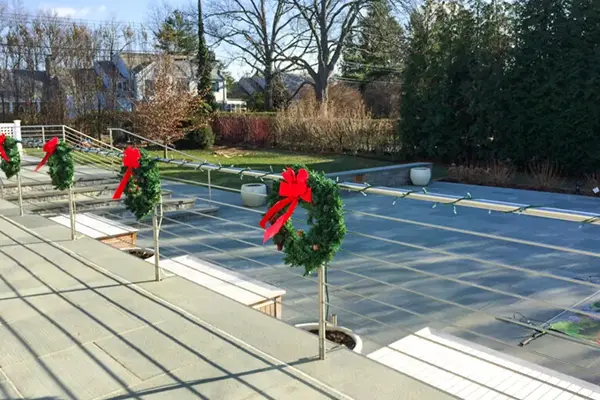
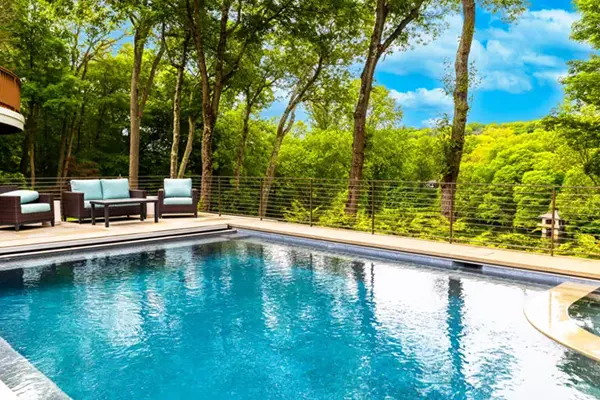
Cable handrail systems are specified wherever a code-compliant graspable handrail is required alongside an open cable infill. Common applications include:
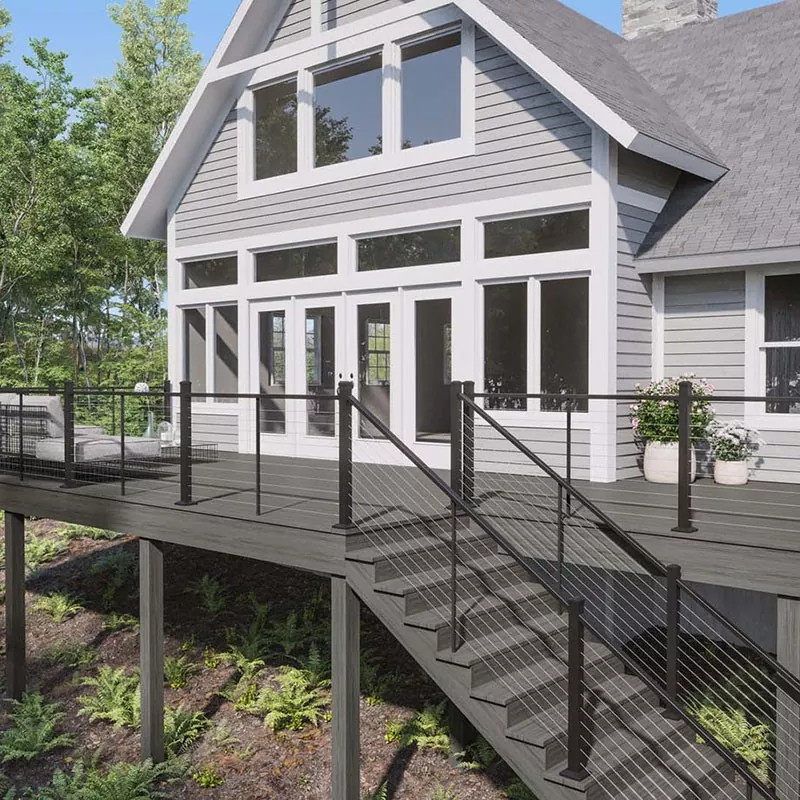
Interior residential staircases and loft stairs — Exterior timber deck stairs — Concrete and steel commercial stair cores — Hotel and hospitality staircase balustrades — Public stair and ramp handrail systems — Mezzanine and gallery stair connections — Escalator and moving walkway balustrades
Customisation Options
Vionta Metal fabricates cable handrail systems to project-specific requirements. The following parameters can all be specified at the order stage:
| Parameter | Options |
| Cable grade | SS304 or SS316 |
| Cable diameter | 3 mm / 4 mm / 5 mm |
| Cable run orientation | Horizontal (standard) or vertical |
| Top rail profile | Round tube (standard), oval, or timber-capped channel |
| Post profile | Square or round; surface mount or side mount base plate |
| Surface finish | Brushed No. 4, mirror polished No. 8, satin |
| Post height | Standard 900/1,000/1,100 mm; stair-rake and custom heights available |
| Stair configuration | Straight run, L-shaped, U-shaped, helical — corner fittings supplied |
OEM and private-label programs are available for importers and building product distributors. Contact riley@viontametal.com with project drawings or specifications for a tailored quote.
Installation Overview
Cable handrail installation on a staircase follows the same sequence as a flat deck system, with additional considerations for stair rake angle and continuous top rail runs.
1. Fix post base plates to stair stringer or substrate at specified centres. For stair applications, posts are typically set on a plumb vertical, not perpendicular to the rake.
2. Set posts plumb and secure base plates. Verify alignment with a string line from top to bottom post.
3. Feed cable runs through posts and intermediate guides. On raked stair runs, cable angle fittings are used at the top and bottom posts.
4. Apply tension to cable runs per Vionta's tensioning specification sheet. Target tension varies by cable diameter and post span.
5. Fix top rail — continuous from top landing to bottom newel. Wall brackets secure the rail to masonry or timber where required.
6. Check cable spacing, post plumb, and all fastener torque. Re-tension after 30 days.
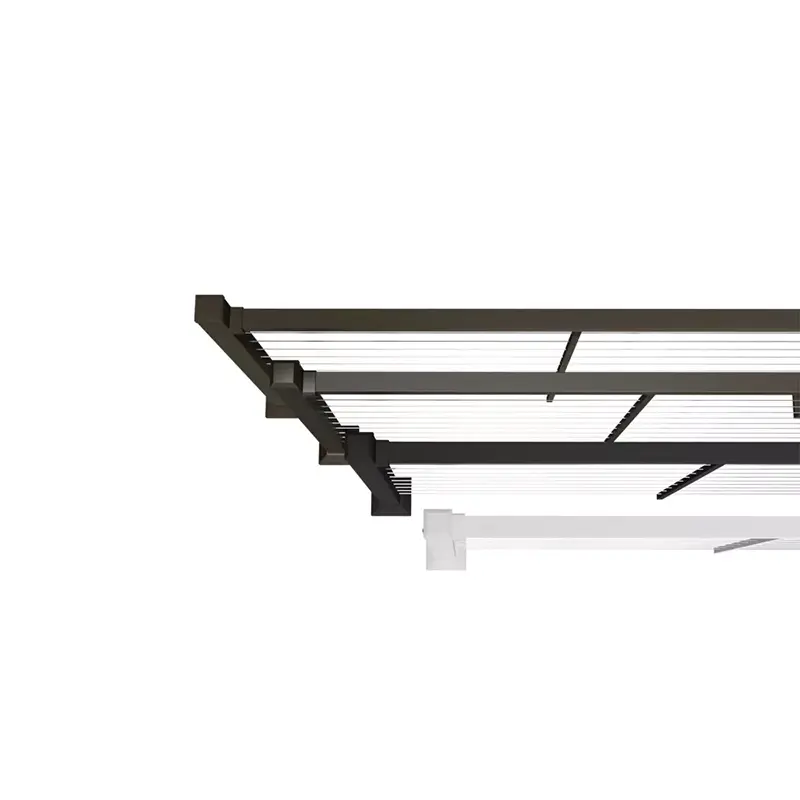
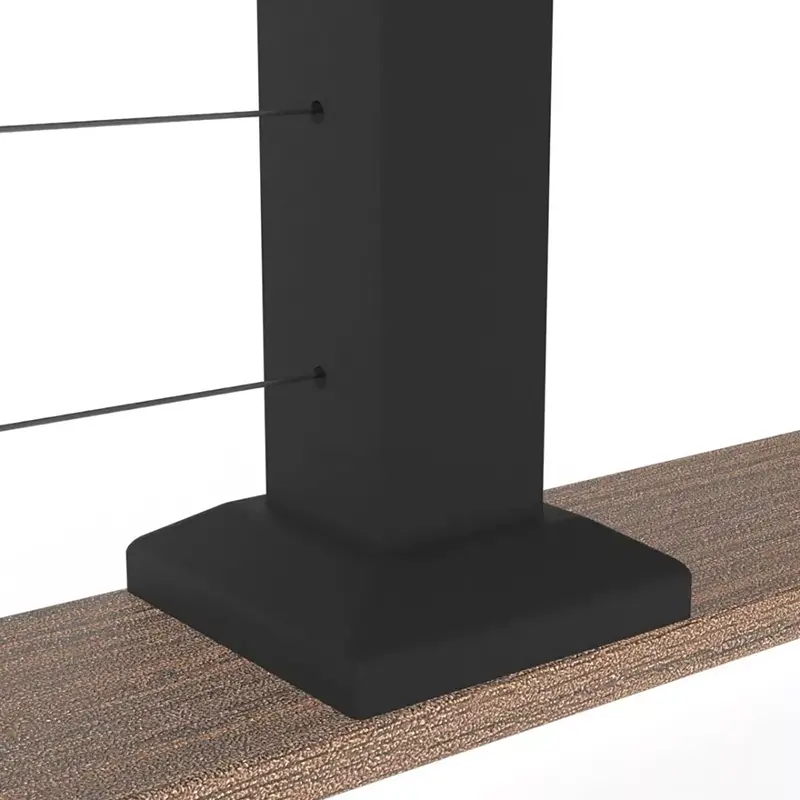
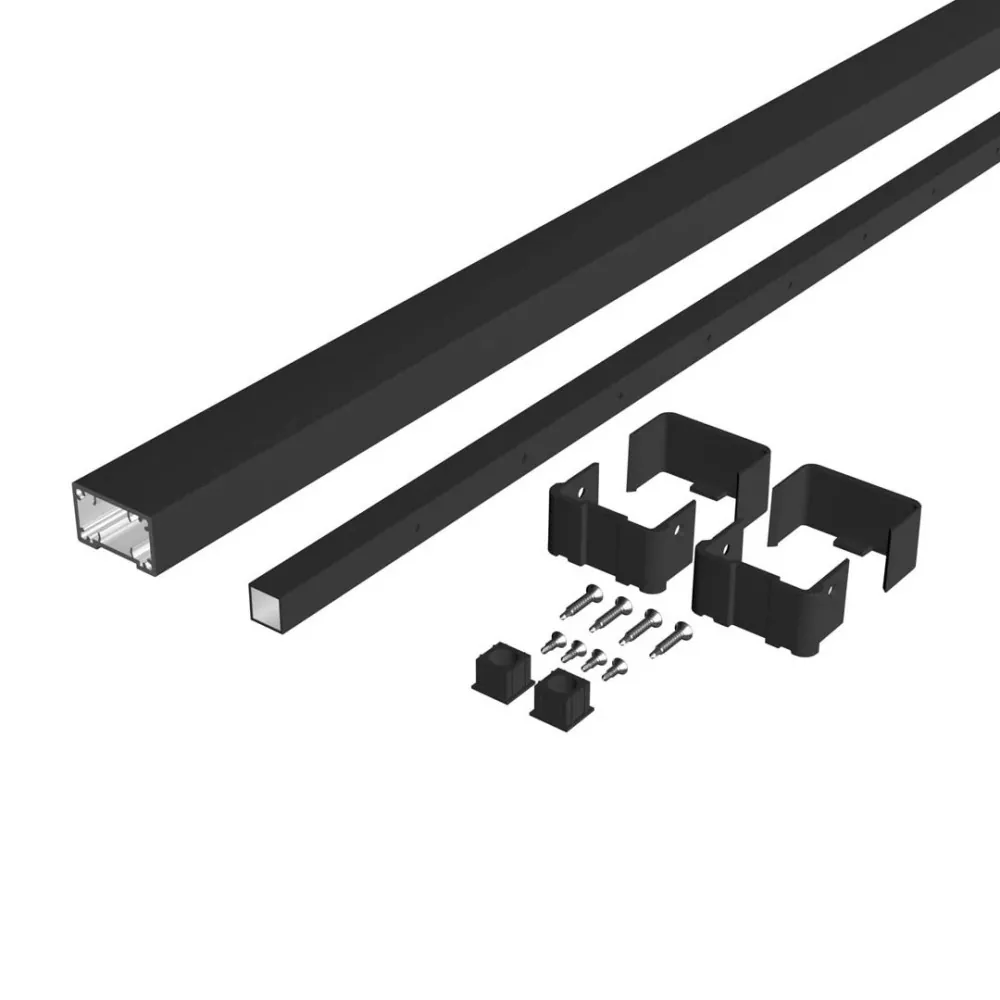
Vionta Metal provides PDF installation guides, stair-specific tensioning specification sheets, and fitting torque values with every order. For complex stair configurations, our technical team can provide shop drawings on request.
Quality Control
| Test / Check | Standard |
| Material grade verification | Mill certificates for cable, tube, and fittings — 304 or 316 as specified |
| Cable breaking load test | Sample batch tensile test per ASTM A492 or equivalent |
| Salt spray test | 500 hours minimum per ASTM B117 |
| Top rail dimensional check | OD and wall thickness ±0.1 mm; straightness to 1 mm/m |
| Surface finish inspection | 100% visual — no pitting, weld defects, or surface inclusions |
| Pre-shipment assembly check | Sample system assembled and inspected before container loading |
Factory and OEM Services
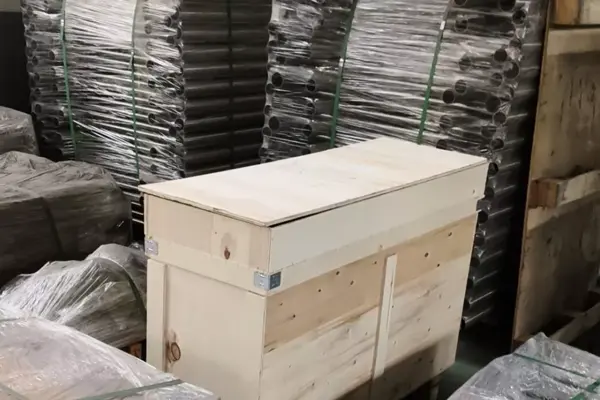
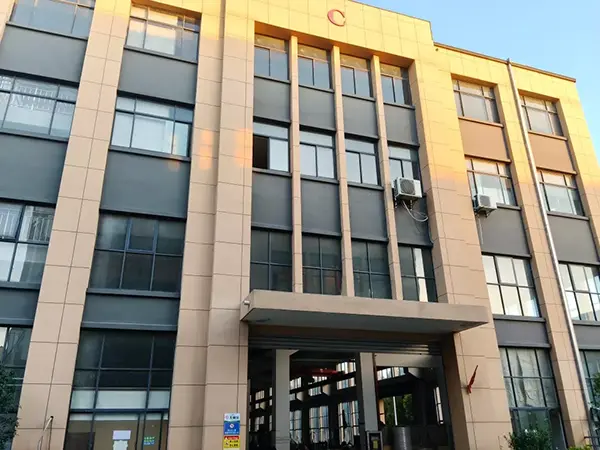
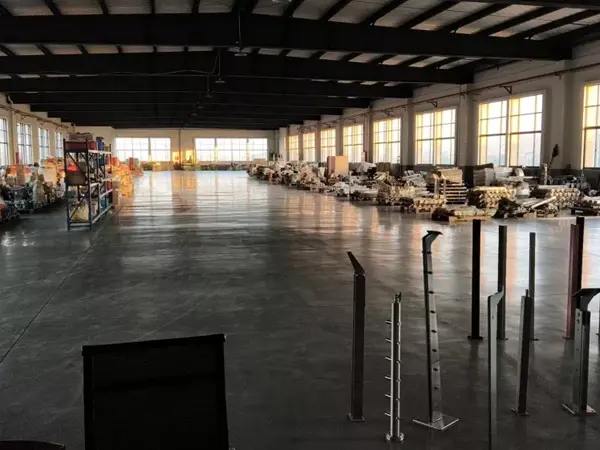
Vionta Metal operates its own manufacturing facility in Cixi, Ningbo. We handle extrusion, cutting, welding, polishing, cable assembly, and pre-shipment inspection in-house. OEM and private-label programs are available — we can fabricate cable handrail systems to your specification, apply your brand markings, and pack to your labelling requirements.
We supply cable handrail systems to the UK, Germany, the Netherlands, Australia, Canada, and the United States. Material test certificates and third-party inspection support are available for projects that require it.
Frequently Asked Questions
What is the difference between a cable handrail and a cable balustrade?
A cable handrail includes a graspable top rail as the primary functional element — it is the correct specification for staircase applications where codes require a continuous handrail. A cable balustrade refers to the complete guard system (posts plus cable infill) and may not include a graspable top rail. For stairs, specify cable handrail; for deck and balcony perimeters, specify cable balustrade.
What top rail profiles are available?
Stainless steel round tube in Ø 42.4 mm or Ø 48.3 mm (brushed or mirror-polished), and timber-capped channel with an approximate section of 45×65 mm. The round tube options fall within the graspable diameter range required by IRC, IBC, and AS 1428.1.
Can cable handrail be used on angled or helical staircases?
Yes. Corner posts with cable angle fittings allow the cable runs to change direction at landings without a break in the infill. Vionta Metal fabricates systems to project-specific stair geometry on request.
Which cable grade should I specify for outdoor installations?
For most outdoor environments, 304 grade is adequate. For coastal, waterfront, or pool-adjacent installations, specify 316 throughout — cable, posts, and all fittings. Use the same grade for all metal components to avoid galvanic corrosion.
Does cable handrail meet stair handrail code requirements?
Yes, when the top rail diameter is within the graspable range (typically 1.25–2 inches / 32–51 mm for US codes). Vionta Metal can provide specifications and dimensional data to support compliance documentation for IRC, IBC, AS 1428.1, BS EN 1991, and NBC.
What is the lead time from China?
Standard production and shipping takes 15–25 days depending on order volume and customisation. Lead times are confirmed at the quotation stage.
Hot Tags: Stainless Steel Cable Handrail, Glass Railing Handrail, Metal Balcony Handrails
Related Category
Send Inquiry
Contact Info
-
Address
No. 26, Lane 293, Cilong East Road, Longshan Town, Cixi City, Ningbo City, Zhejiang Province, China
-
Tel
-
E-mail
For inquiries about Metal Railing, Aluminium Pergola, Aluminium Awning or price list, please leave your email to us and we will be in touch within 24 hours.