How Do Motorized Awnings Contribute to Energy Efficiency?
Published by Vionta Metal | viontametal.com
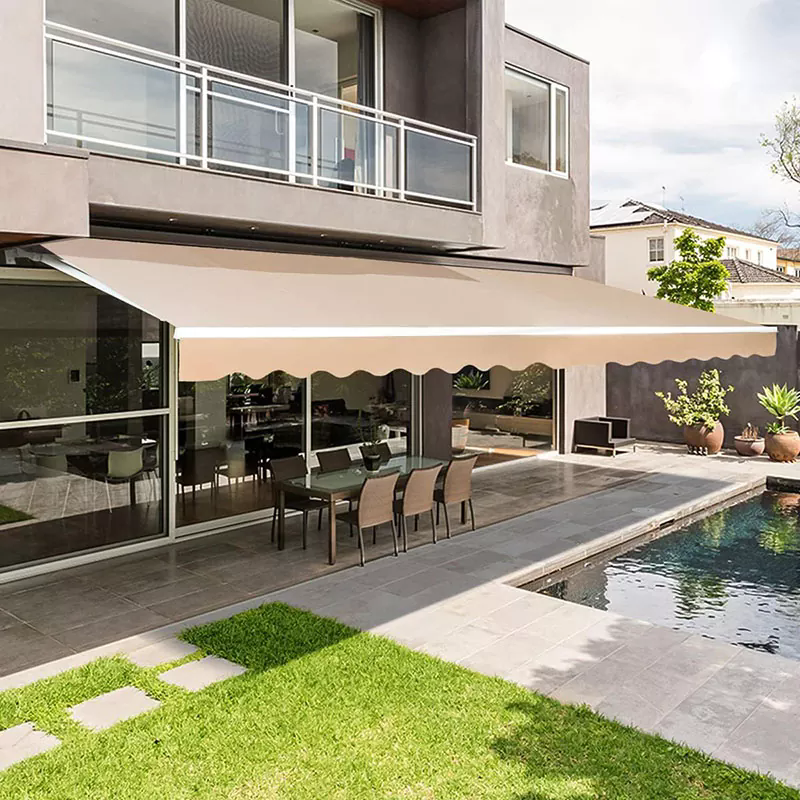
Aluminum Awnings Energy Efficiency Outdoor LivingA lot of homeowners think about energy efficiency in terms of insulation, windows, or HVAC upgrades. But there is one simple addition that often gets overlooked — outdoor motorized awnings. Mounted above windows, patios, or glass doors, awnings do more than keep rain off your barbecue. When chosen and installed well, they actively reduce the heat that enters your home, cutting cooling costs in a very straightforward way.
This article walks through how that actually works, what makes aluminum awnings a reliable choice, and what to look for when you are ready to buy. Whether you are a homeowner, a contractor, or a commercial buyer sourcing from a China manufacturer or supplier, the basics here apply to everyone.
Table of Contents
- How Do Awnings Actually Block Heat?
- Why Are Outdoor Motorized Awnings Better Than Fixed Ones?
- What Makes Aluminum Awnings Stand Out from Other Materials?
- How Much Energy Can Awnings Actually Save?
- What Features Should You Look for in a Quality Motorized Awning?
- How Do Motorized Awnings Work in Different Climates?
- FAQ
How Do Awnings Actually Block Heat?
When sunlight hits a window or glass door, it passes through and heats up the room inside. This is called solar heat gain. In summer, that unwanted heat forces your air conditioner to work harder. An awning placed above a window acts like a visor — it intercepts sunlight before it ever reaches the glass.
Studies from the U.S. Department of Energy have shown that awnings can reduce solar heat gain through south-facing windows by up to 65%, and up to 77% on west-facing windows during the hottest parts of the day. Those numbers translate directly into lower cooling loads and smaller electricity bills.
The principle is simple: shade the glass, and less heat gets in. Less heat inside means your cooling system runs less. That is really the whole story, and it is not complicated.
Why Are Outdoor Motorized Awnings Better Than Fixed Ones?
Fixed awnings always block sunlight — including in winter, when you might actually want that warmth coming through the window. Motorized awnings solve this problem completely.
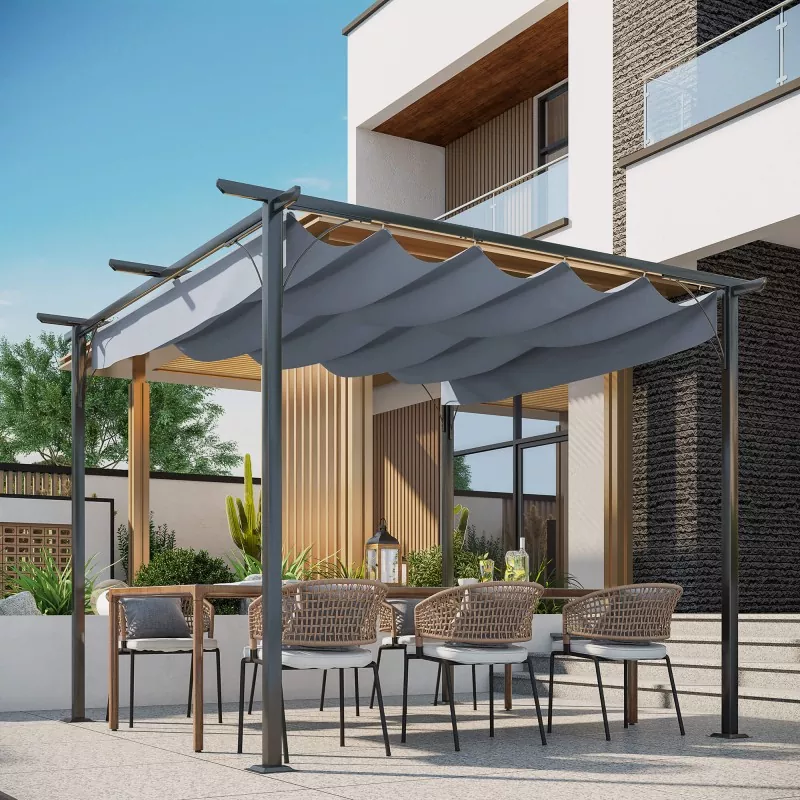
With outdoor motorized awnings, you extend the shade in summer and retract it in winter. In colder months, the sun's lower angle means it can still heat your rooms passively, reducing your heating bill. In summer, you extend the awning to block that high-angle midday sun. You get the best of both worlds, and you do not have to do it manually.
Most modern motorized systems connect to a wall switch, a remote, or a smartphone app. Some higher-end models include sun and wind sensors that operate the awning automatically. The awning extends when the sun hits a set intensity and retracts when wind speed climbs too high. You can largely forget it is there.
| Feature | Fixed Awning | Outdoor Motorized Awning |
| Summer shade | Yes | Yes |
| Winter solar gain | Blocked | Available (retracted) |
| Wind safety | Manual adjustment needed | Auto-retract with sensor |
| Convenience | None | Remote / app / auto |
| Year-round energy benefit | Partial | Full seasonal optimization |
What Makes Aluminum Awnings Stand Out from Other Materials?
Aluminum awnings have been around for decades, and there are good reasons they remain a popular choice for both residential and commercial projects. Here is how they compare to the main alternatives.
Fabric awnings look soft and come in many colors, but they degrade under UV exposure over time, collect mold and mildew, and tend to lose their shape. Canvas or polyester canopies might last five to ten years before they need replacing.
Aluminum awnings, by contrast, hold up for twenty to thirty years with minimal maintenance. They do not absorb water, they resist UV degradation, and they hold their shape in wind. For anyone sourcing in volume — whether from a local dealer or a China factory — aluminum is the cost-effective choice over a long horizon.
From an energy standpoint, aluminum awnings can be powder-coated in light, reflective colors that bounce solar radiation away rather than absorbing it. That reflective surface adds another layer of heat reduction on top of the basic shading effect.
| Material | Lifespan | Maintenance | Heat Reflection | Cost (Long-Term) |
| Aluminum | 20-30 years | Low | High (with light coatings) | Low |
| Fabric / Canvas | 5-10 years | Medium-High | Medium | Higher (replacement) |
| Steel | 10-20 years | Medium | Medium | Medium |
| Polycarbonate | 10-15 years | Low | Variable | Medium |
How Much Energy Can Awnings Actually Save?
This is the question most buyers ask first. The honest answer is that the savings vary depending on your climate, your building orientation, how much glass you have exposed to the sun, and how efficiently you use the awning system.
That said, credible research gives us useful ballpark numbers. A well-shaded south or west-facing window can reduce air conditioning energy use by 10 to 25 percent for that part of the building. For homes in hot climates with large glass surfaces — think patio doors and large picture windows — the savings can be meaningfully larger.
Commercial buyers and building managers sourcing aluminum awnings from a China supplier at scale often find that the payback period on the investment is two to five years, after which the energy savings are essentially free money. For a factory or warehouse with extensive south-facing glazing, the numbers are even more compelling.
The motorized element also contributes here. A motorized system is actually used correctly — people extend it when needed and retract it when not. Manual awnings often stay in a fixed position because adjusting them is inconvenient. That behavioral gap means motorized awnings tend to deliver better real-world savings than their manual equivalents, even if the hardware is identical.
What Features Should You Look for in a Quality Motorized Awning?
Not all motorized awnings are built the same way. If you are evaluating suppliers — including manufacturers and factories in China — these are the specifications worth paying attention to.
Motor quality and torque rating
The motor is the heart of any motorized awning. Look for motors rated for the arm span and fabric weight of your specific system. Undersized motors burn out faster. Good manufacturers publish torque ratings and load capacity clearly.
Control system compatibility
Modern outdoor motorized awnings should support at minimum a hardwired wall switch and a wireless remote. Smart-home compatibility (Z-Wave, Zigbee, or Wi-Fi) is a bonus for residential projects. For commercial installations, centralized control systems that manage multiple awnings from one interface are worth specifying.
Wind and sun sensors
A wind sensor is not a luxury — it is a safeguard. Without one, an awning left extended in a sudden gust can be damaged badly. Quality aluminum awnings paired with a reliable sensor system protect your investment and reduce maintenance calls significantly.
Frame and bracket construction
For aluminum awnings specifically, wall bracket design and arm construction matter for long-term stability. Extruded aluminum arms with internal reinforcement hold their geometry over years of extension and retraction. Cheaper stamped-metal arms flex and fatigue.
Finish and coating
Powder-coated aluminum resists corrosion and UV fading far better than painted finishes. Ask suppliers for the coating thickness (typically 60 to 80 microns for outdoor applications) and whether it meets relevant standards.
| Feature | Minimum Acceptable | Recommended for Quality |
| Motor type | AC tubular motor | DC tubular motor with soft start/stop |
| Control | Wall switch + remote | Smart home compatible + sensors |
| Wind protection | Manual retract | Automatic wind sensor |
| Powder coat thickness | 40 microns | 60-80 microns |
| Arm construction | Stamped steel | Extruded aluminum, reinforced |
How Do Motorized Awnings Work in Different Climates?
The energy story for awnings changes depending on where you are. This is worth thinking through before you buy.
In hot, sunny climates — the American Southwest, Southeast Asia, the Middle East, Southern Europe — awnings deliver maximum value. The cooling load is high, the sun angle is strong, and shading windows has an immediate and significant impact on energy use. Motorized systems in these regions often pay back their cost in two to three years purely on electricity savings.
In temperate climates with distinct seasons — much of Europe, northern China, the northern United States — the seasonal flexibility of motorized awnings is the key advantage. You shade aggressively in summer and open everything up in winter for passive solar heating. A fixed awning cannot do this.
In cooler climates with less intense sun, the energy gains from awnings are smaller, but the comfort benefits remain. Reducing glare, protecting outdoor spaces from occasional rain, and managing interior temperatures on warm days all contribute to a better living or working environment even where the pure energy ROI is modest.
For buyers sourcing aluminum awnings from a China manufacturer for international projects, it is worth discussing climate-specific configurations — projection depth, arm geometry, fabric opacity or slat spacing — with your supplier before finalizing specs.
What Does Vionta Offer?
Vionta is a China-based manufacturer and supplier specializing in aluminum awnings and related shading systems for residential and commercial applications. The Vionta factory produces both retractable fabric-arm systems and rigid aluminum awning structures, with motorized options available across the product range.
Vionta products are designed for the international market and meet standard quality requirements for export. The team works with buyers ranging from individual homeowners to large-scale commercial contractors and retail distributors who source from China at volume. Custom sizing, custom powder-coat colors, and OEM arrangements are all available.
If you are evaluating suppliers for outdoor motorized awnings or aluminum awnings for a project, Vionta is worth including in your comparison process. The combination of competitive factory pricing and consistent product quality is what most international buyers are looking for in a China supplier relationship.
Ready to Source Quality Aluminum Awnings?
Whether you are outfitting a single home or sourcing at volume for a commercial project, Vionta has the product range and manufacturing capacity to support your needs.
Contact the Vionta team today to request product specifications, samples, or a quote.
China manufacturer · Competitive factory pricing · Custom options available · Export-ready
Get a Quote from ViontaSummary
Motorized awnings contribute to energy efficiency in a direct and well-documented way: they reduce solar heat gain through windows, cutting cooling loads and electricity costs. Aluminum awnings do this durably, holding up for decades with minimal upkeep. The motorized element is not just a convenience — it is what allows the system to work optimally across seasons, extending shade in summer and opening to passive solar warming in winter.
For buyers evaluating outdoor motorized awnings, the key is to match the product specs to the climate, the building orientation, and the level of automation that makes sense for the application. And for those sourcing from China, working with an established manufacturer like Vionta gives you access to quality aluminum awning products at factory pricing, with the flexibility to customize for your specific project.
FAQ
Q: How much can motorized awnings reduce my air conditioning costs?
A: In well-suited conditions — sunny climate, south or west-facing windows, significant glass area — awnings can reduce cooling energy use for shaded areas by 10 to 25 percent. The actual savings depend on your building, climate, and how consistently you use the system.
Q: Are aluminum awnings better than fabric awnings for energy efficiency?
A: Both materials block sunlight effectively. Aluminum awnings offer better durability and longevity, and light-colored powder-coated aluminum reflects solar radiation rather than absorbing it. Fabric options offer more design variety but require more maintenance and replacement over time.
Q: How long do aluminum awnings typically last?
A: Quality aluminum awnings with powder-coated finishes typically last 20 to 30 years with minimal maintenance — mainly periodic cleaning and occasional lubrication of moving parts in motorized systems.
Q: Do motorized awnings work in windy areas?
A: Yes, when equipped with a wind sensor. The sensor detects unsafe wind speeds and automatically retracts the awning to prevent damage. For areas with frequent strong winds, this feature should be treated as essential rather than optional.
Related News
- Are Jalousie Windows Easy to Break Into?
- Is Stainless Steel Glass Railing Safe?
- How waterproof is an aluminum louvered pergola during heavy rain, and how should its drainage capacity be tested?
- How Strong Is Aluminum Railing Compared With Steel Railing?
- How to Choose Metal Railing for Residential and Commercial Projects
- How To Remove Hard Water Stains From Glass Railings?
Leave me a message